
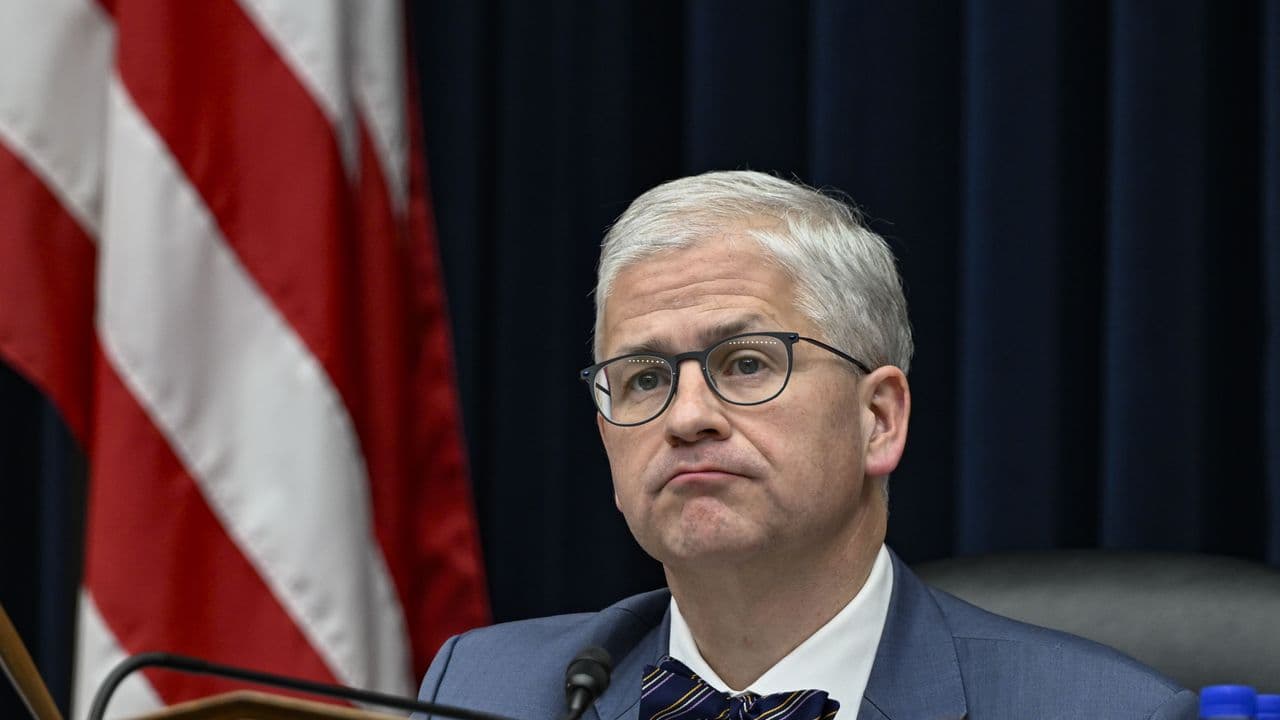
McHenry said the rest of crypto’s integration into traditional finance would be delayed without a market-structure law.
- McHenry said that the market structure bill split had looked good earlier.
- According to him, the end Democrats had walked away from an excellent deal.
- McHenry was also skeptical of Rep. Maxine Waters, a Democrat on the House Financial Services Committee.
Former Republican congressman Patrick McHenry, who chaired the House Financial Services Committee, said on Friday that he "made a mistake" by splitting stablecoin rules from the broader crypto market-structure bill.
Speaking with journalist Eleanor Terrett, McHenry admitted that decision helped derail the Digital Asset Market Clarity Act (CLARITY Act), and traced the trouble back to his own time as chair.
"I do have ownership in that too, and I made a mistake, and that mistake did impair us getting a market structure bill done, and that was when I separated stablecoins, and a market structure bill, and I made that decision that we're going to have two pieces of legislation," he said.
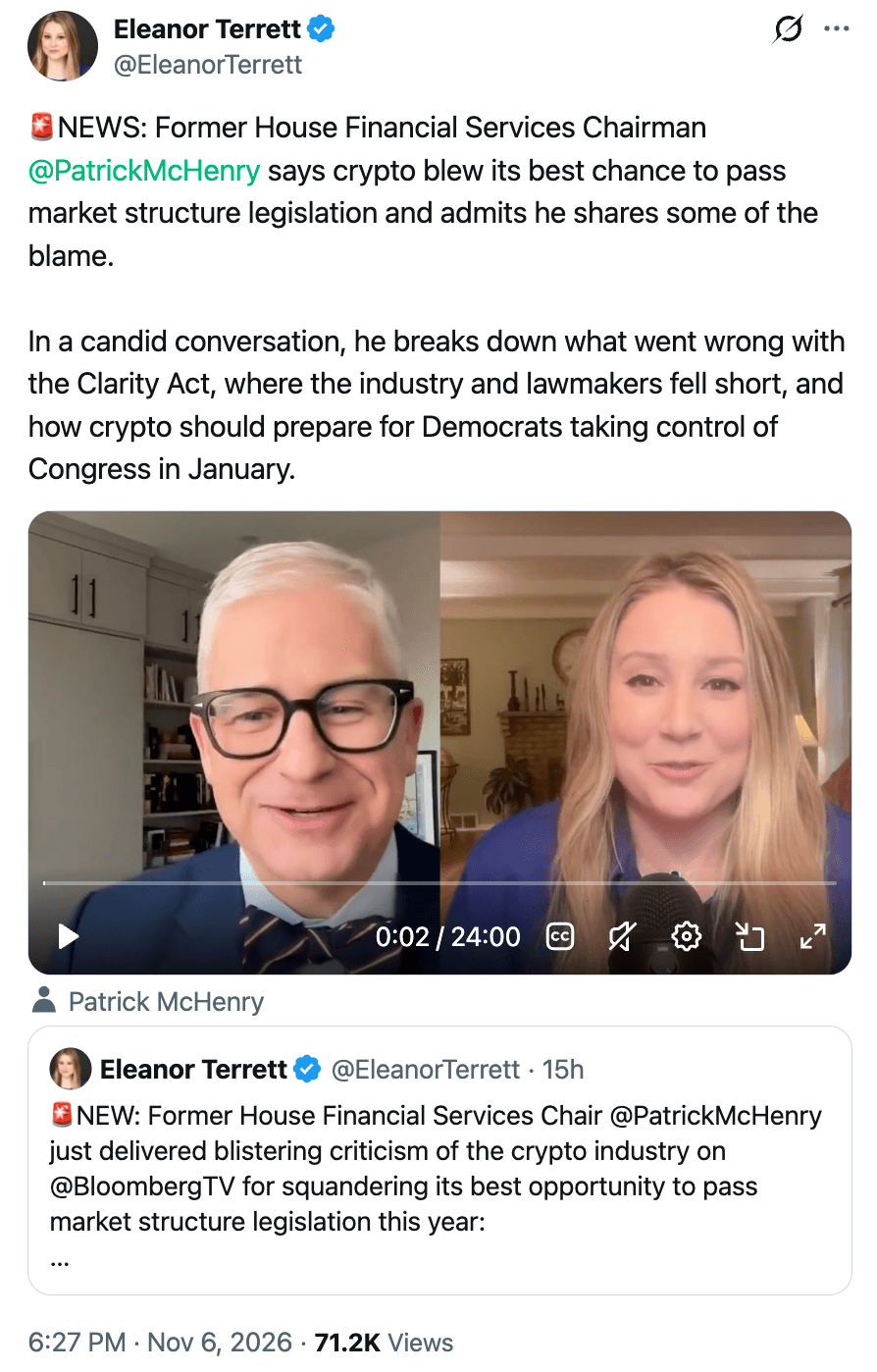
He added that the split looked like the smarter path at the time. "It didn't have to be that way. It neatly divided that way, and I thought it was the right thing to do at the time because I thought we had a better shot of bipartisan legislation on stablecoins. I was wrong," he said.
McHenry said the stablecoin bill, the GENIUS Act, moved quickly once it stood alone, and that took pressure off market structure. The Clarity Act then hit a wall in the Senate in September, when a procedural vote to take it up fell short of the 60 votes needed.
Blame Spreads To Senate
McHenry said his decision was only one part of the failure. He also pointed to the Senate's slow committee process and the approaching midterm campaign. "And then you got to the summer, and Schumer strategically slow-rolled the process, which brought it to September. And I think that was a political move for his members and the Senate political map," he said.
By then, he said, the politics had hardened. "I think what happened was in the end Democrats walked away from an excellent deal, an excellent compromise, and they simply refused because you're in the political cycle," he said.
He also faulted the industry for waiting too long. "So take something good rather than holding out for something great. And I think a deal made at the beginning of the year was better than a deal that could be made in summer or the fall," he said. Asked whether the industry was trying to avoid a bad law, he said, "Well, the justification is always you don't want bad law, but perfection became the key here."
Regulators To Fill Gap
With legislation stalled, McHenry said crypto rules would now come from regulators. "Though we're not getting clarity in law, we're going to get something close to it through regulation," he told Terrett. He warned that those gains could be reversed if the industry stepped back. "If we're engaged, if we pull back, if crypto pulls back, they can roll back those policies very readily without consequence. So we need to stay at it," he said.
McHenry was also skeptical of Rep. Maxine Waters (D-CA), a Democrat on the House Financial Services Committee. Terrett said Waters had called for "tough but fair" crypto rules in a memo on Friday. McHenry said, "It means very bad law. It would be a very bad piece of legislation that she would craft on crypto market structure."
He said the industry still had enough support in both parties to block harmful bills. "They will not be able to pass anti-crypto laws though because we built inroads in both parties on crypto," he said.
Crypto Coalition That Blew It
McHenry made similar points earlier in the day in an interview with Bloomberg Television. Asked whether a deal was possible in the incoming Congress, he said, "Not after the election results we just saw." He put much of the blame on the industry. "Frankly, you had a crypto coalition that blew it. They had an opportunity to legislate, and they were holding out for something that was unattainable, a perfect piece of legislation," he said. "Rather than take something that was good, many of them held out for perfection, and now have ended up with nothing legislatively."
He also pointed to the GENIUS Act and stablecoin use as where adoption was already happening, while he said the rest of crypto’s integration into traditional finance would be delayed without a market-structure law. That puts stablecoin issuers like Circle Internet Group (CRCL), which issues the USDC stablecoin, a step ahead of the rest of the industry.
CRCL stock closed down over 2% on Friday. On Stocktwits, the retail sentiment around CRCL remained in the ‘bearish’ zone, while chatter around it stayed at ‘normal’ levels over the past day.
For updates and corrections, email newsroom[at]stocktwits[dot]com.<









