

The Philadelphia Semiconductor Index was on track for an eighth consecutive daily decline on Friday.
- The SOX index shed more than 12% over the previous seven sessions, wiping out roughly $2 trillion in market value.
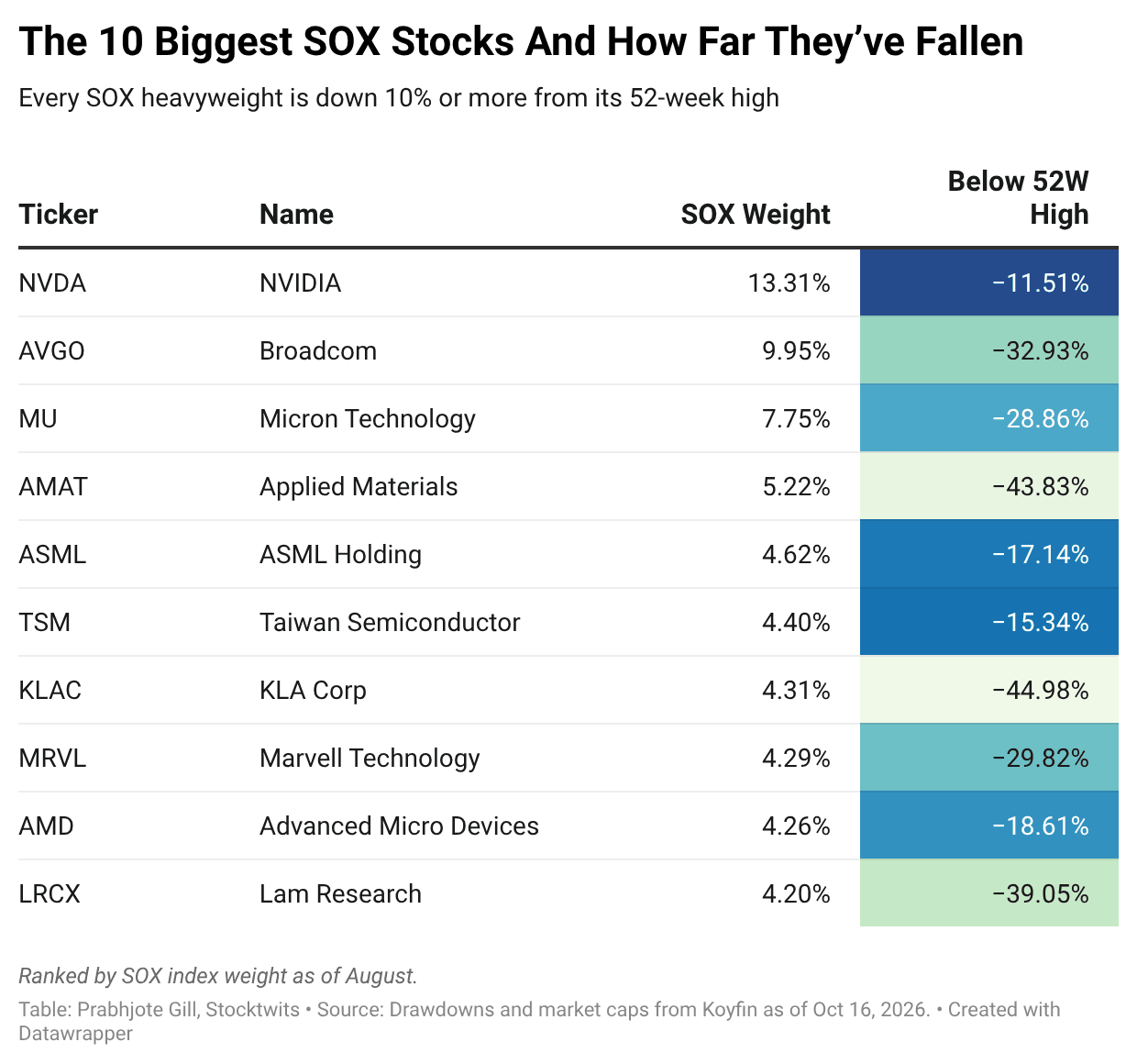
- More than half of SOX constituents were down at least 10% from their respective highs.
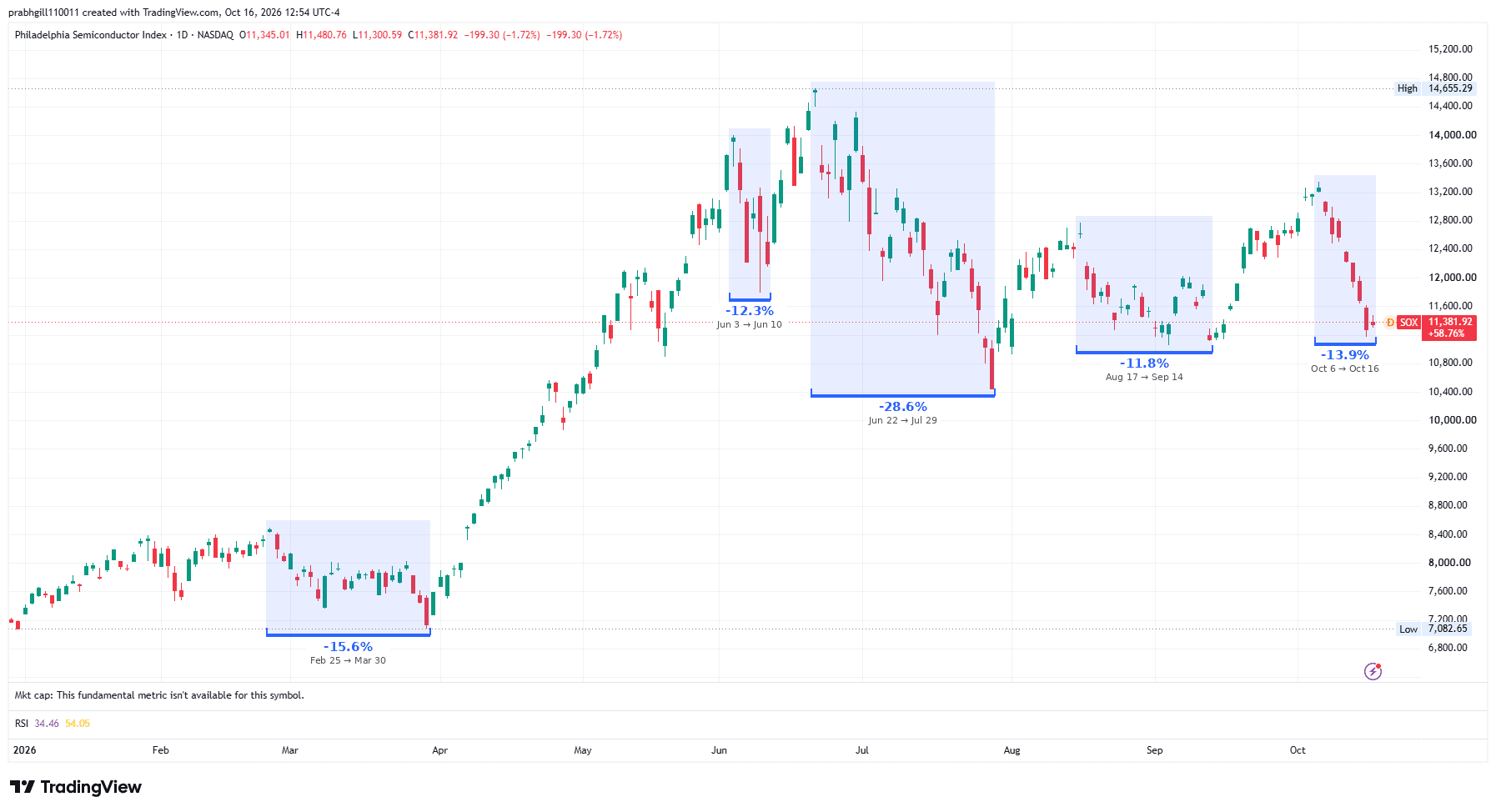
- The current drawdown marks the index’s fifth correction of at least 10% this year.
Semiconductor stocks were enduring one of their sharpest sell-offs in years on Friday, with the Philadelphia Semiconductor Index (SOX) on track to end eight consecutive trading sessions in the red.
The index had fallen more than 13% over the previous seven sessions, wiping out roughly $2 trillion in market value, according to TradingView data. A further decline on Friday would extend the streak to eight sessions, with the index under pressure from concerns over AI spending, rising interest-rate expectations and intensifying competition in the memory-chip market.
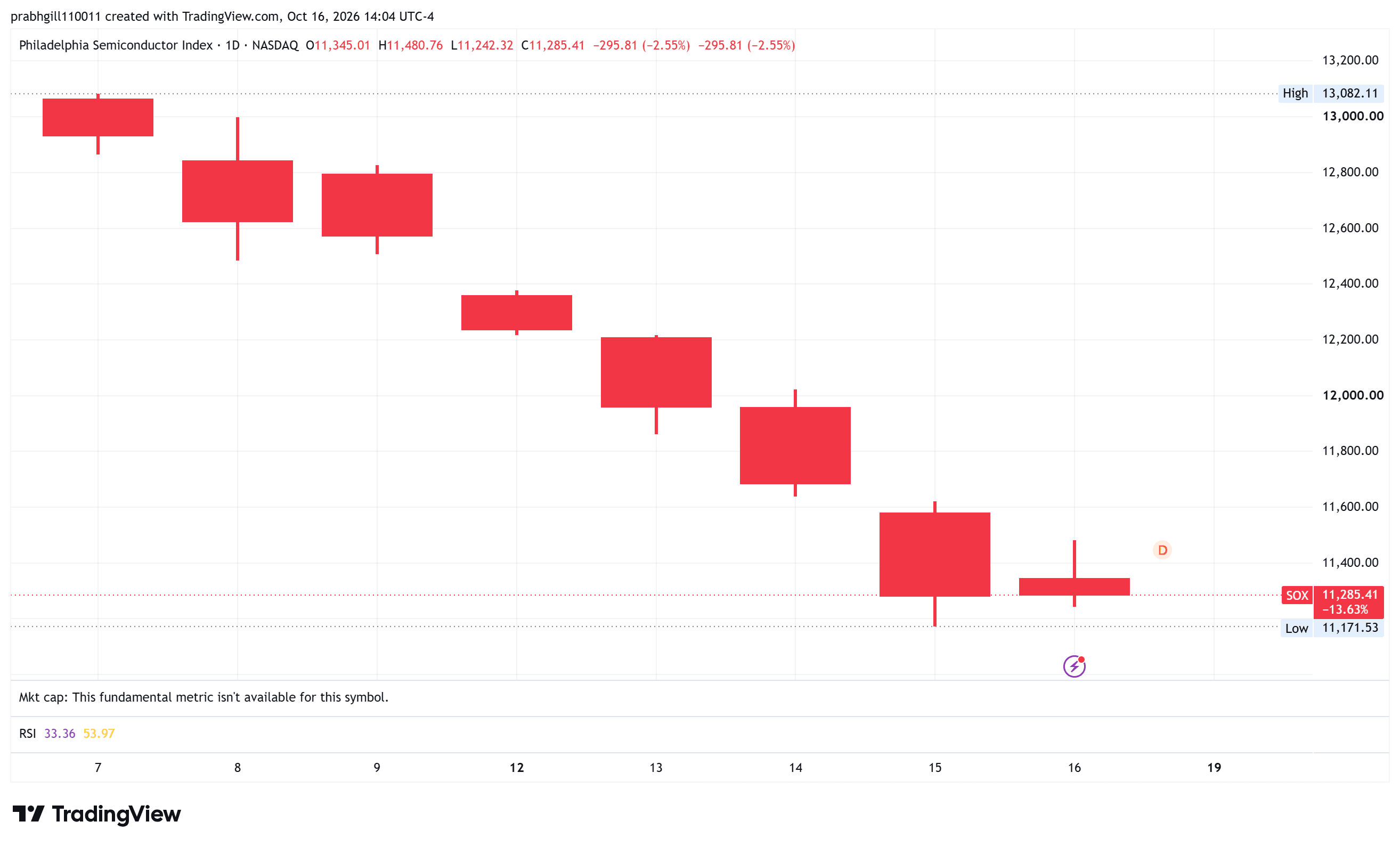
The losing streak matches the index’s longest since the 2008 financial crisis, flipping the script on the sector, which has been one of the biggest beneficiaries of the artificial intelligence (AI) boom.
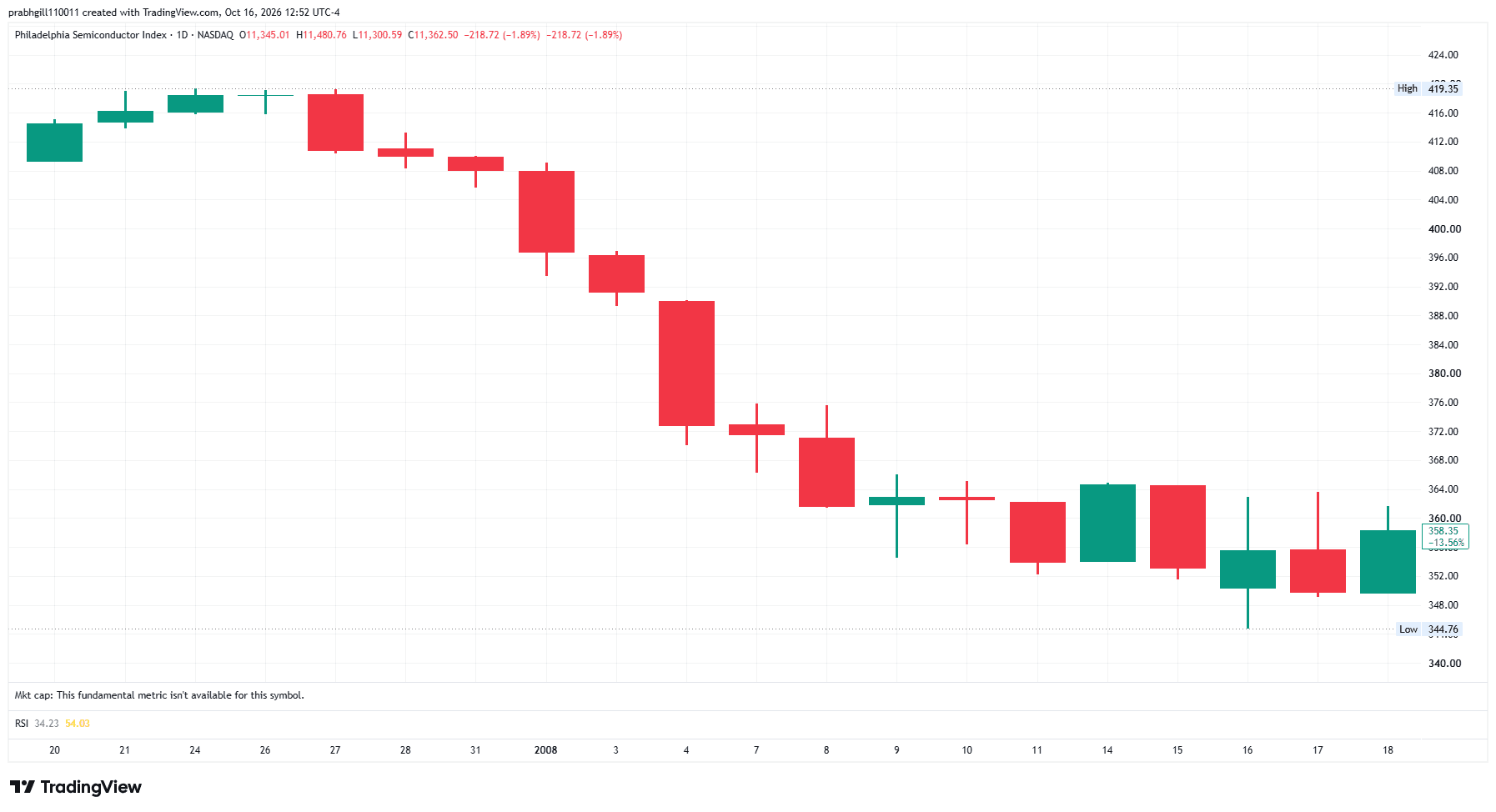
The index also logged its fifth correction of at least 10% this year. More than half of the stocks listed within the index are down at least 10% from their respective highs.
The Invesco PHLX Semiconductor ETF (SOXQ), which tracks SOX, slipped 2.6% in midday trade. On Stocktwits, retail sentiment around SOXQ slipped to ‘bearish’ from ‘neutral’ territory over the past day.
Chip Stocks Face Widespread Losses
Nvidia (NVDA), the largest constituent of the Philadelphia Semiconductor Index, has fallen more than 11% from its 52-week high. The pullback has been steeper among several semiconductor equipment makers, including Applied Materials (AMAT) and KLA Corp. (KLAC), pointing to weakness extending beyond chip designers.
Memory stocks have also come under pressure, with Micron Technology (MU) down sharply from its high.
Semiconductor stocks have lost about $2 trillion in market value in the current sell-off. Measured from each stock’s own 52-week high, the losses add up to roughly $4 trillion.
The pullback follows a powerful rally earlier this year driven by expectations of sustained AI-related demand. Despite the recent losses, the index remained up nearly 60% this year so far.
Strategists Warn Against Turning Too Bearish
The sell-off has raised questions about whether investors are reassessing the AI trade or simply locking in gains after a strong rally. Brett Pachuba of SpotGamma cautioned on Friday that investors could miss a sharp rebound if positive news from major technology companies reignites demand for AI stocks.
“I still believe that there remains a real right tail risk in this market where if you are underinvested to the upside, and we get positive news out of say a Meta or a Google… then there could be a real strong upside chase into a part of the year that has really strong seasonals,” Pachuba told CNBC. “So I do think investors really have to watch out as they kind of step into this bearish mode here.”
Dave Maza, CEO of Roundhill Investments, said investor sentiment toward memory stocks had turned negative, citing concerns about Chinese competition, comments from Broadcom CEO Hock Tan and a challenging macroeconomic backdrop.
Maza maintained that demand for memory chips remains strong, with supply sold out through 2027 and customer demand extending into 2028.
Read also: AI Stock Sell-Off Could Catch Bearish Investors Off Guard In ‘Right Tail Risk’, But Wall Street Feels Broader Market Signals Are Holding Up
For updates and corrections, email newsroom[at]stocktwits[dot]com.<
