
The IMF’s comments come as government bond yields worldwide, including in the U.S., have been climbing to multi-decade highs.
- The U.S. bond market lost 2.6% in September, one of its worst months in three decades, according to an analyst.
- Meanwhile, UK 30-year gilt yields topped 6% for the first time since 1998, Japanese government bond yields are trading around 3.05%, hovering near three-decade highs, and German Bund yields are at 3.55%.
- The iShares 20+ Year Treasury Bond ETF, which tracks long-term U.S. government debt, fell to an all-time low on Thursday.
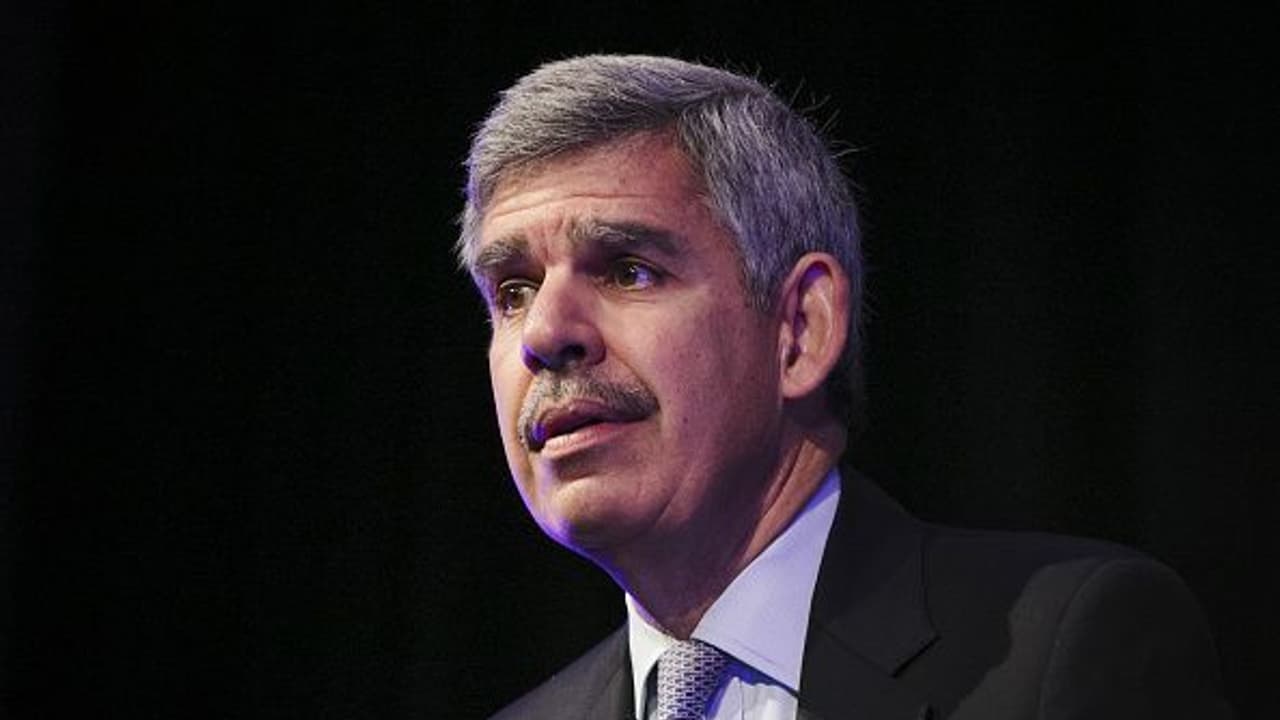
Mohamed El-Erian, chief economic adviser at Allianz, said on Thursday that the International Monetary Fund’s comments about how bond markets are functioning raise more questions than provide reassurance.
In a post on X, El-Erian said the IMF’s statement that bond markets are “continuing to function in an orderly manner” is “highly unusual—and risks raising more questions than it answers.”
The IMF’s comments come as government bond yields worldwide, including in the U.S., have been climbing to multi-decade highs.
What Did The IMF Say About Bond Markets?
Julie Kozack, the IMF's communications director, said at a press briefing on Thursday that globally, "bond markets are continuing to function in an orderly manner." She addressed concerns about bond yields rising across maturities in recent months in both advanced economies and some emerging ones.
The U.S. 10-year Treasury yield jumped to its highest level since 2002, surging to 5.34% on Wednesday. Meanwhile, UK 30-year gilt yields topped 6% for the first time since 1998, Japanese government bond yields are trading around 3.05%, hovering near three-decade highs, and German Bund yields are at 3.55%.
“When we've been looking at short-term yields, what we have seen is that they started to increase owing to rises in energy prices. And those increases in energy prices changed expectations in the market regarding the path of monetary policy,” Kozack said.
“Then when we look at the longer term, in addition to long-term yields reflecting, say, a changing path for Central Bank policy, we've also, our analysis shows they've also been influenced by some concerns about high levels of debt, even though those concerns have been with us for a little bit of time, and also an increase in term premia,” she added.
However, Kozack emphasized that while yields are rising in emerging economies, spreads have been declining as “emerging economies have taken a lot of measures and done a lot of reforms in the last decades, which have really strengthened their fundamentals.”
Analyst Calls It A Bond Market ‘Crash’
At the time of writing, the 10-year U.S. Treasury yield was trading at 5.249%, marginally below the 5.3% highs it had previously reached. The 30-year Treasury bond yield was trading at 5.628% at the time of writing.
Charlie Bilello, chief market strategist at Creative Planning, noted in a post on X that the U.S. bond market was down 2.6% in September based on the Bloomberg Aggregate index.
Only five months in the past three decades had a worse return, Bilello said: March 2022, April 2022, August 2022, September 2022 and July 2003. "For the stock market, losing 2.6% in a month is a non-event. But for the bond market, this is akin to a crash," he said.
The iShares 20+ Year Treasury Bond ETF (TLT), an exchange-traded fund that tracks long-term U.S. government debt, fell to an all-time low on Thursday. At the time of writing, it was down 0.23% amid ‘bullish’ retail sentiment.
Meanwhile, the iShares 10-20 Year Treasury Bond ETF (TLH) also fell to historic lows, trading 0.02% lower amid ‘neutral’ sentiment.
For updates and corrections, email newsroom[at]stocktwits[dot]com.<
