
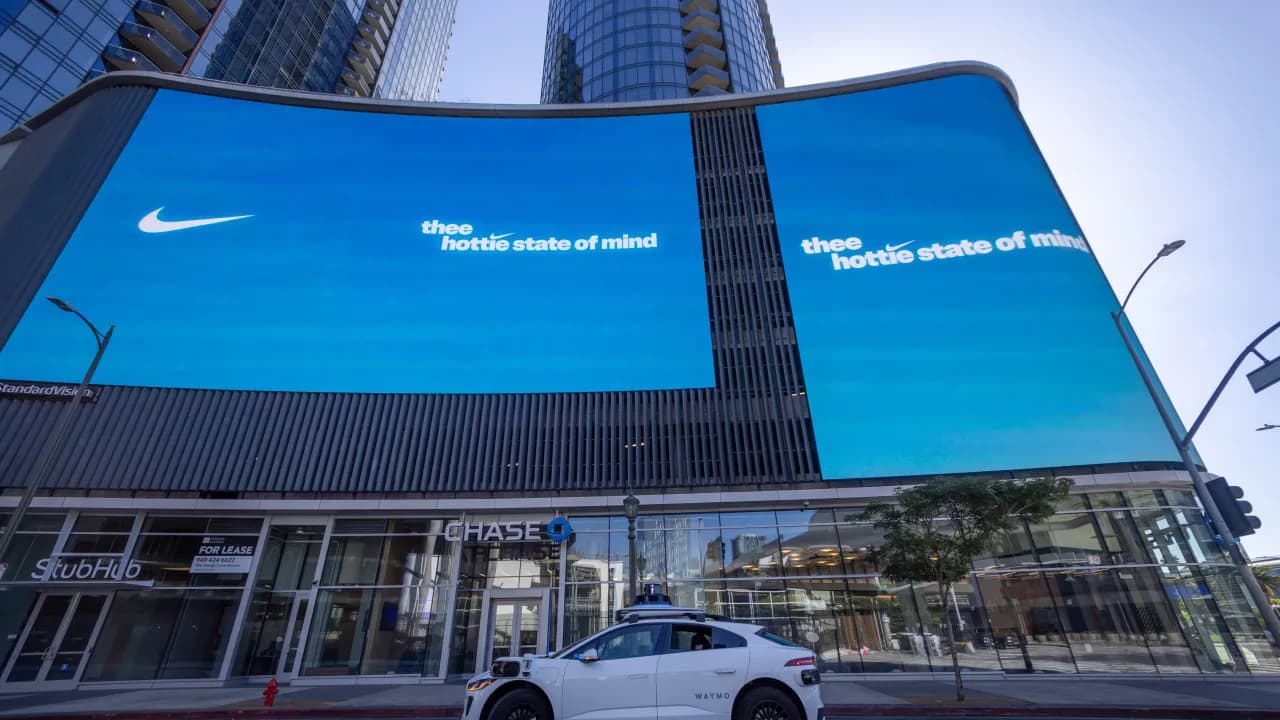
Alphabet remains Waymo’s majority owner, though the company did not disclose how much it invested in the round.
- Alphabet remains Waymo’s majority owner after a funding round led by Dragoneer, DST, and Sequoia.
- Waymo now delivers over 400,000 paid robotaxi rides each week across six U.S. cities.
- In 2026, Waymo plans to expand into additional U.S. cities and launch services in London and Tokyo.
Waymo, the self-driving car unit of Alphabet, said on Monday that it raised $16 billion in a new funding round that values the company at $126 billion on a post-money basis, nearly tripling its valuation in less than two years.
Alphabet In Control As Waymo Valuation Soars
Waymo said the funding round was led by Dragoneer Investment Group, DST Global and Sequoia Capital, with backing from investors including Andreessen Horowitz, Mubadala Capital, Bessemer Venture Partners, Silver Lake, Tiger Global and T. Rowe Price. Alphabet remains Waymo’s majority owner, though the company did not disclose how much it invested in the round.
The new valuation is more than double the $45 billion level Waymo achieved in its previous funding round in October 2024, when Alphabet committed $5 billion as part of a multiyear investment.
Autonomous Crash Rates Fall
The company said the fundraising builds on what they described as a safety record that is “statistically superior to human driving.”
Waymo vehicles have logged 127 million miles of fully autonomous operation and achieved a 90% reduction in serious injury crashes compared with human drivers. The company said it provided 15 million rides in 2025, more than tripling its annual volume from the prior year, and has now surpassed 20 million lifetime rides. Waymo currently delivers more than 400,000 paid rides per week across six major U.S. metropolitan areas.
Waymo Pulls Ahead In US Robotaxi Race
Waymo has established a clear commercial lead in autonomous ride-hailing in the U.S., operating fully driverless services without safety drivers or in-vehicle attendants. In some markets, such as Austin and Atlanta, it delivers rides through partnerships with Uber Technologies.
The company currently operates driverless, fare-charging robotaxi services in markets including Austin, the San Francisco Bay Area, Phoenix, Atlanta, Los Angeles and Miami. In 2026, Waymo plans to open service in cities such as Dallas, Denver, Detroit, Houston, Las Vegas, Nashville, Orlando, San Antonio, San Diego and Washington. It also plans to expand into London and Tokyo.
Rivals are still operating more limited deployments. Tesla has begun testing constrained driverless operations in Austin, while Amazon’s Zoox unit is running a small robotaxi fleet on the Las Vegas Strip and testing in other locations.
Waymo’s per-vehicle costs are roughly two to three times higher than Tesla’s, which could limit fleet growth and push Waymo to deepen partnerships with automakers, according to a report by Bloomberg.
Regulatory Spotlight
Waymo’s rapid expansion has also brought increased scrutiny. In December, the company issued a software recall after Texas officials said its robotaxis had illegally passed school buses multiple times. More recently, a Waymo vehicle struck a child near an elementary school in Santa Monica, California, an incident that is under investigation by the National Highway Traffic Safety Administration (NHTSA).
How Did Stocktwits Users React?
On Stocktwits, retail sentiment for Alphabet was ‘bullish’ amid ‘high’ message volume.

Alphabet’s stock has risen 68% over the past 12 months.
For updates and corrections, email newsroom[at]stocktwits[dot]com.<
