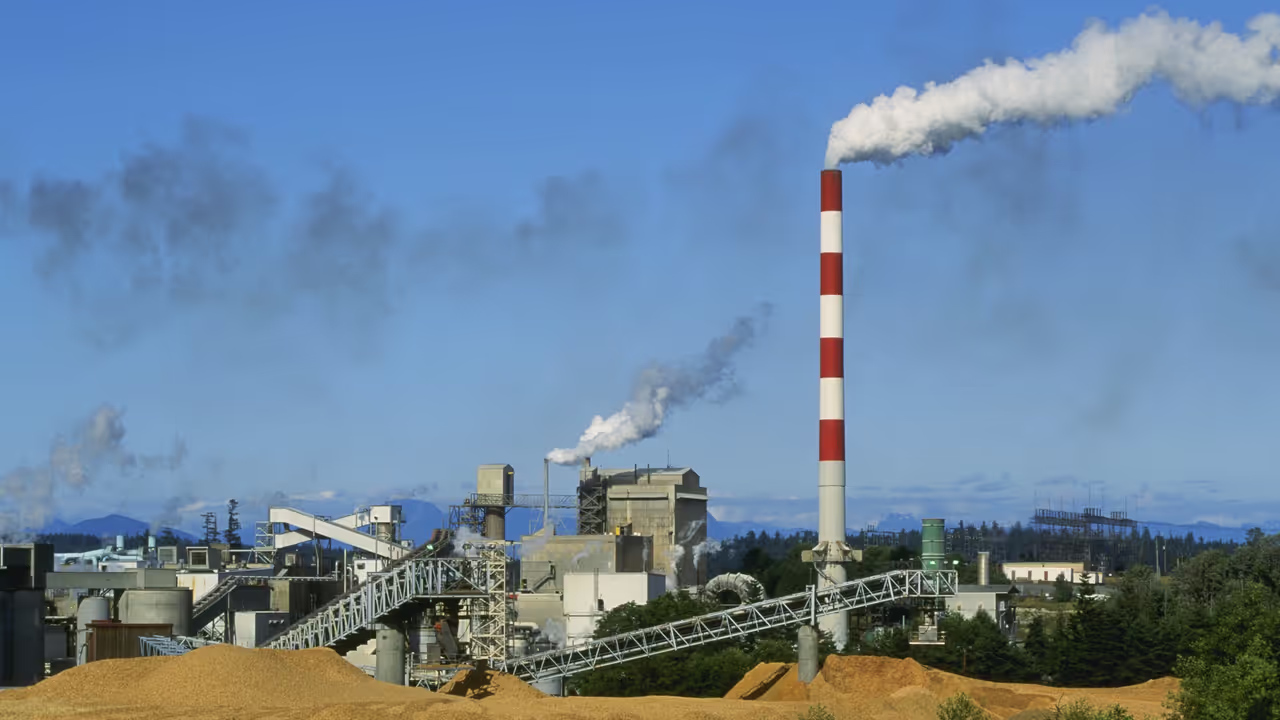
Lignin waste from paper mills has been transformed into a high-performance nickel–iron catalyst that boosts clean hydrogen production. The study shows a low-cost, durable, and scalable route to greener industrial water electrolysis.
Scientists in China have unveiled a breakthrough catalyst that could make clean hydrogen production far cheaper and more sustainable. In a new study published in Biochar X, researchers transformed lignin an abundant waste material from paper mills and biorefineries into high-performance carbon fibers that can dramatically improve the oxygen evolution reaction, one of the most energy-demanding steps in water electrolysis.
Turning a Low-Value Waste Into High-Value Energy Material
Lignin is produced in vast quantities globally but is typically burned for low-efficiency heat. The research team instead used electrospinning and controlled heat treatment to convert lignin into conductive carbon fibers. These were then loaded with nickel oxide and iron oxide nanoparticles, forming a catalyst known as NiO/Fe₃O₄@LCFs.
The resulting structure creates a stable, nitrogen-doped carbon network that offers fast electron transport, high surface area, and strong mechanical durability. Importantly, microscopic imaging revealed that the nickel and iron oxides form a nanoscale heterojunction—an interface that boosts catalytic activity by allowing reaction intermediates to bind and release at optimal speeds.
Related Articles

Fast Kinetics, Strong Stability, and Real-World Potential
Electrochemical tests confirmed impressive performance. The catalyst achieved a low overpotential of 250 mV at 10 mA/cm² and showed long-term stability for more than 50 hours under high current conditions, outperforming many single-metal catalysts.
The material also displayed a Tafel slope of 138 mV/dec, indicating rapid reaction kinetics. Further validation using in situ Raman spectroscopy and computational modelling strengthened the conclusion: the engineered nanoscale interface is the driving force behind the catalyst’s efficiency.
Because lignin is cheap, renewable, and globally plentiful, the approach offers a realistic route toward industrial-scale green hydrogen production without relying on precious metals like iridium or ruthenium. The researchers also note that the same strategy could be adapted for other metal combinations and catalytic reactions.
A Step Toward Affordable Clean Energy
By turning plant-based waste into a powerful catalyst, the study highlights the rising potential of biomass-derived materials in clean energy technologies. As nations ramp up hydrogen production ambitions, innovations like these could play a pivotal role in lowering costs and reducing environmental impact.