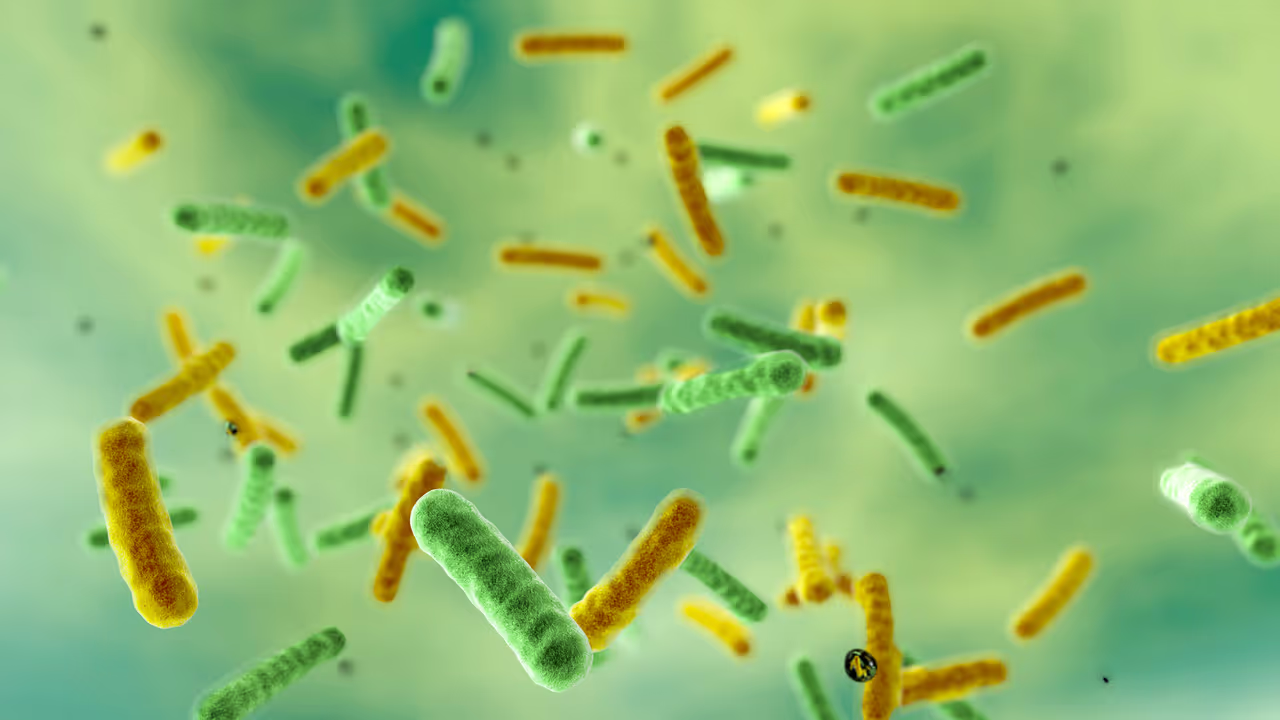
Researchers have developed a nanoparticle-infused vinegar that kills antibiotic-resistant bacteria and heals infected wounds safely. The breakthrough from the University of Bergen could revolutionize treatment for superbugs worldwide.
A simple kitchen ingredient could become a medical lifesaver. Scientists from the University of Bergen, together with teams from QIMR Berghofer and Flinders University, have found a way to dramatically enhance vinegar’s antibacterial power using nanotechnology.
Supercharged Vinegar Takes on Drug-Resistant Bacteria
Their breakthrough, published in the international journal ACS Nano, shows that when vinegar (acetic acid) is combined with carbon and cobalt-based nanoparticles, it becomes a potent solution capable of killing even the toughest antibiotic-resistant bacteria — without harming human cells.
For centuries, vinegar has been used as a natural disinfectant, but its germ-fighting ability was limited. This new “nano-vinegar” changes that. The researchers created cobalt-carbon quantum dots, tiny particles that intensify vinegar’s natural acidity and turn it into a dual-action killer — attacking bacteria both inside and outside their cell walls.
Related Articles

Dr. Adam Truskewycz and Professor Nils Halberg, who led the study, tested this enhanced solution against multiple bacterial species, including drug-resistant Staphylococcus aureus, E. coli, and Enterococcus faecalis. The results were remarkable.
Turning a Household Ingredient into a Lifesaving Innovation
“The vinegar’s acidity helps bacteria absorb the nanoparticles,” Dr. Truskewycz explained. “Once inside, the nanoparticles rupture the cells from within while also breaking down their outer walls. This completely wipes out the infection — safely and effectively.”
In experiments on mice with infected wounds, the nano-infused vinegar cleared the infections without slowing healing or harming tissue.
Professor Halberg emphasized that this innovation could become a vital tool in the global fight against antibiotic resistance — a crisis responsible for nearly 5 million deaths each year. “By combining traditional treatments like vinegar with cutting-edge nanotechnology,” he said, “we can outsmart bacteria that no longer respond to antibiotics.”
The research opens a new chapter in medicine — showing how a humble household ingredient, when supercharged with science, could one day save millions of lives.