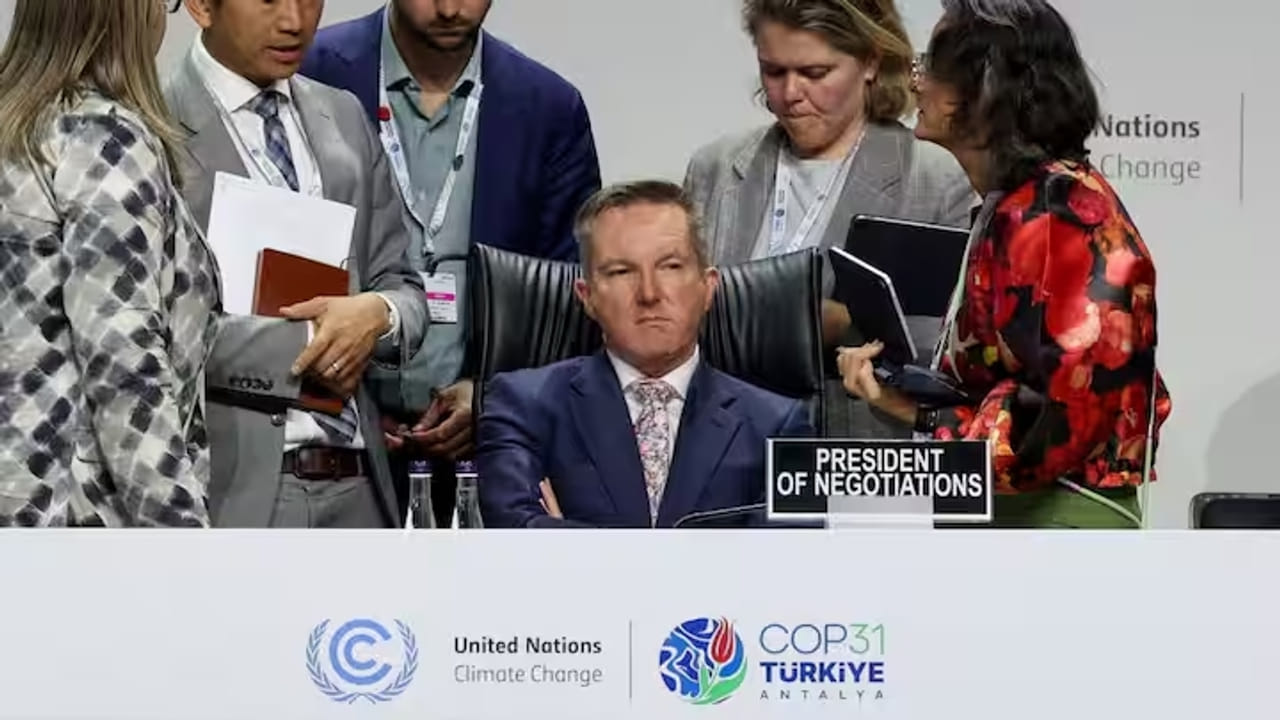
A major UN climate gathering closed without a final agreement after sharp divisions emerged among participating nations. The outcome has triggered political fallout, renewed criticism, and concern among vulnerable states.
The United Nations climate summit in Antalya ended without a final agreement after countries failed to bridge deep differences over how to address the role of fossil fuels in global warming, marking the first collapse of a COP conference outcome since the 2009 meeting in Copenhagen.
The talks, held under the COP31 banner and hosted by Turkey with Australia sharing leadership responsibilities, concluded after extended negotiations ran into record overtime. Delegates from more than 190 countries were unable to secure consensus on a closing text after the European Union and several other parties rejected a proposed agreement that omitted any reference to fossil fuels' contribution to climate change.
The outcome came at a particularly sensitive moment for international climate diplomacy. It was the first summit since the UN environmental body confirmed that global temperatures are on course to exceed the 1.5 degrees Celsius threshold that scientists have repeatedly warned would worsen the effects of extreme weather. The inability of governments to unite around a common position has intensified doubts about the effectiveness of the multilateral COP process.
Political repercussions were felt immediately in Australia, where opposition figures directed blame at Energy Minister Chris Bowen, who served as president of the COP31 negotiations. Angus Taylor, the opposition leader in parliament, called for Bowen's resignation, describing the summit's outcome as a major failure and arguing that responsibility rested with the minister overseeing the negotiations.
Bowen, speaking after the conference, attributed the breakdown to entrenched positions among participating countries and the rigid red lines maintained by many delegations on climate issues.
Inside parliament, opposition lawmakers also questioned Prime Minister Anthony Albanese about whether Bowen should remain in his role following Australia's expenditure of A$150 million on COP31. Albanese avoided directly addressing calls for Bowen's removal but reiterated his government's position on climate science and national interests.
Growing Concern Over the Multilateral Climate Process
The summit officially began on November 9 but stretched beyond its scheduled timeline as negotiators struggled to find common ground. Tensions had emerged even before formal discussions opened, with Australia and Turkey disagreeing over aspects of hosting responsibilities.
Attendance reached unprecedented levels. More than 92,000 people registered for the event, making it provisionally the largest UN climate conference on record. The United States did not send a delegation.
Last year's conference in Belém, Brazil, succeeded in producing an agreement, although it stopped short of securing a commitment to phase out fossil fuels.
China expressed disappointment over the failure to reach a deal. Foreign Ministry spokesperson Guo Jiakun said the result should not undermine confidence in multilateral cooperation, emphasizing that climate action remains a shared responsibility for all nations and describing the shift toward low-carbon development as irreversible.
India also stressed its continued commitment to engagement. Bhupender Yadav, who headed the country's delegation, said India worked constructively with conference leaders and participating governments throughout the negotiations. While acknowledging concerns about some parts of the proposed decision text, he said efforts to build consensus continued until the final stages of the summit.
Among the strongest reactions came from Pacific island nations facing rising sea levels and other climate-related threats. The Marshall Islands delegation said vulnerable countries had been failed from multiple directions.
Tuvalu also criticized the process, citing concerns over limited engagement and transparency during efforts to finalize a closing statement. Climate Minister Maina Talia said it was disappointing to hear views that undermined the credibility of evidence pointing to climate change and warned that insufficient commitment had left the world further from its agreed temperature goals.