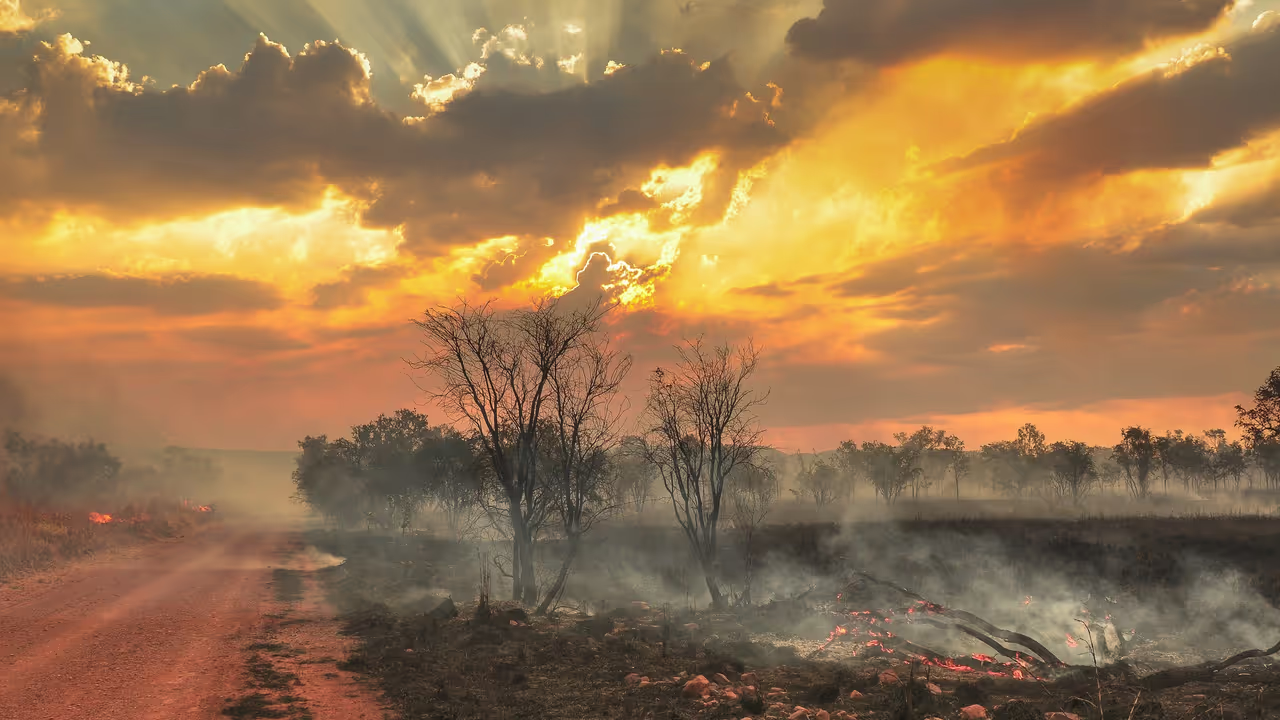
A severe heatwave gripping Australia has pushed temperatures past 40C, raising fears of catastrophic bushfires across Victoria and New South Wales, with authorities urging residents to prepare as extreme heat and dry storms fuel fire conditions.
Millions of Australians were Thursday warned to prepare for a stifling heatwave stoking the risk of “catastrophic” bushfires across swathes of the country.
Temperatures are forecast to soar past 40C in parts of southeast Australia, fueling some of the most dangerous bushfire conditions seen since the “Black Summer” blazes of 2019–2020.
Fire danger reaches “catastrophic” levels
Victoria Country Fire Authority boss Jason Heffernan said the fire danger rating for some rural areas would hit “catastrophic” by Friday.
Related Articles

“This is the worst conditions that fire can burn in,” he told national broadcaster ABC.
“Australian homes aren’t designed to withstand fire conditions that have been predicted in some parts of the state.
“Which is why we’re asking the community to make preparations today.”
Firefighters are already trying to contain blazes dotted across the states of Victoria and New South Wales.
Authorities fear a small number of properties have been destroyed near the rural town of Longwood, about 150 kilometres (90 miles) north of Victoria’s capital Melbourne.
Extreme heat and dry thunderstorms raise risks
Government forecaster Sarah Scully said a band of “extreme” heat had settled across the country.
“There’s also dry thunderstorms forecast across Victoria and southern New South Wales,” she said.
“Those dry thunderstorms have very little rainfall in them, but they can ignite new fires.”
Climate change fuels extreme conditions
The “Black Summer” bushfires raged across Australia’s eastern seaboard from late 2019 to early 2020, razing swathes of forest, destroying thousands of homes and blanketing cities in noxious smoke.
Australia’s climate has warmed by an average of 1.51C since 1910, researchers have found, fueling increasingly frequent extreme weather patterns over both land and sea.
Australia remains one of the world’s largest producers and exporters of gas and coal, two key fossil fuels that are blamed for global heating.
Disclaimer: Except for the headline, this story has not been edited by Asianet Newsable English staff and is published from a syndicated feed.