
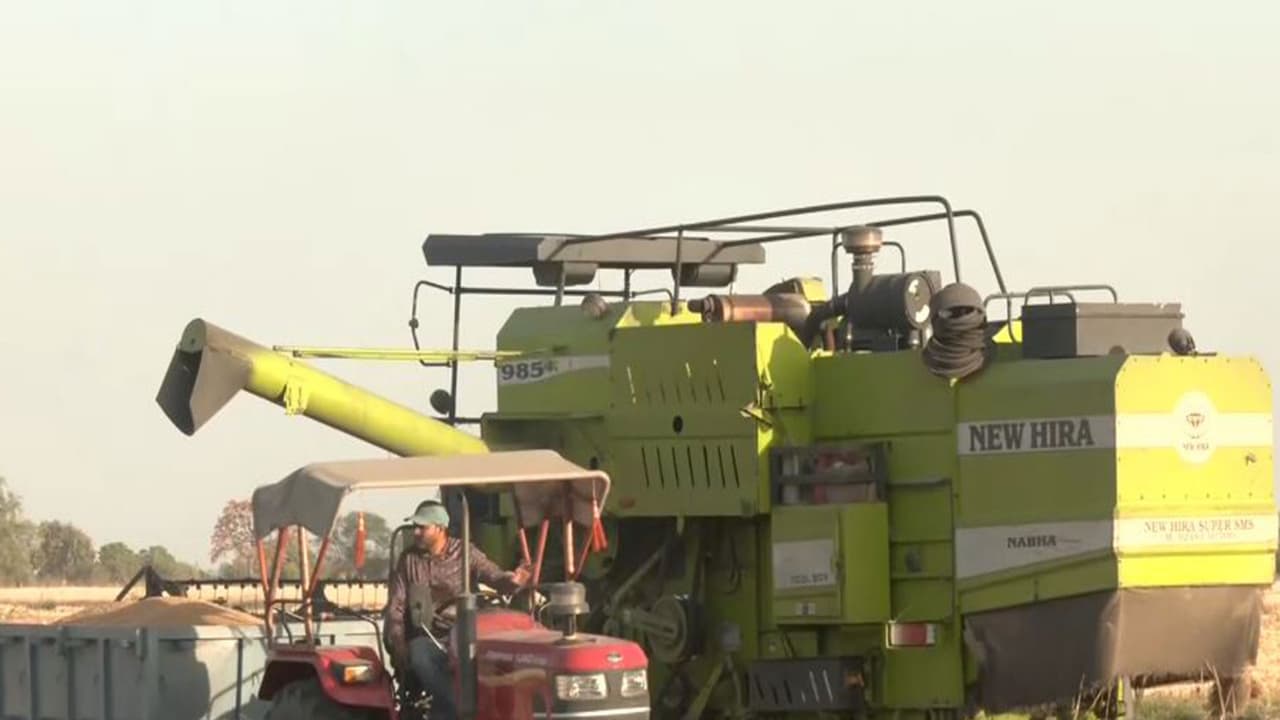
The West Asia conflict is disrupting fertiliser supplies, raising concerns among Indian farmers about crop yields and food prices. Farmers in Madhya Pradesh report black marketing and urge government action to prevent future shortages.
The ongoing West Asia conflict is affecting fertiliser supplies for Indian farmers, raising concerns about potential drops in agricultural yields and increases in food prices. Farmers in Madhya Pradesh, particularly in Bhopal, have urged the government to make proactive arrangements to meet future requirements, citing challenges faced during the previous Rabi and Kharif seasons and issues with black marketing.

Farmers Voice Concerns
A farmer, Kapil Patidar, told ANI, "During our previous Rabi season, when we could not procure Diammonium Phosphate (DAP), we resorted to farming by purchasing its alternative, NPK, [Nitrogen (N), Phosphorus (P), and Potassium (K)] on the black market. We do have hope in the government; however, the government must ensure it maintains adequate reserves and restores the previous system, under which fertilisers were easily accessible. In the current climate, procuring fertiliser has become extremely difficult; it has become as precious as gold or silver."
Commenting on the fertiliser shortage caused by the conflict, farmer Kailash Narayan Patidar told ANI, "Fertiliser shortages have occurred in the past as well; however, if this conflict drags on, the difficulties will only escalate. Should the war persist, the scarcity of fertilisers will become even more acute. Petroleum products, which are intrinsically linked to this sector, are imported from abroad."
Another farmer, Chatur Narayan Patidar, said to ANI, "The conflict is bound to cause a severe shortage of fertilisers, particularly as the paddy crop is about to be sown, a process that requires fertilisers in substantial quantities. There is already a prevailing shortage of fertilisers; we received insufficient supplies last season, and this time around, it appears we won't receive any at all. If supplies cease to arrive from abroad, how are we expected to procure the fertiliser we need?" In such a scenario, inflation is bound to rise; if fertiliser supplies fail to arrive, people will resort to selling them at arbitrary, exorbitant prices."
Expert Cites Logistical Hurdles and Price Surge
Regarding the fertiliser shortage, expert Yogesh Dwivedi told ANI, "India's imports of oil and fertilisers are being adversely affected due to the ongoing conflict. The Government of India is actively working to address this situation; however, priority is currently being given to clearing shipments of LPG tankers. Consequently, ships carrying fertilisers remain stalled. The government had, however, already built up a stockpile of fertilisers back in February."
"While the immediate impact of this situation may not be apparent, its effects could become visible in the near future. A significant number of our cargo vessels remain stranded. The price of Urea has already surged; what previously cost $450 per metric ton has now risen to $600 per metric ton. Similarly, the price of DAP has increased by approximately $25. Furthermore, imports of various gases, sourced from nations such as Oman, Saudi Arabia, and Russia, could also face disruptions," Dwivedi added.
Domestic Production and Economy Under Threat
Regarding domestically produced fertilisers, experts point out that numerous manufacturing plants are operational across the country. However, the raw materials and other inputs required for these fertilisers are imported from Gulf nations such as Bahrain, Kuwait, Oman, Qatar, Saudi Arabia, and the UAE. Given the logistical hurdles affecting ships traversing the Strait of Hormuz, farmers may face significant difficulties in the times ahead.
Moreover, a recent report released by Crisil Ratings stated that supply chain disruptions stemming from the ongoing conflict in the West Asia can potentially impact annual domestic production of both complex fertilisers and urea by 10-15 per cent. Profitability of manufacturers could decline amid lower capacity utilisation due to supply constraints of key raw materials.
The report further noted that the increase in prices of raw materials and imported fertilisers is likely to increase the working capital requirement of players and also raise the subsidy bill of the government by Rs 20,000-25,000 crore.
Conflict Background
The conflict in West Asia began with Israel-US strikes on Iran on February 28, killing Supreme Leader Ayatollah Ali Khamenei. As Iran retaliated, it widened the ambit of the conflict, affecting its neighbours in the region. (ANI)
(Except for the headline, this story has not been edited by Asianet Newsable English staff and is published from a syndicated feed.)