
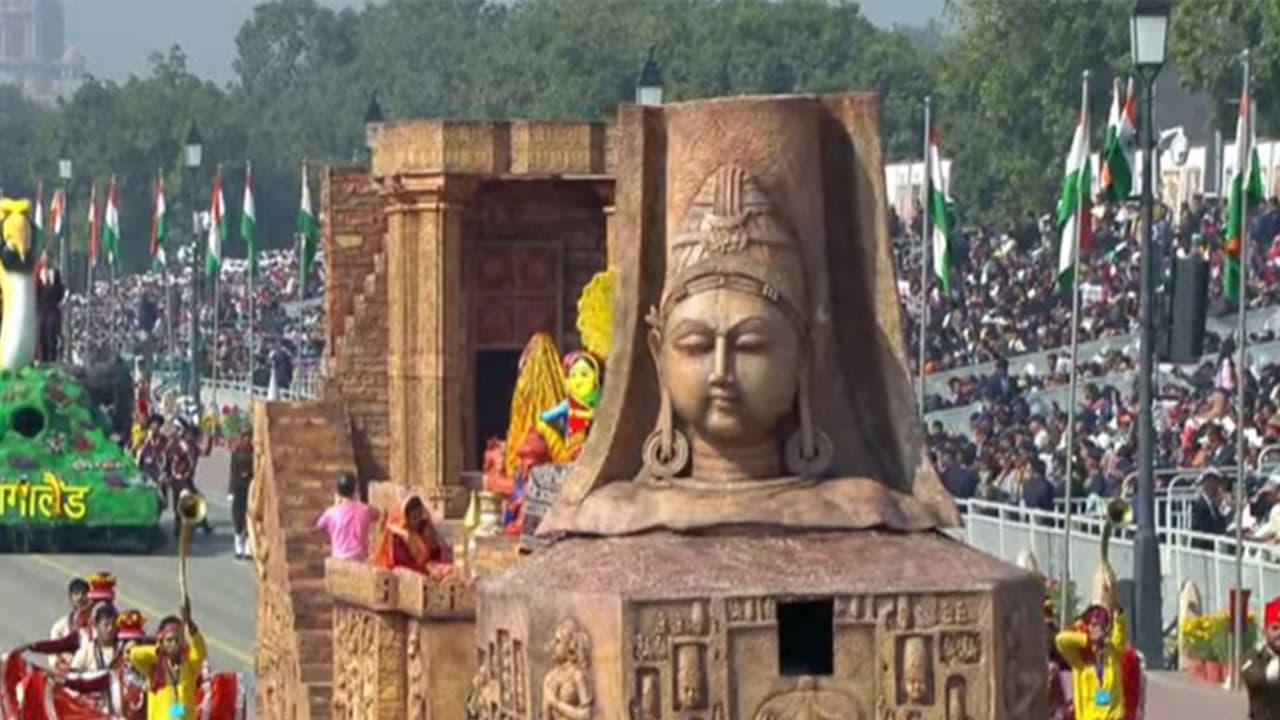
The Uttar Pradesh tableau at the 77th Republic Day parade showcased Bundelkhand's cultural heritage and modern progress. It featured the Ekamukha Linga, Kalinjar Fort, ODOP crafts, and a depiction of the state's industrial growth. (ANI)
UP Tableau Blends Heritage and Modernity
As the Uttar Pradesh tableau marched down the Kartavya path during the 77th Republic Day celebrations, it depicted Bundelkhand's timeless grandeur, seamlessly blending its ancient cultural legacy with a dynamic and rapidly evolving vision of modern Uttar Pradesh.
The front section features the Ekamukha Linga, one of the most celebrated rock-cut sculptures of Kalinjar, symbolising Bundelkhand's deep spiritual roots and extraordinary architectural heritage.
The middle portion showcases Bundelkhand's living craft traditions, including pottery, beadwork, and vibrant local haats. These crafts, recognised as ODOP (One District One Product) items of the Bundelkhand region, represent the cultural ethos and economic backbone of the area, highlighting self-reliance through traditional livelihoods.
Rising prominently is the majestic depiction of Kalinjar Fort, with its carved stone pillars and gateways. Visitors exploring its historic corridors emphasise the fort's importance as a symbol of Bundelkhand's resilience and as a significant cultural and tourism landmark.
The rear section of the trailer features the revered Neelkanth Mahadev Temple, reinforcing the region's spiritual and historical significance. Traditional Bundeli folk dancers add colour, rhythm, and movement, reflecting the vibrant cultural identity of the region.
The tableau then transitions into a powerful portrayal of modern Uttar Pradesh, framed within a fort-inspired architectural facade. Visuals of expressways, industrial growth, infrastructure development, and new-age manufacturing depict a state confidently advancing towards progress.
Significance of Republic Day
Republic Day marks a defining milestone in India's national journey. It marks the day the Constitution of India came into force on January 26, 1950, formally establishing the country as a 'Sovereign Democratic Republic'. While independence on August 15, 1947, ended colonial rule, it was the adoption of the Constitution that completed India's transition to self-governance based on law, institutional accountability, and the will of the Indians.
Grand Celebrations at Kartavya Path
President Droupadi Murmu presided over the grand celebrations on Kartavya Path in New Delhi. The President of the European Council, Antonio Costa, and the President of the European Commission, Ursula von der Leyen, attended as the Chief Guests on this momentous occasion.
This year, Kartavya Path, stretching from Rashtrapati Bhawan to the National War Memorial, has been elaborately decorated to showcase India's remarkable journey. The celebrations feature an extraordinary blend of the 150-year legacy of the national song Vande Mataram, the country's unprecedented developmental progress, robust military strength, vibrant cultural diversity, and active participation from citizens across all walks of life. (ANI)
(Except for the headline, this story has not been edited by Asianet Newsable English staff and is published from a syndicated feed.)