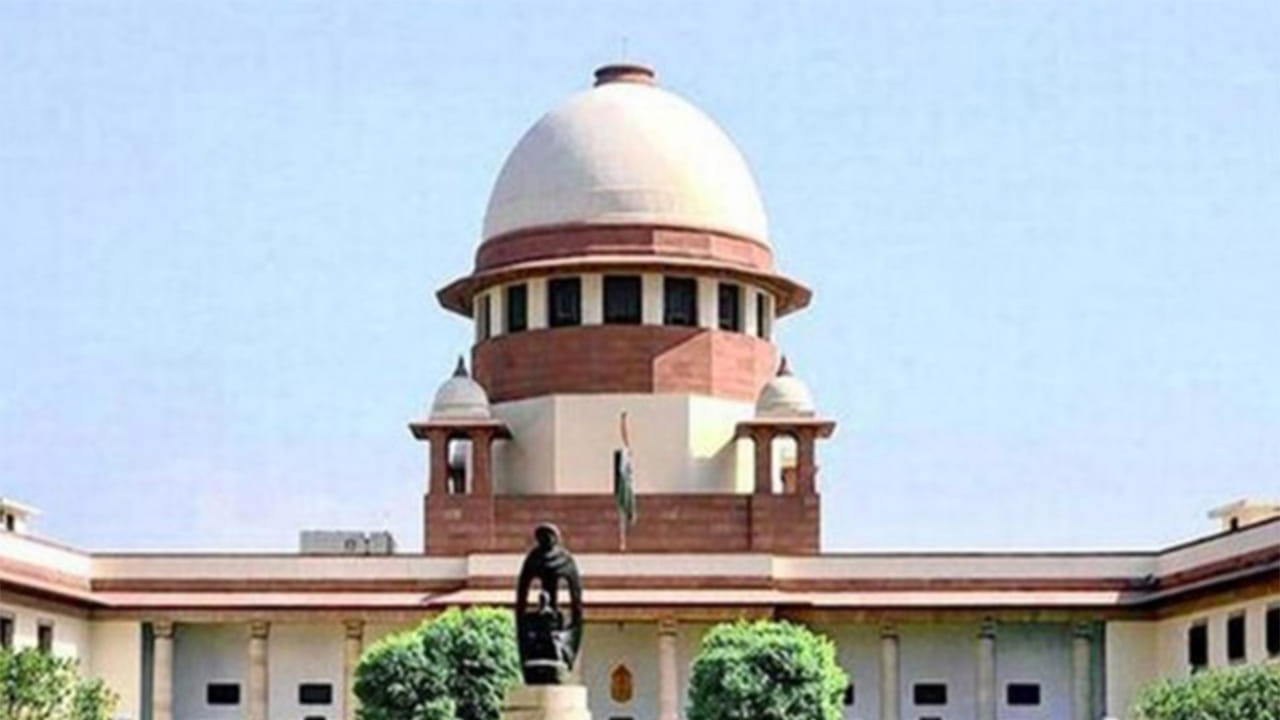
The Supreme Court rejected Karix Mobile's plea against Onextel's selection for a government messaging tender, confirming the Delhi High Court's dismissal and imposing costs on the petitioner for disrupting the established tender process.
New Delhi [India], November 26 (ANI): The Supreme Court has dismissed a plea filed by Karix Mobile Pvt Ltd challenging the empanelment of Onextel Limited under the Government of India’s messaging gateway services tender issued by National Informatics Centre Services Inc. (NICSI), imposing costs of Rs 50,000 on the petitioner. A bench of Justices Pamidighantam Sri Narasimha and Alok Aradhe, in an order dated November 23, 2026, refused to interfere with the Delhi High Court’s April 2 judgment dismissing Karix’s challenge to Onextel’s empanelment. “We are not inclined to interfere with the order passed by the High Court,” the Supreme Court said. The bench accordingly dismissed Karix’s Special Leave Petition and directed the company to pay Rs 50,000 as costs to the Supreme Court Advocate-on-Record Association (SCAORA) within three weeks. It also directed that all pending applications, including intervention and impleadment applications, stand disposed of.
The dispute arose from NICSI’s tender for implementation of Message Gateway Services of the Government of India. Under the empanelment, Onextel was allocated 70 per cent of the messaging traffic, while Netcore was allocated the remaining 30 per cent. Karix emerged as the third-lowest bidder and was not empanelled. Karix had approached the Delhi High Court challenging the Letter of Empanelment issued to Onextel on December 26, 2025. It alleged that Onextel had submitted an invalid CMMI Level 5 certification issued by UK Certification & Inspection Ltd (UKCert), which, according to Karix, was not authorised by ISACA to issue such certifications. Karix contended that a valid CMMI Level 3 or above certification was a mandatory eligibility condition and that acceptance of Onextel’s certificate had vitiated the tender process.
However, a division bench of Justices V Kameswar Rao and Manmeet Pritam Singh Arora dismissed the writ petition on April 2, 2026, holding that the tender conditions did not mandate that the CMMI certification be issued exclusively by ISACA or its authorised partners. “The condition of CMMI certification under the subject tender in Corrigendum No. VI does not mandate that the certification should be from any specific or exclusive entity i.e., ISACA or its approved partners,” the High Court observed. The High Court noted that NICSI had constituted a committee of technical experts to examine the objections raised by Karix. The committee, following its examination, concluded that the certificate issued by UKCert was valid and satisfied the tender’s eligibility conditions.
The bench also observed that Karix had access to the technical bid documents, including Onextel’s CMMI certificate, when the technical evaluation results were declared on October 30, 2025, but did not raise an objection at that stage. It approached the court only after the financial bids were opened on December 26, 2025, when it emerged as the third-lowest bidder. The High Court further observed that judicial review in tender matters was limited to examining the decision-making process and did not extend to substituting the court’s view for that of technical expert bodies. “The petitioner is merely an unsuccessful party, who is seeking out reasons to interfere in the implementation of LoE,” the bench observed. The court also took note of the public interest involved in ensuring uninterrupted government messaging services, observing that Karix’s extended contract was due to expire on March 31, 2026, while the new service providers were scheduled to commence operations from April 1, 2026. “In these facts, any interdiction of the tender process by the Court will be clearly against public interest,” the High Court said while dismissing the petition. The High Court, however, advised NICSI to clearly specify in future tender documents whether CMMI certifications were required to be obtained from a particular authorised agency, so as to avoid similar disputes.