
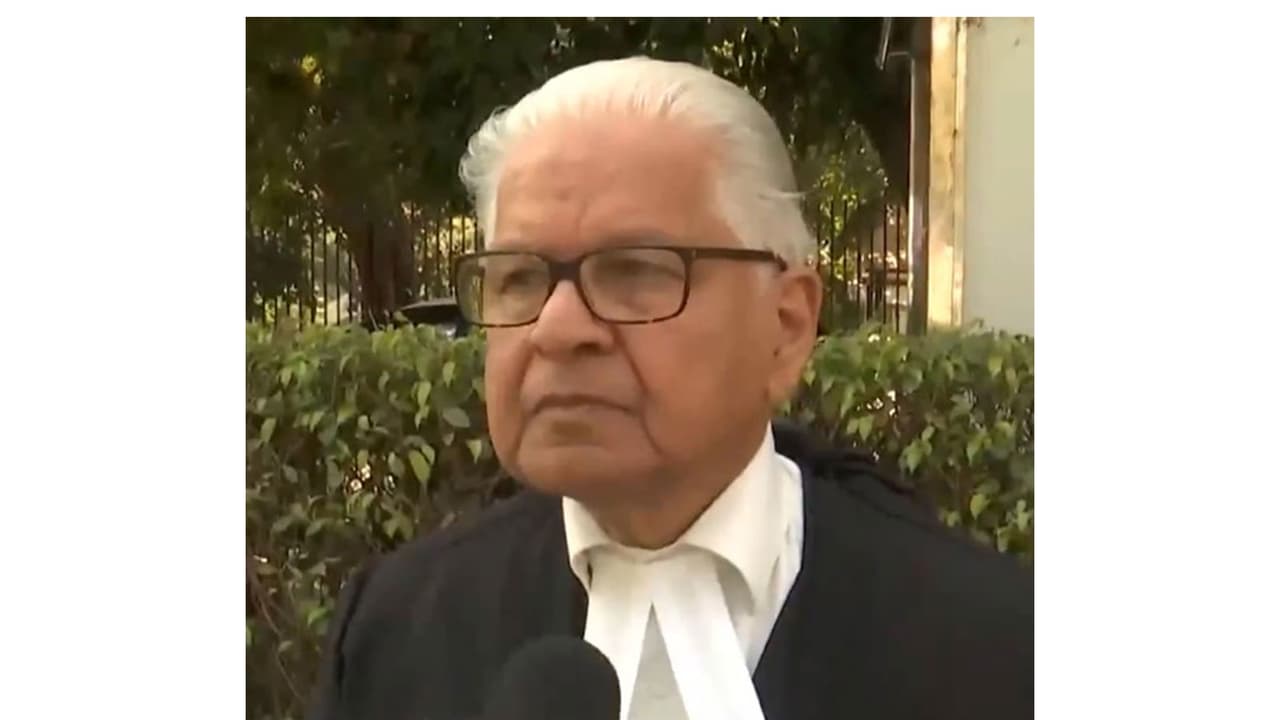
The Supreme Court took suo moto cognisance of an NCERT Class 8 textbook chapter on judicial corruption. Former Law Minister Ashwani Kumar praised the move, while the CJI vowed to prevent the institution's denigration over the "calculated" inclusion.
As the Supreme Court took suo moto cognisance of NCERT's class eighth study curriculum, former Law Minister Ashwani Kumar on Wednesday said that he could affirm, "without any fear of contradiction," that the judiciary, as one of the pillars of Indian democracy, has rendered stellar service in upholding individual rights, promoting justice, and strengthening democracy in the country. He further emphasised that the judiciary is a venerable institution, and any attempt to legitimise narratives labelling it as corrupt is completely unacceptable. He praised the Chief Justice for taking the appropriate steps to prevent the denigration of the judiciary.
"I am delighted that the Supreme Court has taken suo moto cognisance...I can say without any fear of contradiction that, amongst the pillars of Indian democracy, the judiciary as a branch of the Indian Republic has done a stellar service in promoting individual rights, promoting justice and promoting democracy in this country. I think the judiciary is a venerable institution and any attempt to sanctify such propaganda as judicial corruption is wholly impermissible and wholly unacceptable...The Chief Justice has taken the correct step in the matter to prevent the denigration of the judiciary as an institution," Ashwani Kumar told ANI.
Supreme Court Initiates Suo Moto Proceedings
The Supreme Court on Wednesday initiated suo moto proceedings regarding the inclusion of a section on "corruption in the judiciary" within the new NCERT class 8 (Eighth) Social Science textbook, with Chief Justice of India Surya Kant asserting that the institution will not be allowed to be defamed.
"I'm fully aware of it. We will wait for a day. This definitely concerns the entire institution. Both bar and bench. I am getting a lot of calls, lots of messages. I'm taking suo moto cognisance of the issue. I will not let anybody, no matter how high up they are, defame the institution," the Chief Justice said.
Senior lawyers Kapil Sibal and Abhishek M Singhvi mentioned the issue before the CJI-led bench and stated that children are being taught the subject of corruption in the judiciary as if it doesn't exist anywhere else in any other institution.
"They have left out bureaucracy, politics, etc. Not a word on other sectors. They are teaching as if it only exists in this institution", the lawyers said.
The CJI, in response, acknowledged the seriousness of the issue and said that "it's a calculated and deep-rooted thing. We will not say anything more than that. As head of the institution, I'm aware, I'm already doing something about it."
Background on Textbook and Criticism
Earlier, it was reported that the National Council of Educational Research and Training (NCERT) has introduced a section on "corruption in the judiciary" in its new Class 8 Social Science textbook, marking a significant shift from earlier editions that largely focused on the structure and role of courts. The revised chapter, titled "The Role of the Judiciary in Our Society," goes beyond explaining the hierarchy of courts and access to justice, and addresses challenges faced by the judicial system, including corruption and case backlogs.
On Tuesday, Senior Advocate Kapil Sibal criticised the National Council of Educational Research and Training (NCERT) over a newly added section in its Class 8 textbook on corruption in the judiciary, questioning why corruption in other sectors is not addressed. "NCERT's Class 8 book includes a section on corruption in the judiciary! What about the massive corruption of politicians, including ministers, public servants, investigation agencies, and why governments? Brush them under the carpet," Sibal stated in his post on X. (ANI) .
(Except for the headline, this story has not been edited by Asianet Newsable English staff and is published from a syndicated feed.)