
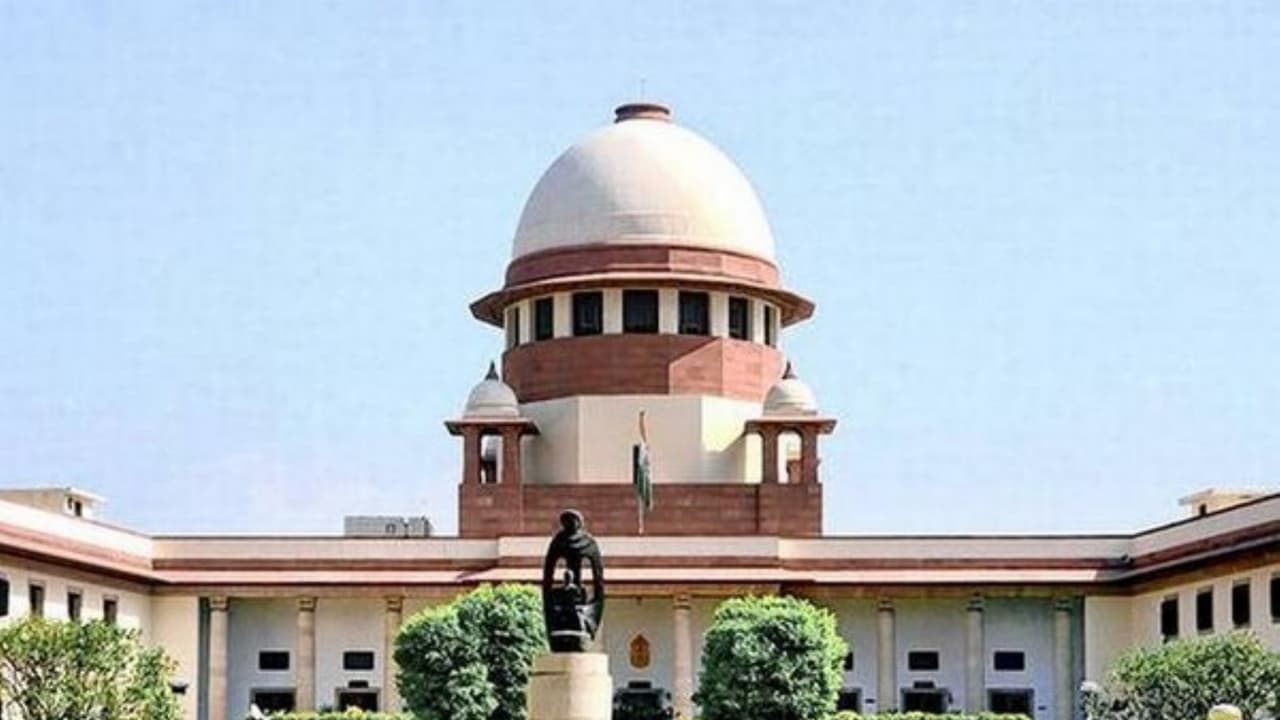
The Supreme Court has ordered authorities to lift the shutdown of Delhi Metro and train services imposed for a protest, calling the complete ban 'overreaching'. It directed services be regulated to avoid public inconvenience.
The Supreme Court on Friday directed the authorities to lift the ‘shut down’ of 57 Delhi metro trains and certain Indian railways trains to Delhi that had been imposed ahead of a proposed peaceful protest at Jantar Mantar on October 10 over alleged irregularities in the Special Intensive Revision (SIR) of electoral rolls and the functioning of the Election Commission of India and the office of CEC Gyanesh Kumar.
The restrictions followed a police communication citing the potential for “unruly mob movements towards sensitive locations”. The communication directed the Delhi Metro Rail Corporation to reduce Metro frequency and close entry and exit gates at 57 stations from 9 pm on October 9 until the situation normalised. The Railways, meanwhile, instructed that Mail/Express trains arriving at New Delhi and Hazrat Nizamuddin railway stations be cancelled or cease operations.
SC terms restrictions 'overreaching'
A three-judge bench headed by Chief Justice of India (CJI) Surya Kant India (CJI) Surya Kant and comprising Justices Joymalya Bagchi and V. Mohana held that the restrictions were “overreaching” as they effectively imposed a complete ban on essential public transportation. The Court drew a distinction between completely prohibiting public transport and regulating its operation to deal with a law-and-order situation. “It appears that the notifications are overreaching, as they impose a complete ban upon essential public transportation”, it said.
The Court asked the Solicitor General of India (SGI) Tushar Mehta, representing the Centre, to reconsider its restrictions and relax them to only a regulatory exercise that would not cause inconvenience to the common citizenry of Delhi, the people who would be travelling within the city to earn their livelihoods and may not participate in the protest. The Court also noted the SG’s assurance that the authorities would reassess the prohibitions. It directed that Metro and other rail services be permitted to operate in a regulated manner, while ensuring that residents and the general public of Delhi are not inconvenienced and that the principle of proportionality is followed by the authorities.
Petition challenges widespread transport ban
The Court made it clear that there could be no outright prohibition on Metro movement. It said authorities could take a “prudent decision” on how Metro and other rail services should operate, but any such arrangement must be suitable and regulated. The decision was also directed to be widely publicised so that commuters were aware of the prevailing arrangements.
The restrictions had been imposed in the backdrop of the October 10 protest at Jantar Mantar. The petition filed by CPI(M) General Secretary M.A. Baby said the protest had been called by students’ organisations, civil society groups and political parties over the SIR exercise and the functioning of the Election Commission. According to the petition, the organisers had informed the Delhi Police in writing and had repeatedly committed to maintaining peace.
The petition challenged the restrictions on the ground that measures aimed at regulating the protest had instead affected the movement of people across Delhi and those travelling to the capital. It said the 57 Metro stations were spread across Central, South, North, North-West, North-East and East Delhi and were not limited to areas around Jantar Mantar. The list included stations serving universities, hospitals, courts, interchange points and residential areas.
The petition also challenged the cancellation of Mail/Express trains scheduled to reach New Delhi and Hazrat Nizamuddin between 4 am and 2 pm on October 10. It specifically referred to the Howrah-New Delhi and Sealdah-New Delhi Rajdhani Express trains. The petitioner argued that the restrictions affected commuters, patients, students, workers, litigants and other travellers who had no connection with the protest.
Baby sought quashing of the October 8 communication directing the Metro restrictions and setting aside of the railway cancellations. He also sought directions permitting the peaceful protest at Jantar Mantar while regulating it through lawful crowd-management measures, and protection against detention merely for travelling to Delhi to participate in the protest. The petition argued that the Metro communication did not cite a statutory provision or an order of a District or Executive Magistrate and relied on an apprehended “likelihood of unruly mob movement”. It further argued that the closure had no fixed end date, as it was to continue “till the situation normalises”, and that less restrictive measures such as regulated entry, crowd management, designated routes or limited restrictions around the protest site could have been considered.
Court issues further directions
The senior lawyers who had appeared against the cessation of Metro and rail services clarified that they did not represent the proposed protesters or organisers but were concerned about the right of peaceful protesters. The Court, however, confined the issue before it to the validity of the absolute prohibition on movement of Metro and trains from New Delhi and Hazrat Nizamuddin.
The Court has also given organisers of the protest the liberty to approach the Court through an urgent petition. Separately, it also directed authorities to come up with designated sites and the appropriate infrastructure for such protests on the petitioners’ submission that amenities must be provided to peaceful protesters. The Court also directed that a traffic advisory be published in newspapers and online to facilitate smooth movement of vehicles and prevent hardship to people travelling within Delhi. The Delhi Metro Rail Corporation, the concerned Railway authorities and Delhi Police (Traffic) have been directed to file a compliance report within four days. (ANI)
(Except for the headline, this story has not been edited by Asianet Newsable English staff and is published from a syndicated feed.)
