
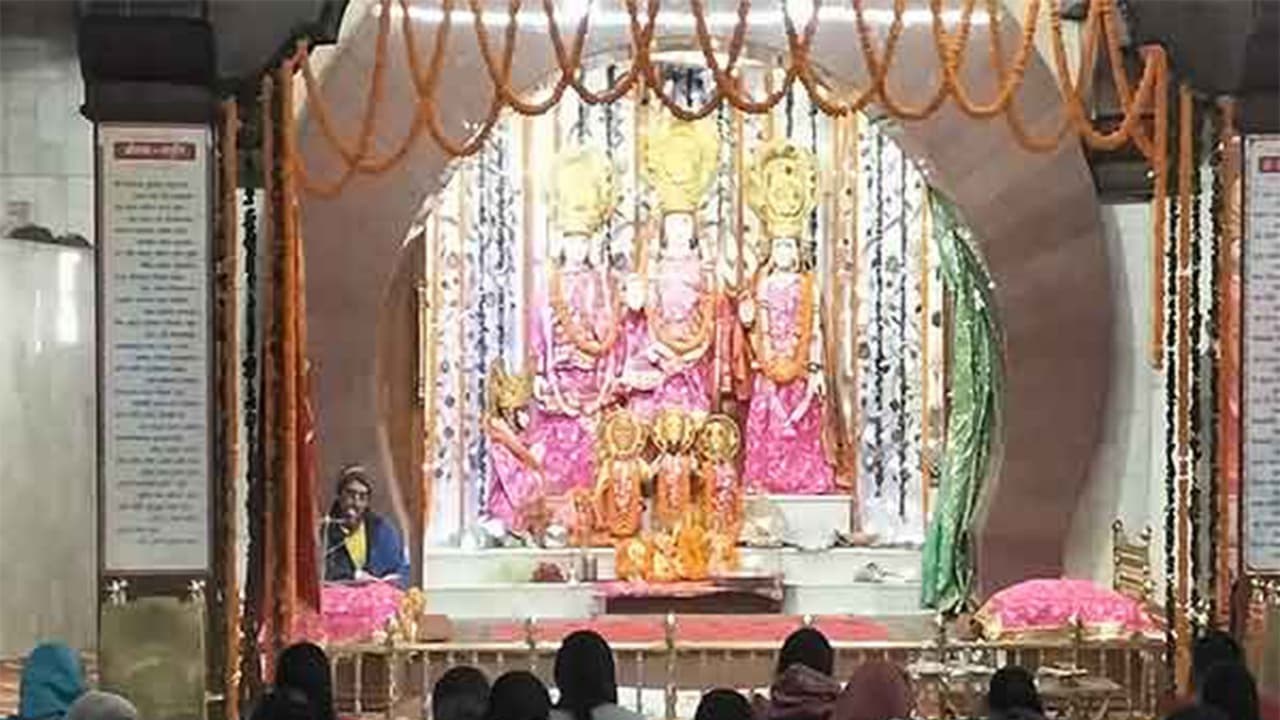
Devotees gathered in large numbers at Shimla's historic Ram Mandir to celebrate Ram Navami. The celebrations included special prayers, yajna rituals, Ram Katha recitations, and a community feast (bhandara) after a nine-day programme.
Devotees gathered in large numbers at the historic Ram Mandir in Shimla to celebrate Ram Navami, offering special prayers, participating in yajna rituals, and attending Ram Katha recitations.
Spiritual Significance of Ram Navami
Local priest Sukhdev Shastri, while speaking with ANI, explained the spiritual significance of Lord Ram's incarnation. "God takes incarnations to destroy evil and unrighteousness. Lord Ram is known as Maryada Purushottam, and the main purpose of celebrating Ram Navami is to follow his ideals in life." He added that the festival reminds people to walk on the path of righteousness and adopt values such as discipline, respect for elders, and devotion to duty. Shastri also noted that continuous recitation of the Ramcharitmanas had been taking place since the beginning of Navratri and concluded on Ram Navami, followed by a community feast (bhandara).
Temple President on Celebrations and Legacy
Rajiv Sood, president of the Shimla Sood Sabha that manages the temple, extended greetings on the occasion "First of all, I would like to congratulate everyone on Ram Navami. Every year, devotees gather here at the Ram Mandir, where celebrations begin from the first day of Navratri. As per tradition, an invitation is first offered to Kali Mata, after which the main recitation of the Ramayana begins at the temple."
"This year, Acharya Prem Ji from Kandaghat, along with his team of reciters and musicians, conducted the programme, which continued for eight days. Today, both the eighth and ninth day rituals are being observed together, followed by a yajna, Ram Katha from 11 am to 1 pm, and a grand bhandara open to people from all walks of life." He added.
Cultural and Astronomical Context
Highlighting the cultural context, Sood remarked, "Many people consider this period as the Hindu New Year. In fact, I call it a 'scientific New Year' because it is based on nature and astronomical calculations, unlike the Gregorian calendar."
History of the Ram Mandir
Speaking about the temple's history, he said, "The temple is very old, and the idols are believed to be around 160-170 years old. However, the present structure and the installation of idols took place on June 26, 1988. Interestingly, today's date also coincides with June 26, 2026, making it a rare and auspicious coincidence according to both the Gregorian and Hindu calendars."
Developmental Challenges
Sood also touched upon developmental challenges, stating, "Due to environmental concerns and restrictions on tree cutting, expansion work faces technical hurdles. Our religion also teaches us to work in harmony with nature, so we will proceed accordingly."
Relevance of Lord Ram's Ideals
Emphasising the relevance of Lord Ram's teachings, he said, "Lord Ram is called Maryada Purushottam. His life teaches us leadership, management, respect for elders, and equality for all--whether it was Shabari or Nishad Raj, there was no discrimination. Society should rise and follow these ideals so that everyone attains happiness and prosperity."
The celebrations concluded with rituals, recitations, and the distribution of prasad during the bhandara, drawing participation from devotees across the region.
(Except for the headline, this story has not been edited by Asianet Newsable English staff and is published from a syndicated feed.)