
In the grand scheme of things, this moment has the potential to mark a turning point in India's journey toward becoming a Vishwa Guru (world leader). The success of this mission is poised to cultivate confidence and self-belief among Indians, says Barclays Vice President Shishu Ranjan
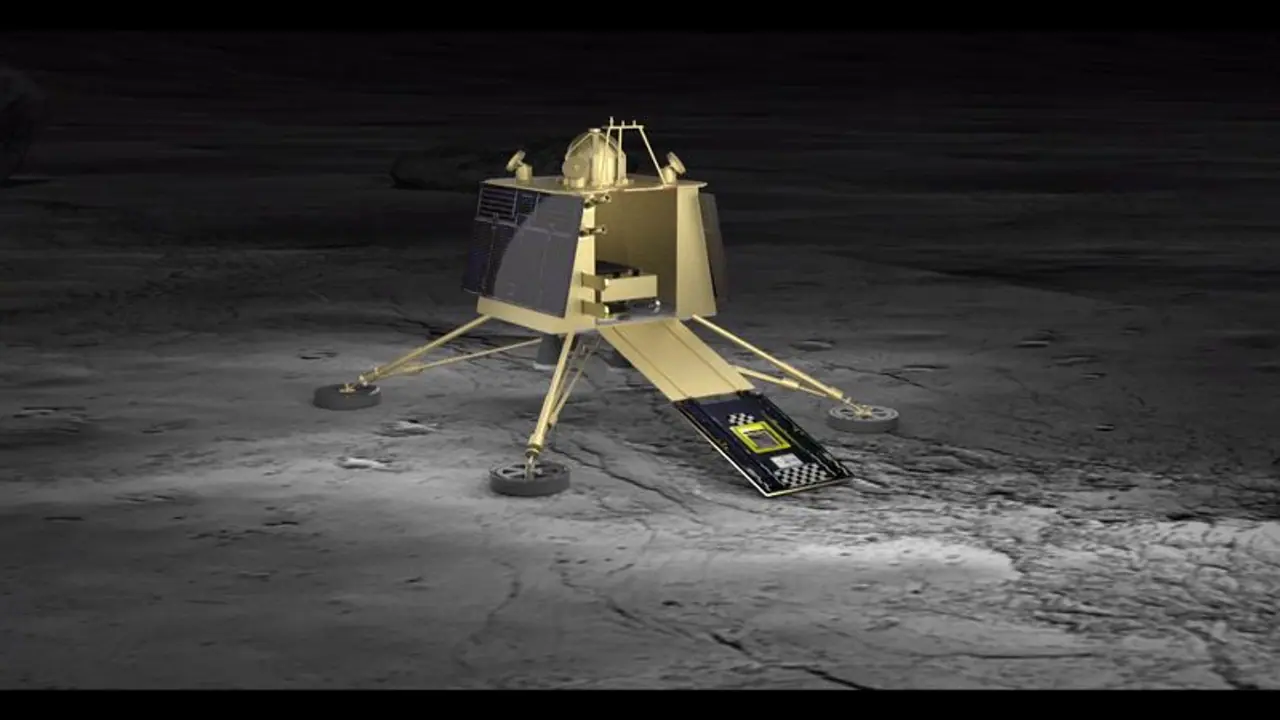
The historic touchdown on the South Pole of the Moon by Chandrayaan-3 mission's Vikram lander module will inspire not only humanity for the years to come but will have a significant impact on India’s techno-economic power within global space. The successful moon landing made India the fourth nation to do such a soft landing but at the cheapest cost. The world’s expectations could not be better summarised as it has been done by Elon Musk, owner of SpaceX, a global giant in Space Technology as well as the owner of X (formerly Twitter). Musk highlighted that the total cost of this Chandrayan is even less than the cost of a Hollywood movie named 'Interstellar'.
India became the first country in the world to do a soft landing on the south lunar pole, an achievement that could open the space for economic and technological collaboration of the Indian space agency with various global agencies for shared research and development, production, execution or exploration of future missions.
With this achievement, India exhibited its technological capabilities under the lowest production cost and in-house Human Resource along with the intent to explore and deploy its economic resources where only developed nations are expected to operate.
Today, the decision to invest in space exploration stands justified for a developing nation like India where economic resources are scarce and priorities are renegotiated with changing political scenarios. It is important to note that the technological innovation in defence and space industries are generalised later in other fields and that creates a long-lasting impact.
Humanity is indebted to Dr APJ Abdul Kalam, renowned scientist and India’s former president, as he designed callipers using materials used in defence and aerospace area to reduce the weight from 4kg to 400g for polio-affected people or he designed stents at 10 per cent cost of what was available for heart patients.
With this feat, India would be in the league where the global community would look for solutions to the great challenges that the world is facing in various areas such as global warming, food security issues, disease control & cure, poverty alleviation, financial engineering, artificial intelligence, low-cost production of complicated engineering and design, etc.
This could be a turning point for the Make In India project as well. The success of Chandrayaan is capable enough to convince major production units across the world to set up their unit in India to leverage a skilled workforce that can produce quality products at the lowest cost. The service industry may also witness significant growth with agencies across the world trying to get Indian way of solving economic and technological problems in various fields.
Overall, the moment could prove to be an inflexion point in India’s path to becoming a Vishwa Guru. This successful mission will impart two things for certain. One is confidence and self-belief in Indians that we can do and we must do. Two, awe and appreciation among the global community who can no longer ignore India and Indians.
The author is Vice President-Independent Validation Unit (Model Risk) at Barclays. Views expressed are personal.
