
This financial inclusion program, one of the world's largest, has empowered economically disadvantaged sections with financial assistance, insurance, and access to diverse financial products. PMJDY has revolutionized the delivery of government benefits, and aims to connect every adult with a bank account by March 2024.
India's ambitious financial inclusion initiative, the Pradhan Mantri Jan Dhan Yojana (PMJDY), has completed nine years since its inception on August 28, 2014. This transformative scheme has successfully opened a staggering 50 crore Jan Dhan accounts to date, and the total deposits in these accounts have crossed the remarkable figure of Rs 2.03 lakh crore.
PMJDY, recognized as one of the world's largest financial inclusion programs, was launched with the mission to provide financial assistance, insurance coverage, and access to various financial products such as pensions, loans, and investments to economically disadvantaged sections of society. Notably, PMJDY has played a pivotal role in ensuring that government benefits, including schemes like Kisan Samman Nidhi and Ujjwala Yojana, are delivered directly to beneficiaries without intermediaries, even during challenging times such as the COVID-19 pandemic.
Finance Minister Nirmala Sitharaman, commemorating this milestone, stated, "Nine years of groundbreaking initiatives led by PMJDY and digital transformation have revolutionized financial inclusion in India. It is a matter of great pride that over 50 crore people have been integrated into the formal banking system through Jan Dhan accounts. Approximately 55.5 per cent of these accounts belong to women, and 67 per cent have been opened in rural and semi-urban areas. The cumulative deposits in these accounts have surged past Rs 2 lakh crore. Furthermore, around 34 crore 'RuPay cards' have been issued for these accounts without any charges, providing an accidental insurance cover of Rs 2 lakh."
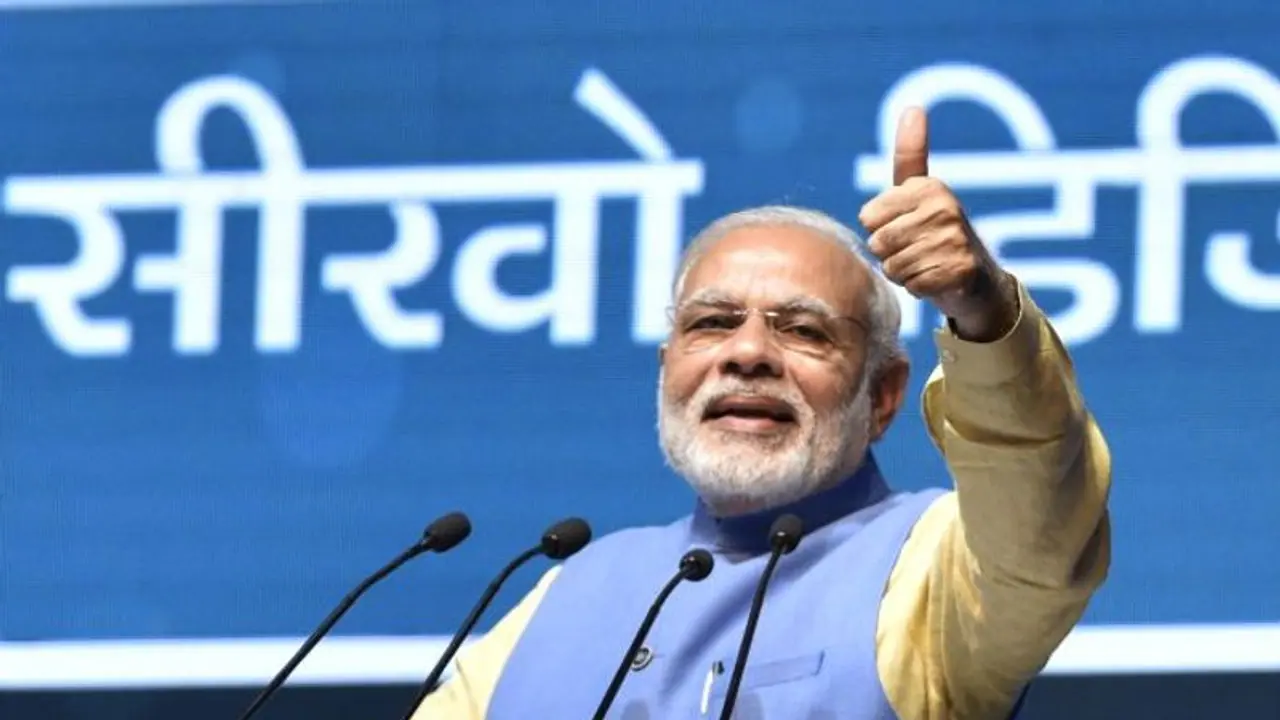
PM Narendra Modi had announced the launch of the Jan Dhan Yojana on August 15, 2014, and from August 28, 2014, the scheme was implemented nationwide. The primary objective was to provide banking facilities to individuals living below the poverty line who had been deprived of such services for years.
Under PMJDY, zero-balance bank accounts were opened, with the aim of directly reaching those who benefited from government schemes, eliminating the need for intermediaries.
Since its inception, PMJDY has been embraced by people below the poverty line, resulting in the opening of 50.09 crore zero-balance Jan Dhan accounts in just nine years. Approximately 6.26 crore PMJDY account holders receive Direct Benefit Transfer (DBT) from the government under various schemes, facilitating the timely disbursal of benefits to eligible beneficiaries.
In addition to the issuance of over 33.98 crore RuPay Debit cards under PMJDY, the installation of 79.61 lakh Point of Sale (PoS) and mobile PoS machines, and the introduction of mobile-based payment systems like UPI, digital transactions in India have witnessed a significant surge.
The total number of digital transactions has risen from 1,471 crore in FY 2017-18 to 11,394 crore in FY 2022-23. Likewise, the total number of UPI financial transactions is expected to increase from 92 crore in FY 2017-18 to 8,371 crore in FY 2022-23. The total number of RuPay card transactions on PoS and e-commerce platforms has also grown from 67 crore in FY 2017-18 to 126 crore in FY 2022-23.
As of now, India has a total of 225 crore bank accounts, although many individuals possess more than one. Despite this, around eight per cent of the population still lacks access to banking services. The government's vision is to connect every adult with a bank account by March 2024, ensuring that no one needs to rely on intermediaries for government scheme payments and that all government funds are directly deposited into beneficiaries' accounts.
