NDA allies and regional parties have endorsed the Centre's revised delimitation and women's reservation bills, aiming for a 50 percent increase in Lok Sabha seats to ensure 33 percent female representation amidst outdated census data.
New Delhi [India], November 28 (ANI): Ahead of the Parliament session beginning Monday, November 30, key NDA allies alongside non-aligned and splinter regional outfits, including the Janata Dal (United), Bharat Rashtra Samithi (BRS), Shiv Sena, and the Nationalist Citizens Party of India (NCPI), on Saturday threw their weight behind the Centre’s revised delimitation and women’s reservation legislative package, citing outdated constituency population figures, protections for southern states, and the urgent rollout of the 33 per cent women’s quota. The endorsement comes a day after the Union Cabinet cleared three revised draft legislations: The Constitution (132nd Amendment) Bill, 2026, The Delimitation (Second) Bill, 2026, and a proposed amendment to Union Territories laws.
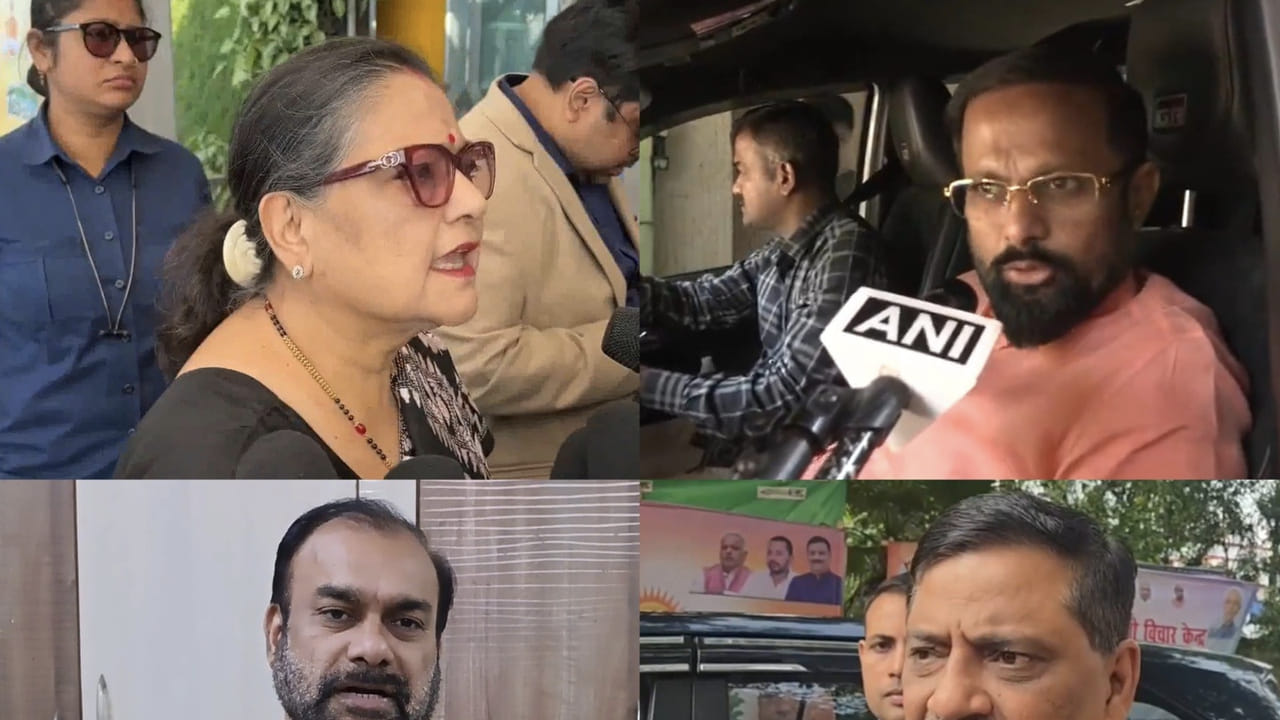
Designed to unlock the implementation of the Nari Shakti Vandan Adhiniyam (33 per cent reservation for women in the Lok Sabha and State Assemblies), the package proposes a flat 50 per cent increase in Lok Sabha seats for every state and Union Territory, raising the Lower House’s maximum strength to 850 (up to 815 from states and 35 from UTs), alongside a corresponding expansion in State Legislative Assemblies. Speaking in Patna, JD(U) National Working President Sanjay Jha questioned the Opposition’s resistance, pointing to outdated demographic data and Bihar’s panchayat quota success. "The biggest objective is to ensure women's reservation alongside delimitation, giving women one-third representation in the Lok Sabha and state Assemblies. Bihar is the biggest example. Those in the Opposition who want to understand the impact of reservation should visit Bihar and see how women's representation in social and political life increased after reservation was introduced in panchayats," Jha said. "Why should anyone oppose this? There must be some reason or logic. The population figures used for parliamentary and Assembly constituencies date back to 1971-72. How much has the population increased since then? A parliamentary constituency that earlier had around 10 lakh people now has 30-40 lakh. With such a significant rise in population, delimitation is necessary," said Jha.
While the total number of seats allocated to each state in the Lok Sabha has remained frozen on the 1971 Census baseline (via the 42nd and 84th Constitutional Amendments), the internal boundaries of constituencies were last redrawn by the 2002 Delimitation Commission using 2001 Census figures—not 1971. In Hyderabad, BRS spokesperson Ravula Sridhar Reddy confirmed that the party’s Upper House MPs would vote for the legislation, noting that the revised formula addresses southern concerns. "Currently, the Southern states have 24 per cent representation in the Lok Sabha, and this proposed 50 per cent increase will continue to maintain the 24 per cent share in the Lok Sabha, at the same time, with a safeguard that the interstate ratio will not be altered till 2051. So this satisfies the demands that we had... Our three Rajya Sabha members will support this bill and vote in favour of the bill," Reddy said. Five southern states (Andhra Pradesh, Karnataka, Kerala, Tamil Nadu, and Telangana) plus Puducherry currently hold 130 of the 543 elected Lok Sabha seats (approx. 23.94%). Because the new Bill increases every state’s seats by a uniform 50% (taking southern seats from 130 to 195 out of ~815) and freezes inter-state ratios until 2051, the South’s proportional share remains intact at ~24%.
In Mumbai, Shiv Sena MP Naresh Mhaske urged broad political backing for the reform. "We welcome Sharad Pawar ji's NCP's views on this bill... Everyone should support this Bill in the interest of women's dignity and respect... Shinde Sahib has called a meeting today, and we are going to attend it," Mhaske stated. In Kolkata, NCPI MP Kakoli Ghosh Dastidar extended her party’s support while referencing the Tamil Nadu ruling party’s position. "We also support the bill regarding the delimitation exercise, as it is in the interest of the country and the nation-building process. We endorse the position taken by the DMK," she said. While Mhaske welcomed "Sharad Pawar ji's NCP's views" and Ghosh Dastidar stated she endorses the DMK's position, both the NCP (Sharadchandra Pawar)—which has issued a three-line whip—and the DMK are part of the INDIA bloc, which met at Congress President Mallikarjun Kharge’s residence on Saturday and formally resolved to oppose the revised Bills in Parliament.
In Lucknow, Uttar Pradesh Cabinet Minister Om Prakash Rajbhar hailed the Cabinet’s approval and warned opponents of political consequences from women voters. "First of all, I congratulate the Prime Minister and the Union Home Minister. The struggle we have been fighting for 24 years has received Cabinet approval, and the Bills are now set to be passed by the Lok Sabha and Rajya Sabha. I would urge those opposing them to at least remain worthy of seeking votes in their constituencies. Otherwise, when women take to the streets with rolling pins and brooms, they will not know where to run," Rajbhar said. While Opposition parties have backed women’s reservation in principle, they have objected to linking its rollout with delimitation and demanded that any constituency redrawing await the latest Census data. To fast-track the exercise ahead of the 2029 polls, the Centre has proposed using the 2011 Census to redraw internal constituency boundaries and determine SC/ST-reserved seats, while retaining the 1971 population basis for state-wise Lok Sabha seat allocation—preserving existing inter-state proportions—until 2051. (ANI)