
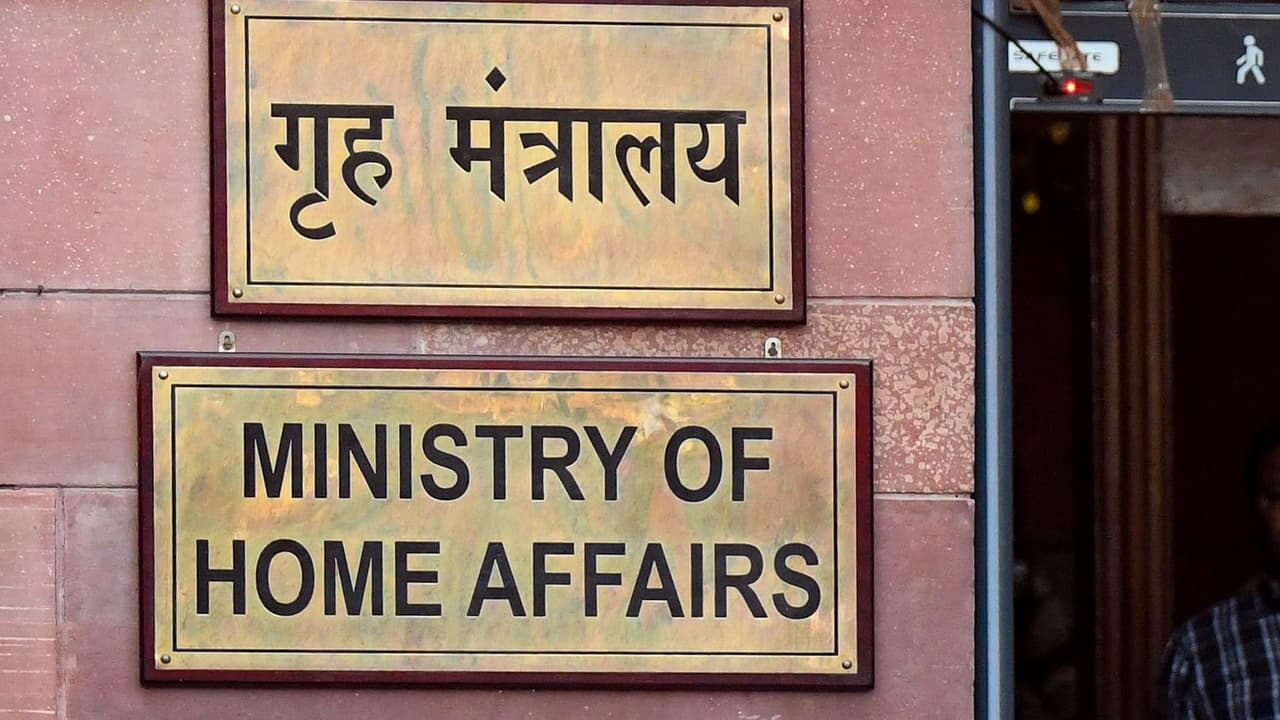
The Ministry of Home Affairs (MHA) has revised the guidelines for its 'Support to Poor Prisoners' scheme after finding its implementation was inadequate. The 2023 scheme provides financial aid to poor inmates unable to pay fines or bail.
The Ministry of Home Affairs (MHA) has reviewed and revised over two-year-old guidelines and Standard Operating Procedure (SOP) for the implementation of the "Support to Poor Prisoners" scheme, citing inadequate and sub-optimal execution across several states and Union Territories (UTs).
The scheme, launched in 2023, aims to provide financial assistance to indigent prisoners whose release is delayed solely due to their inability to pay court-imposed fines or furnish bail because of economic hardship.
The original guidelines and SOP were issued to all states and UTs on June 19, 2023.
In a letter dated December 2, addressed to the Chief Secretaries as well as Directors General and Inspectors General of Prisons and Correctional Services of all states and UTs, the MHA acknowledged that poor implementation had hindered the achievement of the scheme's core objectives.
The ministry said it has revised the guidelines and SOPs to strengthen and streamline procedures for swift, effective implementation.
In a letter written on December 2 to the chief secretaries of as well as the Director Generals and Inspector Generals of prisons and correctional administration of all states and the Union Territories (UTs), the MHA noted that the implementation of the scheme across many states and UTs has been inadequate and sub-optimal, directly impeding the realisation of its core objectives.
"The revised guidelines and SOP for the 'Support to Poor Prisoners Scheme' are appended to this communication. All states and the UTs are requested to adopt these provisions and initiate necessary action to implement the scheme in line with the revisions," reads the letter.
The MHA, on its part, has reviewed the existing guidelines and SOP with a view to further strengthening and streamlining the procedures to ensure swift and effective implementation of the scheme,
In the letter, It is also requested that the guidelines may be disseminated to all concerned authorities to ensure full institutional compliance.
The ministry also requests the active engagement of all states and the UTs in the effective implementation of the 'Support to Poor Prisoners Scheme', which not only has the potential of mitigating the problems faced by poor prisoners but can also contribute towards reducing overcrowding in prisons.
Revised Framework for Implementation
District-Level Empowered Committee
As per the new guideline and the SOP, an 'Empowered Committee' will be constituted in each district of the state and UT, comprising of nominee of the District Collector or District Magistrate (DM), Secretary, District Legal Services Authority (DLSA), Superintendent of Police, Superintendent or Dy. Superintendent of the concerned prison and judge incharge of the concerned prison as nominee of the district judge, to consider cases of eligible prisoners.
It is noted that the Secretary, District Legal Services Authority (DLSA) will be the convener and in incharge of the meetings of the empowered committee.
It is also stated that the committee may appoint a nodal officer and seek assistance from a Jail Visiting Lawyer (JLV), a Paralegal Volunteer (PLV), a civil society representative, a social worker, a District Probation Officer, or any other officer to assist in processing cases of needy prisoners.
The empowered committee will assess the requirement of financial support in each case for securing bail or for payment of fine, and based on the decision taken, the nodal officer of the state and UT prison headquarter shall draw funds from the Central Nodal Agency (CNA) account and take necessary action in this regard.
State-Level Oversight Committee
An oversight committee may be constituted at the state government level, comprising of Principal Secretary (Home/Jail), Secretary (Law Department), Secretary, State Legal Services Authority, DG or IG (Prisons) and Registrar General of the High Court.
As per the guideline, the composition of the district level 'empowered committees' and 'oversight committee' are only suggestive in nature.
It mentioned that 'prisons or persons detained therein' being 'state-list' subject, the committees may be constituted and notified by the concerned state governments and UT administrations.
Funding and Nodal Agencies
"Funds to the states and the UTs will be made available through the CNA."
The MHA has designated the National Crime Records Bureau (NCRB) as the CNA for implementing this scheme.
Each state and UT should open a subsidiary account at the state and the UT Headquarter level under the CNA's account (NCRB) and have it mapped on for Public Financial Management System (PFMS) as all funds from the Centre will flow through this account.
Each state and UT may appoint a nodal officer at the state and UT headquarter level.
The nodal officer of the state and UT prison headquarter will draw the requisite amount from the CNA as per the recommendation of the empowered or oversight committee, as the case may be, and release the amount of fine/bail surety, to the concerned prison's account where the beneficiary is lodged.
(Except for the headline, this story has not been edited by Asianet Newsable English staff and is published from a syndicated feed.)