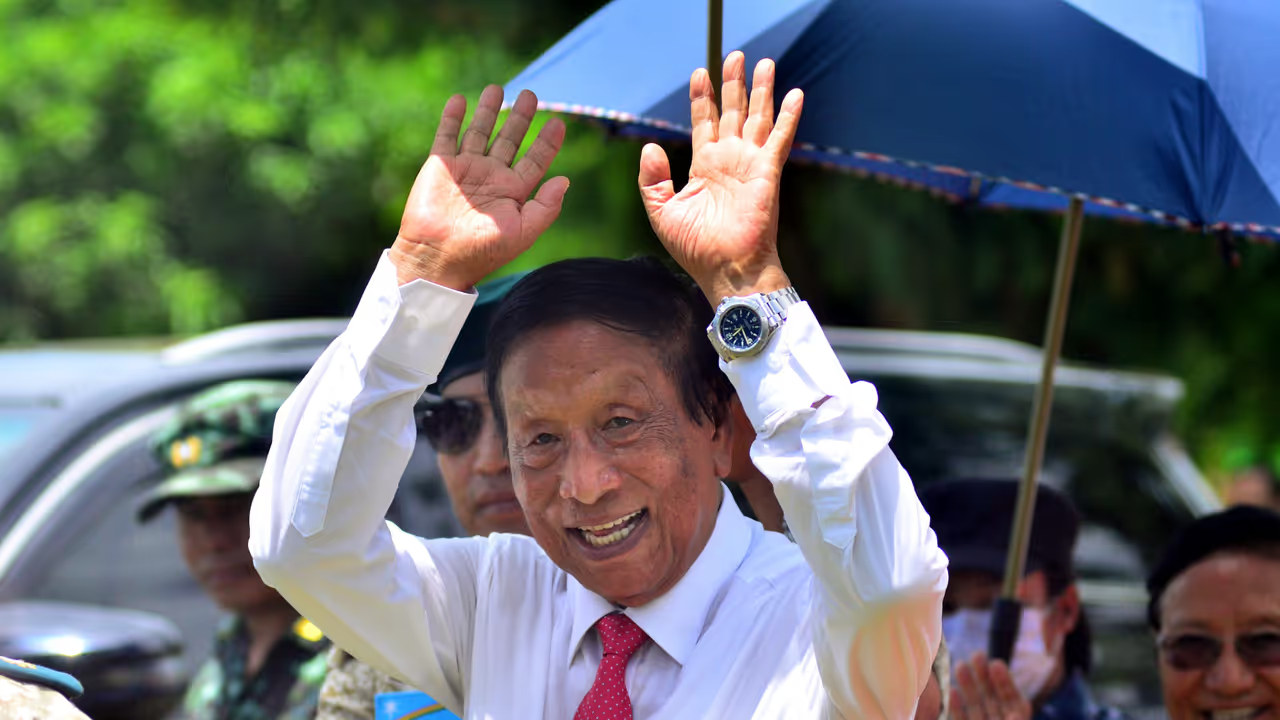
By Shashwat Gupta Ray: Thuingaleng Muivah, NSCN-IM chief, turned Manipur insurgency into a corporate empire of extortion, drugs, and arms trafficking, crippling the economy and exploiting citizens for decades.
By Shashwat Gupta Ray: Thuingaleng Muivah, the ageing supremo of the NSCN-IM, has been described by sympathisers as a revolutionary, a freedom fighter, even a statesman negotiating the destiny of his people. But in Manipur, the reality is far more brutal. For decades, Muivah has orchestrated a system of extortion, smuggling, and parallel governance that has crippled the state’s economy and suffocated its people. Under his leadership, insurgency has ceased to be about political rights; it has morphed into a corporate enterprise where violence, taxation, and black markets form the pillars of power. Far from being a liberator, Muivah has become the mastermind of Manipur’s exploitation.
Extortion Masquerading as Taxation
The foundation of Muivah’s empire is an elaborate network of illegal taxation. In Naga-inhabited areas of Manipur, government employees routinely surrender up to 24–25% of their annual salaries to NSCN-IM cadres. Teachers, nurses, police personnel—people whose duty is to serve society—are forced to serve Muivah’s coffers first.
The system is designed with chilling efficiency. “Receipts” are issued by the NSCN-IM’s finance wings, mirroring the procedures of a legitimate government. Officials and businessmen whisper of being given detailed instructions on how much to pay and when, as though dealing with a state treasury rather than an armed group. This is not spontaneous extortion; it is institutionalised looting, perfected under Muivah’s command.
Related Articles

For traders and transporters, the situation is even worse. Goods entering Manipur are taxed at every stage—entry points, godowns, distributors, and retailers. By the time essentials reach the consumer, they have been levied seven or more times. The result is artificially inflated prices and suffocating pressure on households already struggling with poverty. What Muivah calls “nation-building” is, in truth, systematic robbery disguised as governance.
The Drug Menace: Muivah’s Silent War on Manipur’s Youth
If taxation bleeds Manipur’s economy, drug trafficking poisons its society—and Muivah’s NSCN-IM has been at the heart of it. Manipur, lying next to Myanmar’s Golden Triangle, has become a key transit hub for heroin and opium. In 2024, seizures worth over ₹118 crore were reported, including large consignments of heroin and raw opium.
Yet seizures tell only part of the story. Behind the numbers lies a devastating social reality: Manipur’s youth, with limited opportunities, are drawn into courier networks controlled by insurgent groups. Young men risk their lives ferrying narcotics across borders, while others fall prey to addiction. Families are torn apart, villages destabilised, and an entire generation finds itself ensnared in a cycle of dependency.
Muivah’s organisation profits at every stage—taxing traffickers, protecting routes, and laundering proceeds through hawala and shell companies. Each rupee earned in this dirty trade represents a future destroyed, a young life wasted. The “revolutionary” image crumbles in the face of this truth: Muivah has chosen to turn Manipur’s children into the collateral damage of his underground empire.
Arms Smuggling: Feeding Violence for Profit
Another pillar of Muivah’s shadow economy is arms trafficking. Investigations by the NIA and other agencies have traced the movement of sophisticated weapons from Myanmar and China through Naga areas of Manipur into the hands of insurgents and criminal syndicates across India. AK-47 rifles, pistols, and ammunition are not just tools of resistance but commodities in Muivah’s profit-driven economy.
The implications for Manipur are devastating. Every weapon smuggled across its porous borders fuels more violence, destabilises communities, and keeps fear alive. While Muivah speaks of peace at negotiating tables in Delhi, his cadres ensure that conflict remains profitable on the ground. For him, arms are not symbols of liberation but instruments of perpetual instability—ensuring his organisation never loses relevance.
The Ceasefire Betrayal
The 1997 ceasefire between NSCN-IM and the Government of India was hailed as a historic chance for peace. But for Muivah, it became a shield for expansion. Instead of dismantling underground networks, the ceasefire allowed NSCN-IM to consolidate them. Extortion letters continued, “offices” of the outfit operated openly, and parallel taxation thrived under the nose of both state and central authorities.
By demanding symbolic concessions like a separate flag and constitution while profiting from the underground economy, Muivah has shown his true hand. He is not negotiating to end conflict—he is negotiating to keep it alive. Permanent resolution would dismantle his carefully built empire; hence, stalemate is his preferred outcome. Peace talks have thus become another theatre for manipulation, not transformation.
The Human Cost of Muivah’s Empire
The numbers may speak of crores looted and seized, but the real story lies in the lives destroyed. In Manipur’s hill districts, citizens live under a dual burden: paying official taxes to the government and unofficial ones to insurgents. For many families, underground “taxation” consumes more of their income than legitimate dues.
Small businesses shut down under relentless extortion. Contractors abandon projects rather than pay multiple groups. Investors avoid the state, fearful of insurgent levies. Unemployment soars, pushing young people into drugs or smuggling. Women vendors in Imphal and hill markets face daily harassment from underground collectors, forced to hand over earnings that barely cover household needs.
Above all, a culture of fear has taken root. People speak of NSCN-IM’s “government” with the same seriousness as the elected one. Underground authorities are treated as untouchable, while democratic institutions appear weak and compromised. This normalisation of parallel governance is Muivah’s most poisonous legacy: he has made exploitation look ordinary.
The Corporate Warlord
What emerges is not the portrait of a revolutionary but of a corporate warlord. Muivah runs NSCN-IM like a multinational enterprise: structured revenue targets, regional “ministries,” receipts for extortion, and diversified income streams ranging from narcotics to timber smuggling. This is not insurgency for ideals; it is insurgency for profit.
The irony is bitter. While the people of Manipur sacrifice opportunities and live in fear, Muivah’s organisation thrives in the stability provided by the ceasefire. Businesses, politicians, and even government funds are all entangled in a system that has become too lucrative for its beneficiaries to dismantle. Peace is delayed not because it is impossible, but because Muivah and his cohorts have no incentive to end the arrangement.
Why Manipur Must Break Free
Thuingaleng Muivah has long presented himself as a freedom fighter, but Manipur knows him as something else entirely: the architect of extortion, the protector of smugglers, and the profiteer of conflict. His leadership has drained the state of resources, destroyed its youth, and normalised a culture of lawlessness.
The challenge for Manipur is immense. Breaking free from Muivah’s shadow requires not only strong law enforcement but also political courage to dismantle the networks that sustain insurgent power. It means empowering legitimate institutions, creating economic opportunities, and restoring faith in democracy. Above all, it demands exposing Muivah’s double game—talking peace while practising profiteering.
History will not remember Muivah as a visionary leader of the Naga cause. For Manipur, he will be remembered as the man who bled the land dry, who thrived on fear and exploitation, and who turned insurgency into a business. His true legacy is not liberation but the systematic exploitation of a people who deserved peace, not perpetual conflict.
(Shashwat Gupta Ray is a multiple award-winning defence and strategic affairs journalist with over 20 years of experience in print and digital media. Previously Deputy Editor at Herald Group of Publications and Resident Editor at Gomantak Times, he has extensively covered major events, including the 26/11 Mumbai terror attacks and Maoist insurgencies. He is also the creator of the award-winning YouTube channel Uncovering India, which focuses on impactful social and developmental documentaries. He can be reached at: shashwat76@gmail.com)
Disclaimer: The opinions expressed are solely those of the author and do not reflect the views or stance of the organization. The organization assumes no responsibility for the content shared.