
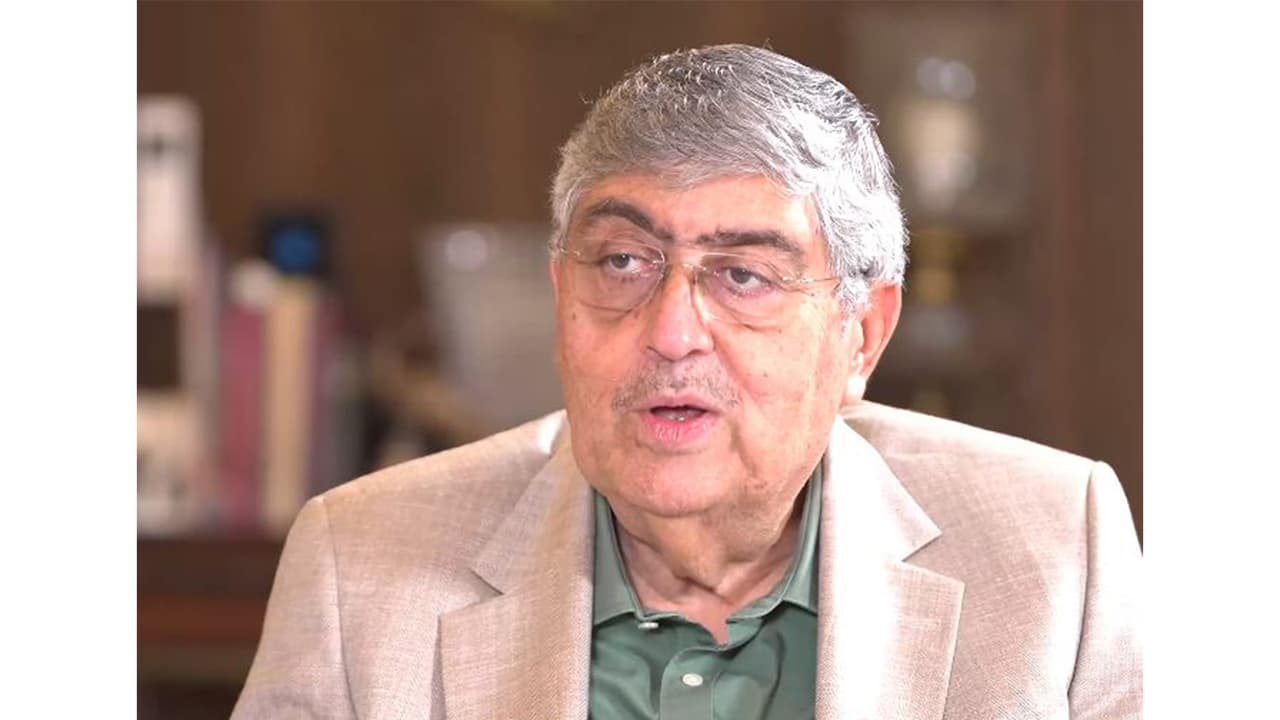
Justice Sanjay Kishan Kaul reveals professional disagreements with former CJI DY Chandrachud regarding judicial appointment processes, executive-judiciary dynamics, and the institutional challenges facing the Indian legal system in his new memoir.
Justice Kaul on Relationship with Former CJI Chandrachud
New Delhi [India], October 28 (ANI): In a wide-ranging set of remarks amidst disclosures surrounding his memoir 'Without Fear or Favour', former Supreme Court judge Justice Sanjay Kishan Kaul provided candid insights into his relationship and professional friction with former Chief Justice of India (CJI) DY Chandrachud. Speaking with ANI, Justice Kaul highlighted key points of agreement, personal rapport, and critical points of departure between himself and the former CJI, focusing heavily on the mechanics of judicial appointments, executive-judiciary dynamics, and the evolution of constitutional institutions.
Justice Kaul reflected on his personal rapport with former CJI Chandrachud, noting that while they maintained a friendly relationship, they had distinct approaches to dealing with executive pressure during the judicial appointment process. He emphasised that the process of filling vacancies must be expedited to attract top legal talent, cautioning against excessive delays and informal pre-consultation with the government. "He was always a little reserved person...Maybe I interacted more easily socially. We've shared a good relationship...You can't close the issues where we differed. I differed with him on this particular aspect. Some people ask, "Well, you agreed to the proposals?" Yes, of course, I agreed to the proposals. The proposals did not get through till I agreed. But the episode I've said is one where he endeavoured to put another person at the last minute. I cautioned him it would not get through the collegium. Did not get through the collegium. I was also not in favour. It's his decision. Maybe, as I said, the government may have suggested the name. He thought something should be done...I felt that if you argue, give reasons to the government and push it, they do help out in the sense of agreeing to what you do...I felt he was too soft at times and he should push harder. I used to suggest to him. Like, even the Judicial appointments matter. When nothing happened for a couple of months, from January to March, I said this is not going to work...This has been a great difference in perception I have had, if I may say so, with the government of the day and always. Judicial appointments must be made quickly. If we want to get talent and the right kind of talent. If people are not willing to come into it, then you must make the process easy, not make it so cumbersome that it goes on for a long time," said Justice Kaul.
Institutional Challenges and Judicial Autonomy
Justice Kaul argued that while keeping the government informed is necessary, it should not lead to stalled files or cumbersome processes that discourage top legal talent from accepting judgeships. Responding to former CJI Chandrachud's view that institutions are vital to national progress and must be strengthened, Justice Kaul agreed with the core premise but noted that institutions themselves often fail to rise to public expectations. Pointing to Parliament as an example, he warned of the erosion of legislative debate when structural friction causes walkouts. "I agree with that. But the only caveat I have is that institutions have also created problems for themselves by not rising to the expectations which a reasonable man may have...Every institution is under a challenge today. Every institution needs to improve itself. Let's take an example of Parliament, though I'm not there...The debates are not happening in Parliament. When the opposition walks out, the result today is that the government pushes through legislation without a debate occurring," he added.
The Evolution of the Collegium System
Detailing the history of judicial appointments in India, Justice Kaul pointed out that the Collegium system emerged from judicial interpretation in response to earlier executive overreach. He explained how the power balance between the judiciary and the executive naturally shifts depending on the political strength of the government in power. He highlighted specific instances, such as a last-minute name proposed during Collegium deliberations, where he advised against pushing names that lacked consensus or executive clearance without proper justification. "Somehow he felt that's how it (Judicial appointments) used to happen earlier. That's how it's happening now. The Government must be kept in the loop. That was his basis. I said yes, but then the collegium system was brought in with an endeavour of the judiciary to insert into a constitutional scheme something which was not by word there, because it was unhappy with the method of appointments. This goes back to the early 90s, late 80s, when the problems arose. Ultimately, this resulted in the collegium system through judicial interpretation, enlarging it and reducing the government's role. It worked well initially. One reason was that there were coalition governments. There's always a little bit of a domain war which occurs between the judiciary and the executive. When the executive is weaker, the judiciary is better off and is able to push a little bit... When the government is stronger, it becomes more difficult to push things through," said Justice Kaul.
Justice Kaul's remarks stem from disclosures in his memoir, Without Fear or Favour, which documents his tenure on the Supreme Court bench and inside the Collegium. Justice Kaul clarified that his critique of former CJI Chandrachud pertains strictly to the administrative handling of judicial appointments and executive negotiations, rather than his judicial acumen or ruling record. The comments highlight long-standing debates over delayed judicial clearances, Collegium procedures, and how strong single-party majority governments interact with judicial independence. (ANI)
(Except for the headline, this story has not been edited by Asianetnews Editorial staff and is published from a syndicated feed.)
