
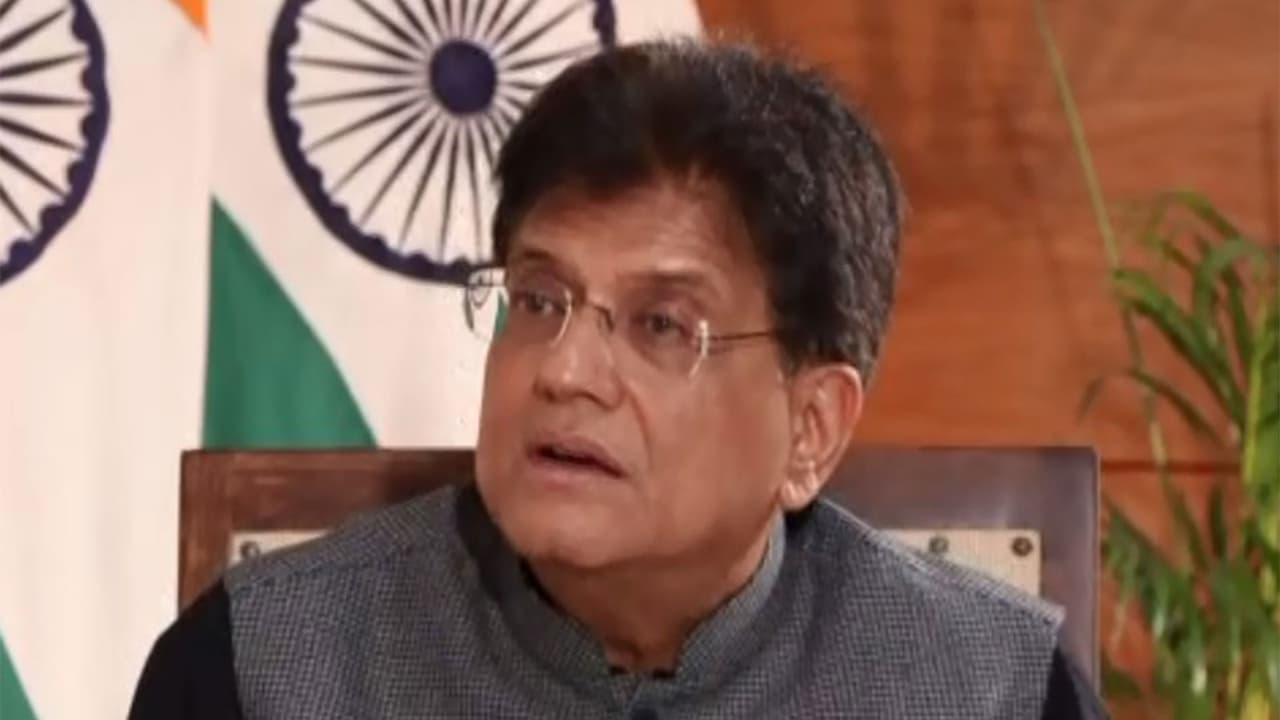
Union Minister Piyush Goyal announced new India-US and India-EU trade pacts, stating the fishery sector is elated. He expects seafood exports to double and assured farmers that sensitive agricultural items have been excluded from the deals.
Fishery Sector Celebrates Trade Pacts
Following the announcement of the India-US interim trade agreement and the conclusion of the India-EU Free Trade Agreement, Union Commerce and Industry Minister Piyush Goyal on Sunday said people working in the fishery sector across coastal states are elated over the developments. In an exclusive interview with ANI, Goyal said people from coastal areas are celebrating these agreements with the EU and the US due to the huge demand for Indian seafood. "So much excitement, so much happiness across the coastal areas. Kerala, Tamil Nadu, Andhra Pradesh, Maharashtra, Gujarat, Odisha - they are all celebrating this Agreement with the EU and the US because they have huge demand." Goyal said.
'Double Advantage' for Seafood Exports
The Union Minister highlighted that the fishery sector, previously hit by high tariffs, now stands to gain a "double advantage" by diversifying into European markets and regaining favourable access to the US market. Goyal expects current export numbers for the fishery market to double.
"Even when the reciprocal tariff was 50% and the seafood exporters had serious concerns, we opened up doors for them in the EU and other markets. I personally would talk to ministers around the world to look at diversifying our markets, and our fish exports grew by 20 per cent it's currently in a growth phase," Goyal said, emphasising that it's rising despite the recent problems.
"I told them at that point in time. This will be a double advantage for you. Now you have a diversified market. And now your US market also is also open. I promise them that once the deal happens, you can actually double your fish exports," he added.
Addressing Agricultural Concerns
On concerns about state agricultural sensitivities surrounding items such as corn, maize, and wheat, Piyush Goyal clarified that the agreement "excluded all sensitive items. What we've opened is items where we have shortage, again calibrated opening. And I see absolutely no harm to our farmers."
Welcoming discussions about the India-US Interim trade agreement, Goyal further said, "I'm happy to meet any farm delegations or any persons who may have any misgivings on this. I have an open-door policy on this." He added that Agriculture Minister Shivraj Singh Chouhan even celebrated the deals with the US and the EU alongside agriculture ministers from nine states.
The Union Minister also addressed the ongoing political debate over the India-US trade Interim agreement, stating, "I think it's very sad that they are playing with the sentiments of these very simple and very well-meaning farmers. I would appeal to everybody to desist from misleading farmers." When asked about the Samyukt Kisan Morcha (SKM) announcing protests across the nation against the deal, he said, "I suspect that it's a very small faction and it's a breakaway faction which has given this call", further expressing confidence that most farmers in the country understand that it's beneficial for them as "They are already exporting 5 lakh crores worth of farm and fish products."
Zero Tariffs on Key Agri Products
Goyal detailed significant tariff reductions that will give Indian farmers a competitive edge, stating, "All our agri products now will have a lower reciprocal tariff than our competition at 18%."
Noting that several key items which will now attract zero reciprocal tariffs, Goyal listed tea and coffee extracts, spices, coconut, coconut oil, vegetable wax, areca nut, Brazil nuts, cashew nuts, chestnuts, avocados, banana, guavas, mangoes, kiwis, papayas, pineapple and shiitake mushroom as a few items which will have zero tariffs.
Details of the Trade Agreements
In early 2026, India announced two trade agreements with the European Union and the United States, reshaping its global economic standing and securing preferential access to foreign markets
India-US Interim Agreement
The US and India announced in a joint statement on February 7 that they have reached a framework for an Interim Agreement on reciprocal, mutually beneficial trade (the Interim Agreement) and have agreed on its terms. According to the joint statement, India will eliminate or reduce tariffs on all US industrial goods and a wide range of US food and agricultural products, including dried distillers' grains (DDGs), red sorghum for animal feed, tree nuts, fresh and processed fruit, soybean oil, wine and spirits, and additional products.
India had reservations about opening the entire US agricultural sector to Indian markets, which is why the interim trade deal apparently missed the initially set timeline - fall of 2025. The Indian side has secured protection for its sensitive sectors, particularly agriculture and dairy, in this deal.
India-EU Free Trade Agreement
The India-EU Free Trade Agreement, which was finalised in January 2026 after long negotiations, eliminates tariffs on over 90 per cent of goods traded between the two sides. According to a sectoral analysis by credit rating agency ICRA, the agreement grants India preferential zero-duty access on 97 per cent of EU tariff lines, covering nearly 99.5 per cent of the value of Indian exports, while India will cut or eliminate tariffs on 92 per cent of its tariff lines for EU imports.
Agricultural and processed food exports, such as tea, coffee, spices, fruits, vegetables, and marine products, will gain preferential access to the EU market. Marine exports are expected to benefit from tariff reductions of up to 26 per cent, supporting coastal employment and export growth. Labour-intensive sectors such as leather, footwear, furniture, and rubber products are also expected to see gains. At the same time, sensitive sectors, including dairy, cereals, and poultry, have been safeguarded to protect farmers and MSMEs. (ANI)
(Except for the headline, this story has not been edited by Asianet Newsable English staff and is published from a syndicated feed.)
