
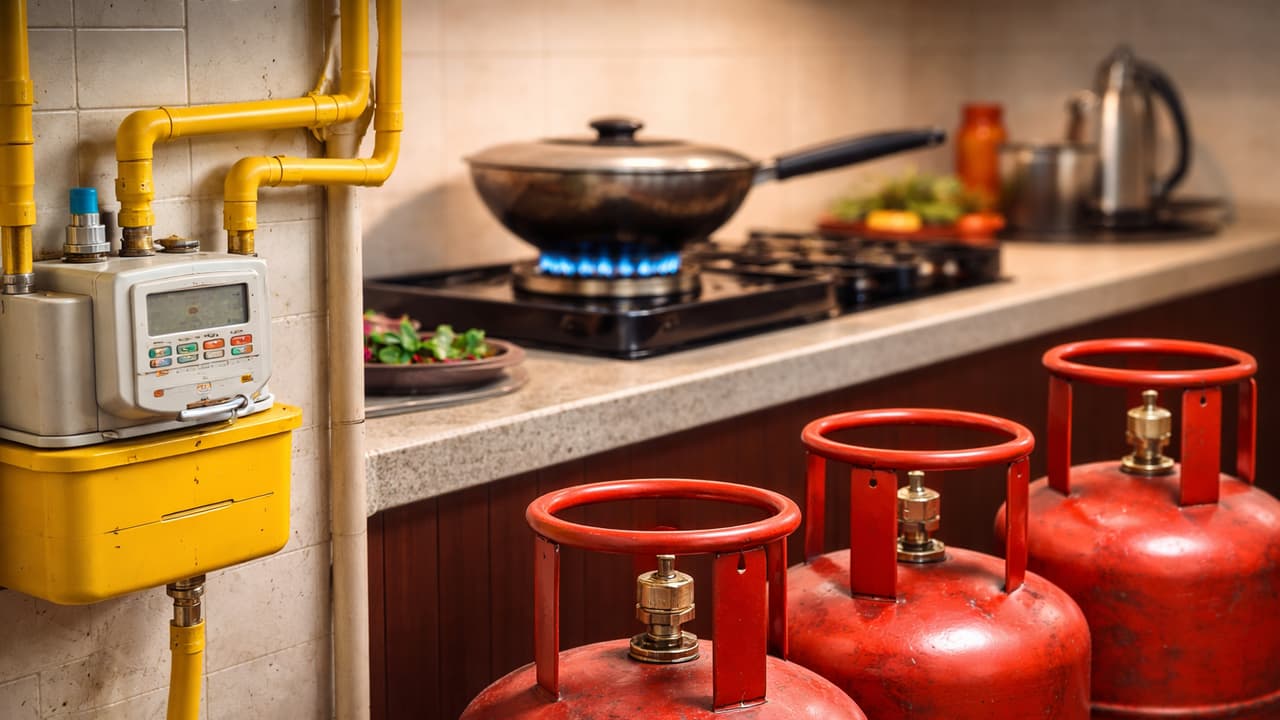
The Iran war is disrupting the Strait of Hormuz, threatening India's energy security. India relies heavily on imported liquefied natural gas (LNG), with a significant portion, especially from Qatar, passing through this vital route. This disruption could cause price hikes and shortages for households and industries.
India is facing a growing energy challenge as the ongoing Iran war threatens critical supply routes through the Strait of Hormuz, a key transit point for global oil and gas shipments. The disruption has raised serious concerns about the availability of liquefied natural gas (LNG) and liquefied petroleum gas (LPG), both of which are vital for India’s energy needs. The situation has once again highlighted the country’s dependence on imports and the risks associated with geopolitical tensions.
Heavy Reliance on LNG Imports Exposes India
India’s natural gas demand has been rising steadily, driven by industrial growth, urbanisation, and increased adoption of cleaner fuels. However, domestic production has not kept pace with this growing demand, forcing the country to rely heavily on LNG imports. Currently, nearly half of India’s gas consumption is met through imports, making it highly vulnerable to global supply disruptions.
A significant portion of these imports comes from the Gulf region, with Qatar being the largest supplier. This concentration of supply creates a dependency that becomes risky during periods of conflict or instability in West Asia. Any disruption in this region can directly impact India’s energy security, as alternative supply sources may not be immediately available or cost-effective.
Strait of Hormuz Disruption Raises Supply Risks
The Strait of Hormuz is one of the most critical chokepoints in the global energy network. A substantial share of the world’s oil and gas passes through this narrow waterway, making it indispensable for energy-importing nations like India. A large proportion of India’s LNG and LPG imports transit through this route, amplifying the impact of any disruption.
With the escalation of tensions due to the Iran war, shipping activity in the strait has been affected, leading to delays, diversions, and increased freight costs. Tanker movement has slowed, and some shipments have been rerouted, tightening global supply chains. This has resulted in higher LNG prices in international markets, further straining India’s import bill.
The disruption also highlights the fragility of global energy logistics. A single geopolitical event can trigger widespread consequences, affecting not just supply but also pricing and availability. For India, which depends heavily on imported energy, this poses a significant economic risk.
Also Read: Trump Admires Modi's Strength, Has Clear Trade & Energy Expectations
KG Basin Output Offers Limited Domestic Relief
India’s domestic gas production provides some cushion against global shocks, but it is not sufficient to fully offset import dependence. The Krishna-Godavari (KG) basin, located off the eastern coast, is the country’s most prominent gas-producing region. It contributes a considerable share of India’s total output and plays a crucial role in meeting domestic demand.
In addition to the KG basin, other regions such as Assam and Tripura also contribute to gas production. Despite these sources, domestic output accounts for only about half of the country’s total requirement. This means that even at peak production, India must continue to rely on imports to bridge the gap.
The limited capacity of domestic production underscores the need for further investment in exploration and infrastructure. While ongoing projects may boost output in the future, they are unlikely to eliminate import dependence in the short term. This structural imbalance remains a key vulnerability in India’s energy strategy.
Gas Supply Crunch May Hit Households, Industry
The impact of supply disruptions is likely to be felt across multiple sectors of the economy. Natural gas is widely used in power generation, industrial processes, and fertiliser production. Any shortage or price increase can have cascading effects, including higher electricity costs, reduced industrial output, and rising food prices.
City gas distribution networks, which supply piped natural gas (PNG) to households and compressed natural gas (CNG) for vehicles, are particularly exposed to supply risks. These networks rely heavily on LNG imports, and any prolonged disruption could lead to reduced supply or increased prices for consumers. This could affect millions of households and commuters who depend on gas as a primary fuel.
The government has taken steps to manage the situation by prioritising gas allocation to essential sectors such as households, transport, and fertiliser plants. Non-essential industries may face reduced supply as part of these measures. Buffer stocks are also being used to ensure continuity in the short term, but these reserves are limited.
To mitigate the impact, India is exploring alternative supply sources, including the United States, Russia, and Australia. Efforts are also being made to increase domestic LPG production and secure additional shipments. However, these measures may only provide temporary relief if the crisis persists.
Also Read: India has enough crude, fuel stocks despite West Asia conflict: Govt
The situation has also drawn attention to the need for long-term energy planning. Diversifying import sources, expanding LNG infrastructure, and investing in renewable energy are essential steps to enhance resilience. Reducing dependence on a single region or route will be crucial in managing future risks.
In the long run, the current crisis could act as a catalyst for change in India’s energy policy. Strengthening domestic production, building strategic reserves, and accelerating the transition to alternative energy sources will be key priorities. The goal will be to create a more balanced and secure energy mix that can withstand global uncertainties.
The disruption in the Strait of Hormuz has served as a wake-up call for India. It has exposed the vulnerabilities in the country’s energy supply chain and highlighted the importance of strategic planning. As the situation continues to evolve, India’s response will play a crucial role in ensuring energy security and economic stability.
