
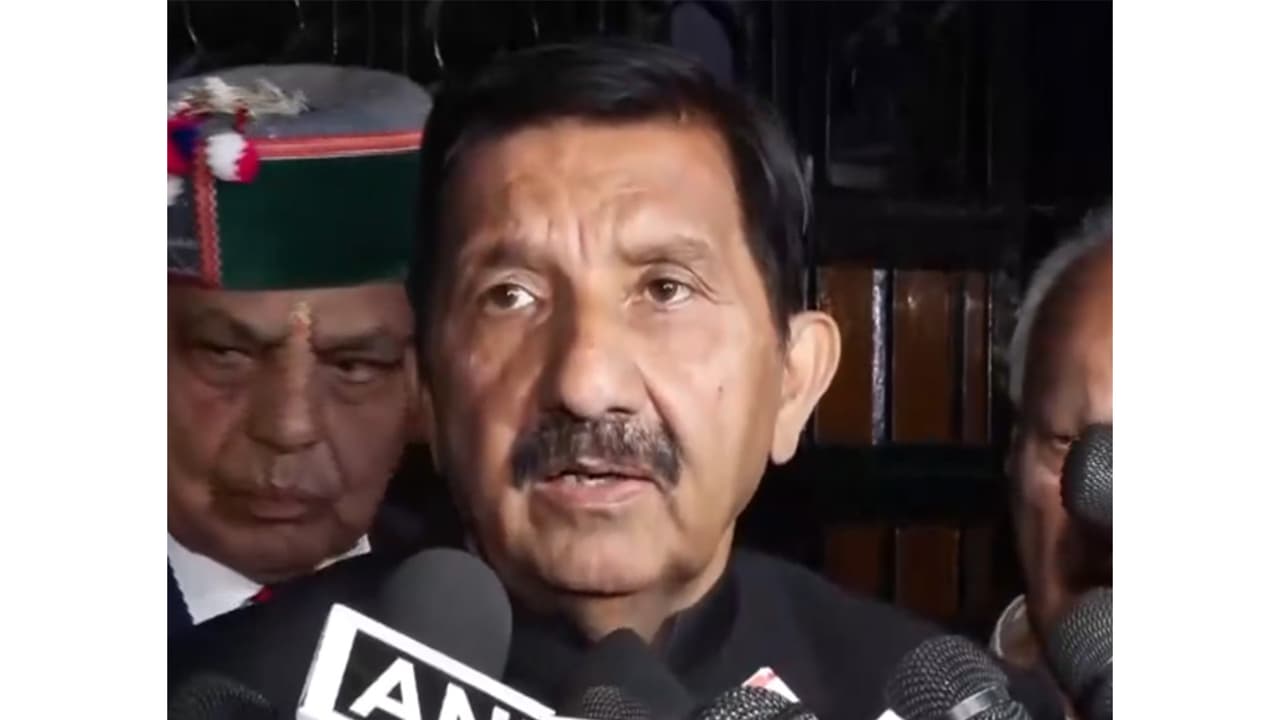
Himachal Pradesh stares at a Rs 10,000 crore revenue deficit after the Centre stopped the Revenue Deficit Grant. Deputy CM Mukesh Agnihotri flagged the issue after meeting Congress leaders, accusing the Centre of weakening the state.
Himachal Pradesh Deputy Chief Minister Mukesh Agnihotri said that the State is staring at a revenue deficit of Rs 10, 000 crore following the discontinuation of Revenue Deficit Grant by the Union Government.
Congress Leadership Discusses Financial Strain
Addressing reporters here after meeting party president Mallikarjun Kharge and Lok Sabha Leader of Opposition Rahul Gandhi in the national capital a day earlier, Agnihotri flagged the financial strain on the hill state following the discontinuation of the Revenue Deficit Grant (RDG). "The Centre is trying to weaken the states, especially those ruled by Congress. We discussed the revenue deficit grant. Himachal Pradesh is going to face a revenue deficit of Rs 10,000 crore. We had been receiving the grant for the past five years, but it was stopped abruptly by the central government," he said.
Echoing similar concerns, Himachal Pradesh Congress President Vinay Kumar said the leadership deliberated on pressing state issues. "We spoke to Mallikarjun Kharge and Rahul Gandhi and discussed various issues that matter to the people of Himachal, including the apple industry and the revenue deficit grant that has been stopped by the central government," Kumar said.
Meanwhile, Congress Rajya Sabha MP Rajani Patil said organisational matters were also discussed during the meeting. "Rahul Gandhi asked for an audit report of all the state ministers, and I have been assigned that responsibility during the meeting," she said.
State Government's Reform Measures
The Himachal Pradesh government is grappling with mounting fiscal pressure after the 16th Finance Commission discontinued the RDG. In response, the state has initiated reforms aimed at strengthening internal resource mobilisation.
These include a new Toll Policy for 2026-27 mandating transparent e-auction of toll barriers, electronic toll collection, CCTV monitoring and phased FASTag implementation to plug leakages and ensure steady revenue flow.
Excise reforms form another pillar of the state's strategy. The 2026-27 excise framework continues auction-based allotment of liquor vends with rationalised reserve prices linked to past revenue performance. Enhanced digital monitoring and stricter enforcement are expected to improve licence fees, excise duty and VAT collections.
Additionally, the state has revised entry fees for vehicles entering Himachal Pradesh from April 1, 2026, raising charges across most categories. Officials argue that technology-driven systems and transparent bidding will boost compliance and offset revenue losses in the post-RDG fiscal landscape, even as tourism stakeholders express concern over higher travel costs. (ANI)
(Except for the headline, this story has not been edited by Asianet Newsable English staff and is published from a syndicated feed.)