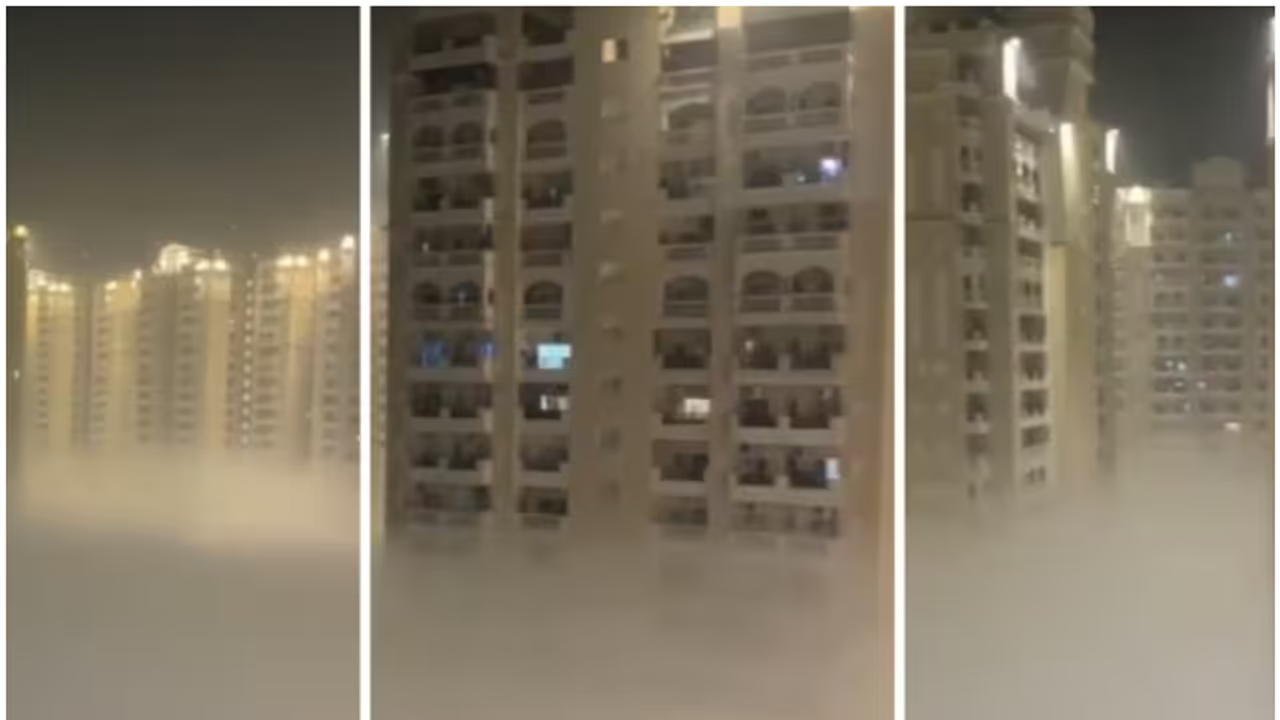
A viral video showing Delhi-NCR high-rises disappearing behind a thick blanket of smog has sparked concern online, bringing renewed attention to the capital region's worsening air pollution and visibility crisis
A video showing an unusual, almost surreal view of Delhi-NCR has caught the attention of social media users. The footage captures a thick layer of smog surrounding the region, with buildings and high-rise structures gradually disappearing behind the grey haze.
What might initially appear to be a picturesque landscape is actually a worrying reflection of the area's deteriorating air quality. The dense blanket of pollution has significantly reduced visibility, making familiar cityscapes look almost unrecognisable.
The visuals have prompted online discussions about the alarming pollution levels and the conditions residents are being forced to live in.
Related Articles

Post-Diwali Pollution Adds To Delhi-NCR's Air Quality Concerns
The viral visuals come amid growing concerns over air pollution in the national capital following Diwali celebrations.
Despite restrictions on firecrackers, celebrations involving fireworks contributed to the already deteriorating air quality. On November 9, Delhi's AQI climbed to 370, placing it in the 'very poor' category, according to reports.
Several monitoring stations across the city recorded readings above 400, entering the 'severe' category. Burari Crossing recorded an AQI of 441, while Vivek Vihar registered 437.
The pollution crisis is not limited to firecrackers. Vehicle emissions, industrial activities, construction dust and crop-residue burning in neighbouring Punjab and Haryana continue to contribute to the problem.
Cooler temperatures, relatively weak winds and stagnant atmospheric conditions further prevent pollutants from dispersing, allowing the toxic haze to linger over the region.
Delhi's Pollution Crisis Sparks Fresh Debate As Smog Engulfs The Region
The latest visuals have once again highlighted the growing air pollution challenge faced by Delhi-NCR residents, particularly during the winter months.
The situation has also renewed questions about the effectiveness of existing pollution-control measures. Authorities have implemented restrictions under Stage III of the Graded Response Action Plan (GRAP), including curbs on construction activities and additional pollution-control measures.
Meanwhile, Delhi's air quality showed some improvement on November 10, with the average AQI falling to 299, bringing it into the 'poor' category. However, the improvement has not eliminated concerns about the persistent haze across northern India.
The viral footage serves as another reminder that air pollution is no longer just a number displayed on monitoring applications. Its impact is increasingly visible in everyday surroundings, from reduced visibility to the disappearance of familiar buildings behind thick layers of smog.