
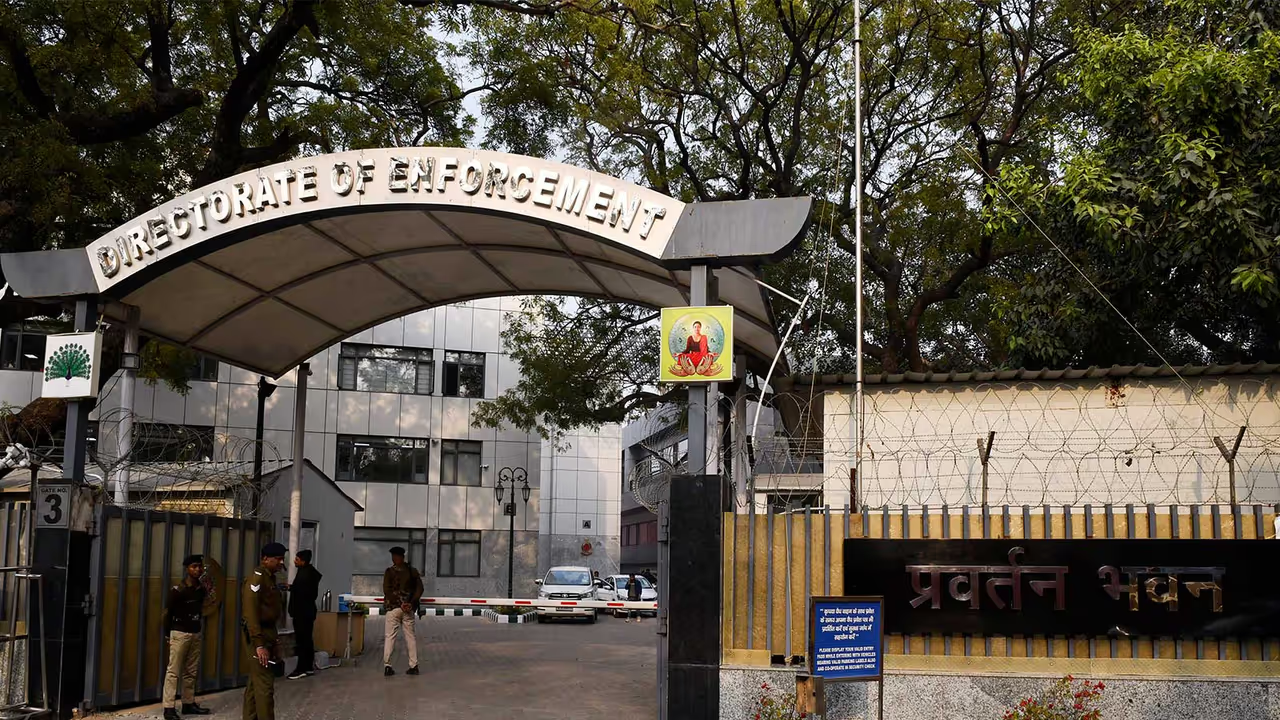
The Enforcement Directorate has convicted two individuals, Dara Singh and Gurdarshan Singh, in a money laundering case linked to cocaine trafficking in Punjab. A special PMLA court sentenced them to three years of rigorous imprisonment each.
The Enforcement Directorate (ED) on Friday said it has secured the conviction of two persons in a money laundering case arising out of drug trafficking involving 1.230 kg of cocaine in Punjab-- a significant achievement in the agency's efforts to disrupt the financial ecosystem supporting the menace of contraband trafficking.
Two Sentenced to Three Years Imprisonment
A special Prevention of Money Laundering Act (PMLA) court in Punjab's SAS Nagar (Mohali) on September 3 convicted Dara Singh and Gurdarshan Singh for the offence of money laundering under Section 3, punishable under Section 4 (outlines penalties for those convicted) of the PMLA, 2002, and sentenced them to rigorous imprisonment for three years each along with a fine of Rs 5,000 each.
ED Probe Based on Police FIR
ED's Chandigarh Zonal Office-I is probing the drug trafficking case. The federal agency initiated an investigation on the basis of a First Information Report (FIR) registered by Punjab Police under the Narcotic Drugs and Psychotropic Substances Act in connection with the recovery of 1.230 kg of cocaine. Both the accused were subsequently convicted in the scheduled offence under Sections 22 and 29 of the NDPS Act, respectively.
Court Defines 'Proceeds of Crime'
The Central agency's investigation under the PMLA brought on record two cheques of Rs 6 lakh and Rs 4 lakh, aggregating to Rs 10 lakh, connected with the dealings relating to the contraband. Significantly, the ED said, the court held that the contraband as well as the aforesaid cheques fall within the definition of “property” and constitute “proceeds of crime” under PMLA, being the result of criminal activity relating to the scheduled offence.
ED's Commitment to Disrupting Drug Networks
As per the agency, the conviction strengthens its commitment to detect, disrupt and destroy the financial networks sustaining the drug menace by targeting not only narcotics-related offences but also the proceeds generated from such criminal activities, thereby striking at the economic foundations of illicit drug trafficking.
(Except for the headline, this story has not been edited by Asianet Newsable English staff and is published from a syndicated feed.)
