
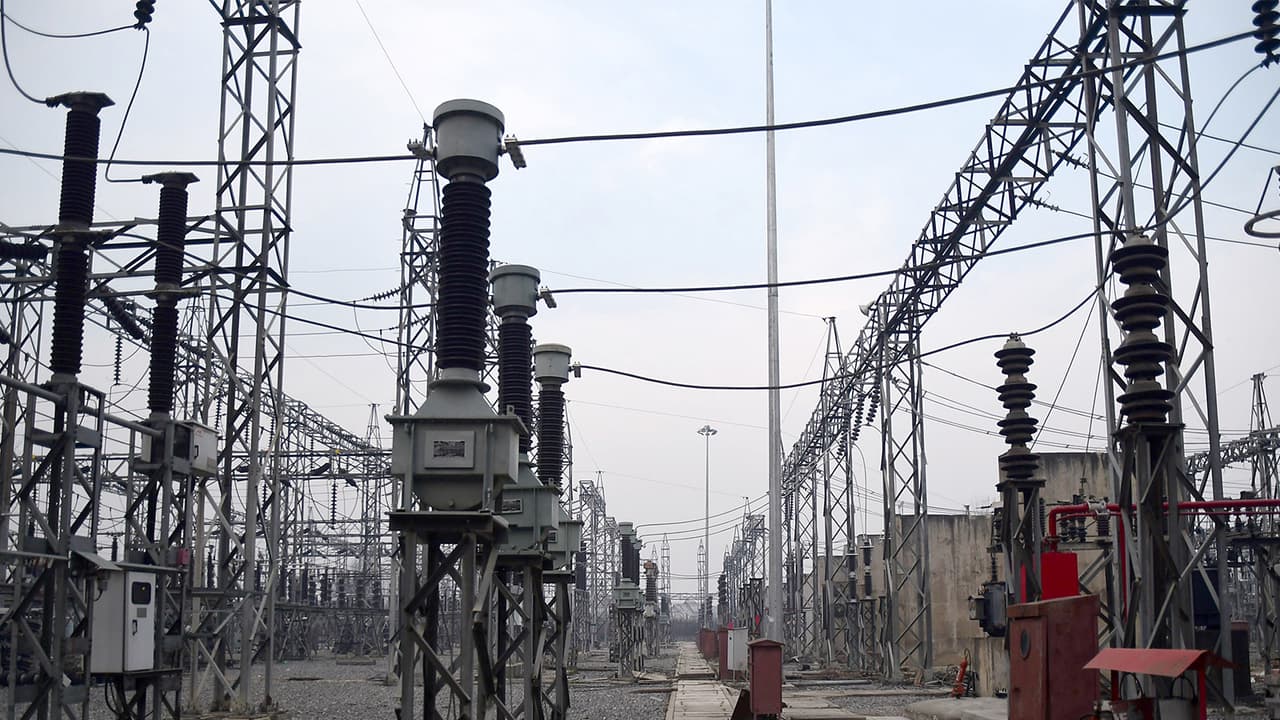
Delhi's peak power demand saw a sharp rise in May 2026, crossing the 8,000 MW mark for the second straight day and hitting a record 8,231 MW. This surge is attributed to an intense and early summer, significantly higher than in past years.
Delhi's peak power demand has seen a sharp rise in May 2026 compared to previous years, reflecting the impact of an intense and early summer. This is the second consecutive day that Delhi's peak power demand has crossed the 8,000 MW mark.
According to the State Load Despatch Centre (SLDC) data, Delhi's peak power demand on Thursday touched 8,231 MW at 3:31 PM, the highest recorded so far in 2026. Yesterday, Delhi's peak power demand had touched 8,039 MW. The Bombay Suburban Electric Supply (BSES) discoms successfully met the peak power demand of 3,762 MW and 1,838 MW in their respective areas.
Historical Comparison of Power Demand
Delhi's peak power demand of 8,321 MW is the highest-ever recorded in the city in the first 21 days of May. In comparison, the peak demand for the same period stood at 7,748 MW in 2025, 7,726 MW in 2024, and 6,011 MW in 2023.
Between May 1 and May 21, Delhi's peak power demand in 2026 was higher than the corresponding day of 2025 on 16 out of 21 days, around 76 per cent of the days. Compared to 2024, Delhi's peak demand in 2026 was higher on 14 out of 21 days, around 67 per cent of the days.
Future Projections and Early Surges
Earlier, on April 27, 2026, Delhi's peak power demand had crossed the 7,000 MW mark for the first time in April, touching 7,078 MW at 3:30 PM. In comparison, the 7,000 MW level was reached only in May during 2024 and 2025.
Delhi is expected to witness another significant rise in electricity demand this summer. According to SLDC projections, against the all-time high peak demand of 8,656 MW recorded in 2025, Delhi's peak power demand is expected to cross 9,000 MW this year.
BSES Prepares to Meet High Demand
Meanwhile, the BSES discoms are fully geared up to ensure reliable power supply to more than 53 lakh consumers and nearly 2.25 crore residents across South, West, East and Central Delhi. These arrangements include long-term PPAs, bilateral tie-ups, banking arrangements with other states, and deployment of advanced technologies such as AI- and ML-based demand forecasting to accurately estimate load and maintain uninterrupted supply.
Green Power and Energy Mix
BSES discoms have been successfully meeting Delhi's rising power demand. Around 2,670 MW of green power will play a key role in ensuring a reliable electricity supply during the summer months in BSES areas.
Solar power is expected to contribute about 840 MW, hydro around 572 MW and wind nearly 500 MW. Pumped storage plants (PSP) will provide around 312 MW, while rooftop solar installations across South, West, East and Central Delhi will contribute nearly 250 MW. Hybrid renewable sources will add about 137 MW, and waste-to-energy plants around 41 MW.
In addition, the 20 MW BESS at Kilokri will help support grid stability and balance demand during peak periods.
Power Procurement Strategy
Additionally, BRPL will also procure power through bilateral contracts under a season-ahead procurement plan, while BSES discoms will procure short-term power from the exchanges, depending on the time slot, in case of unforeseen contingencies.
Given the increasing impact of weather volatility on electricity demand, BSES has also adopted a phased power procurement strategy to optimise costs while ensuring adequate availability of power during the summer months. Since peak demand typically occurs for less than 10 per cent of the time, BSES plans to meet such demand through day-ahead and week-ahead power markets, ensuring flexibility and efficient procurement while maintaining a reliable supply.
(Except for the headline, this story has not been edited by Asianet Newsable English staff and is published from a syndicated feed.)