
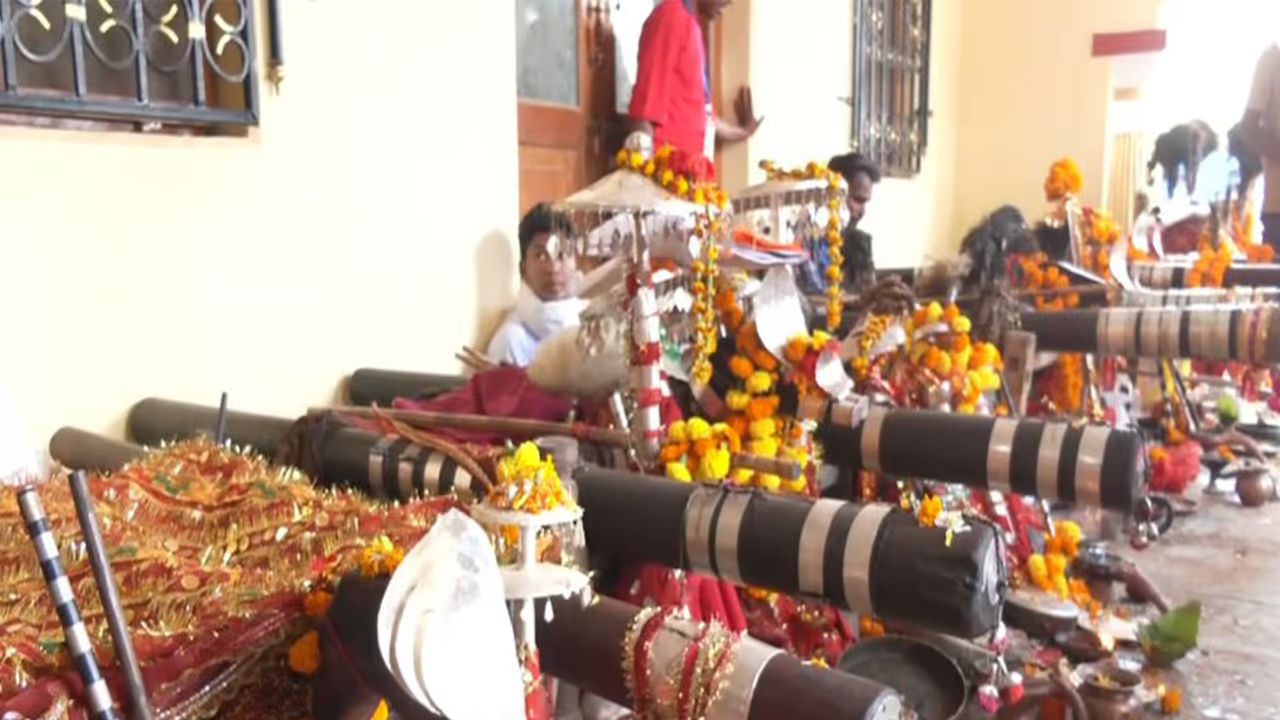
Bastar Dussehra saw record participation this year as deities from 50 previously Naxal-affected villages joined the festivities, signaling newfound peace and accessibility in the region following the eradication of Naxalism.
Historic Participation in Bastar Dussehra
Deities from around 50 villages in areas previously affected by Naxalism participated in the world-famous Bastar Dussehra for the first time this year, after the eradication of Naxalism on March 31, 2026. The participation included deities brought from remote villages in Sukma, Bijapur and Narayanpur districts, as well as from villages in neighbouring Odisha, marking an increase in the number of deities attending the festival.
Patwari Satyanarayan Sethiya told ANI, "For the first time, many village deities—including those from Abujhmad—have arrived in Bijapur. Deities from the Sukma district have also come to Bijapur for the first time. This is due to the deep faith people have in 'Mai Ji' (the Goddess), and the fact that the region has become free from Naxalite influence, making travel much easier." Sethiya also said this year’s gathering was the largest he had witnessed during his tenure overseeing the Dussehra proceedings, particularly during the Mauli Pargaon and Bhitar Raini rituals.
Official Response and Regional Enthusiasm
Bastar Superintendent of Police Shalabh Sinha said people from remote interior villages, including areas in Bijapur, Sukma and Abujhmad in Narayanpur, had arrived with their local deities. "The festival holds immense historical importance for the entire region, drawing tourists from far and wide. Residents from the interior villages bring their respective deities and stay in Jagdalpur throughout the festival to fully experience the celebrations. This year, following the end of Naxalite influence, there was a remarkably high level of participation. People traveled from previously Naxal-affected areas—including Bijapur, Sukma, and the Abujhmad region of Narayanpur—bringing their deities along. Reports indicate that participants arrived from approximately 50 villages that were previously inaccessible, preventing such participation in the past. The large crowds seen on the roads and at the festival venues clearly demonstrate the immense enthusiasm among the people for Bastar Dussehra following the elimination of Naxalism," he said.
"Furthermore, a significant number of tourists—arriving from other districts, various states, and even from abroad—have come to enjoy the Bastar Dussehra festival this year," he added. He said reports indicated that residents of approximately 50 villages previously affected by Naxalism, who had been unable to travel to the festival with their deities due to accessibility issues, had participated this year. Sinha added that the festival had witnessed considerable enthusiasm following the end of Naxalism, with tourists arriving from other districts, states and abroad. As many as 954 deities participated in Mauli Pargaon and 461 in Bhitar Raini, while large numbers of deities also took part in other rituals associated with Bastar Dussehra.
(Except for the headline, this story has not been edited by Asianetnews Editorial staff and is published from a syndicated feed.)
