
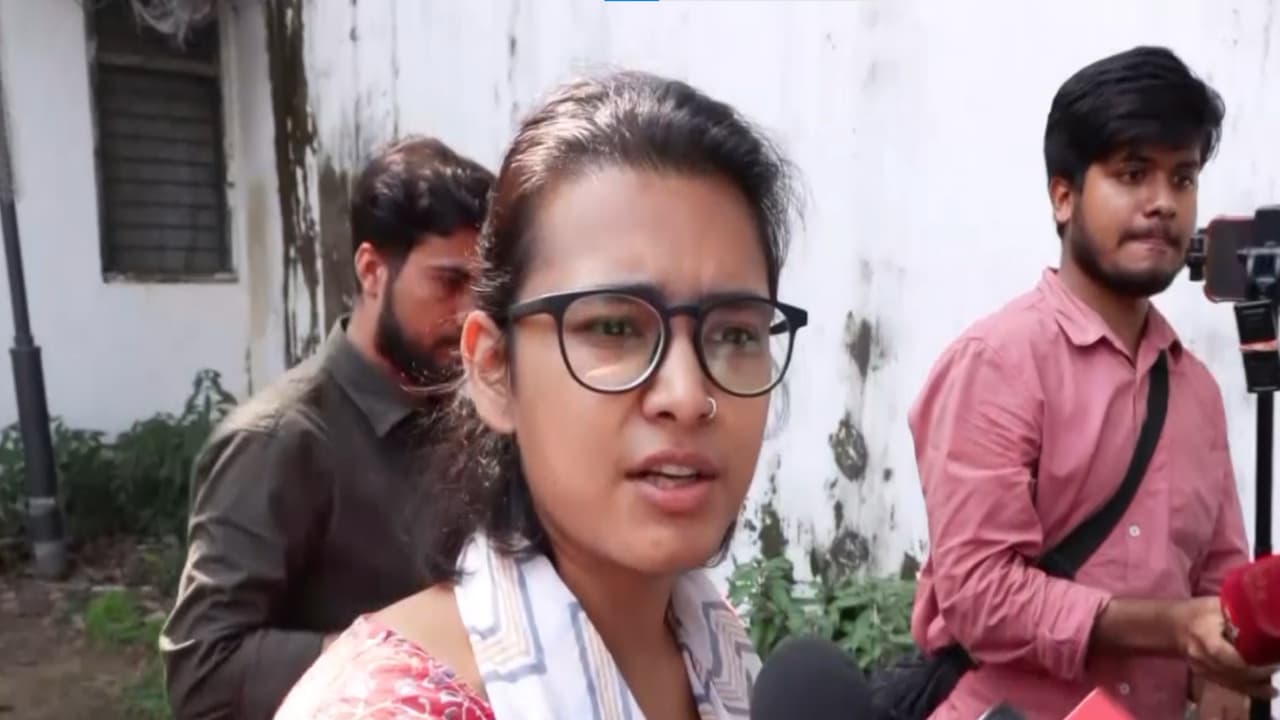
AISA president Neha Bora condemns the use of peace bonds against student protesters, calling them a weapon to suppress democratic dissent and violating constitutional rights to peaceful protest.
AISA Opposes Use of Peace Bonds
New Delhi [India], October 24 (ANI): All India Students' Association (AISA) national president Neha Bora on Saturday pointed out the “primary contradiction” between the executive issuing peace bonds even though the Constitution allows for the right to dissent. She asserted that peace bonds were being “weaponised” to curb democratic protests. She said that AISA, the student wing of CPI(ML) Liberation, will not be a part of “normalising” the signing of peace bonds.
Bora argued that signing such peace bonds was “no less than” singing away the democratic right to dissent. “On one side, the constitution gives us the right to dissent. On the other hand, such peace bonds are invoked only to detain people in the name of breach of peace. We were detained within 10 minutes of protesting at Mandi House on October 16 and told that we are in breach of peace. Peace bonds are being weaponised to curb democratic protests. Therefore, signing such peace bonds is a principally wrong decision for us. It is no less than signing away our democratic right to dissent,” Bora said while addressing a press conference here.
Legal Challenges and Constitutional Concerns
She remained firm on challenging such peace bonds in future while arguing that courts or the “custodians of law and constitutional morality” must understand the contradiction it brings to the fore. “We are hopeful that those who are custodians of law and constitutional morality – the courts – will understand this primary contradiction. They will understand that implementations of such peace bonds are snatching away our right to dissent,” Bora said.
“With this hope, we will not sign peace bonds and will keep challenging them because signing them will indicate that to curb peaceful protests such peace bonds can be invoked. AISA will not be part of normalising this. The peace cannot be only for the government, but also for the people,” she added.
Natural Justice and Judicial Inquiry
The AISA national president clarified that courts didn’t reject their plea challenging the notice issued by the Special Executive Magistrate (SEM), but instead didn’t go on the merits of the challenge. Bora, however, informed that the SEM can’t make people sign anything by issuing such show cause notices since principles of natural justice are applicable.
“Most mediahouses reported that our challenge to the notice was rejected. The court merely said that we will not go to the merits (basis of challenging the notice) of the case, but want you to participate in the inquiry regarding notice issued. The court has said that SEM can’t make (people) sign anything by issuing show cause notices. Principles of natural justice will apply,” Bora said.
Defining Democracy and Breach of Peace
She argued that democracy was not an abstract concept but informed people regarding their fundamental right to vote and peaceful protest. “Democracy is not abstract. In a country like India, people understand two boarder things by democracy – one is the right to vote and another is the right to express against any violation of our rights. Today, the right to vote is being snatched through SIR. 13 crore voters are removed from electoral rolls,” Bora said.
“Media and ground reports, along with testimonies of BLOs and two Election Commissioners, are also asking questions regarding whether the electoral process is democratic. All, including those affected by vote deletions, are asking the same thing – given the massive discrepancies – that the elections that make this country a democracy are not being conducted democratically,” she added.
Bora questioned the idea of “breach of peace”, asking that people protesting peacefully were not it, but the behaviour of police personnel towards protesters can be classified as the same. “When the fundamental idea of this country – right to vote – is being attacked, protesting on streets is not only our responsibility as citizens, but also our duty. You all saw that people who came to the streets didn’t resort to any undemocratic action. The violence came from the side of the police. Security personnel deployed to handle the protest and maintain law and order resorted to using lathis. They tore women’s clothing. Journalists and media were also subjected to violence,” the AISA national president said.
“If something is called a breach of peace during this movement, it won’t be the peaceful protest by common citizens, but the behaviour of the police and security personnel towards protesters and independent media,” she added.
She questioned whether raising voice against injustice was a breach of peace. Bora said that the common public has only peaceful protest as a way, apart from constitutional recourse. “When you talk about peace – whose peace are you talking about and for whom? 13 crore people removed from voter list - should those people stay quiet? Should they not come on the streets? Is that peace? Is the exercise of the right to democratically dissent on streets by protesting a breach of peace? When people are disenfranchised in a system, the common public has only peaceful protest as a way, apart from constitutional recourse,” she said.
“People who have been disenfranchised despite valid documentation and history of voting in previous elections – is asking such questions through peaceful protest a breach of peace? What is peace then? If there is injustice, raising questions is not allowed. Is this peace? Would it be peace if questions are not raised against the government? This is the fundamental question at the heart of what we are doing right now,” she added.
(Except for the headline, this story has not been edited by Asianetnews Editorial staff and is published from a syndicated feed.)