Wasim Akram Mocks IPL, But Here Are 5 Reasons Why PSL Can’t Reach Its Level
Following Wasim Akram's jibe at the IPL, this analysis explores why the PSL lags behind, citing Pakistan’s economic issues, PCB corruption, weak fan turnout, and lower revenues compared to IPL’s professional management and global success.
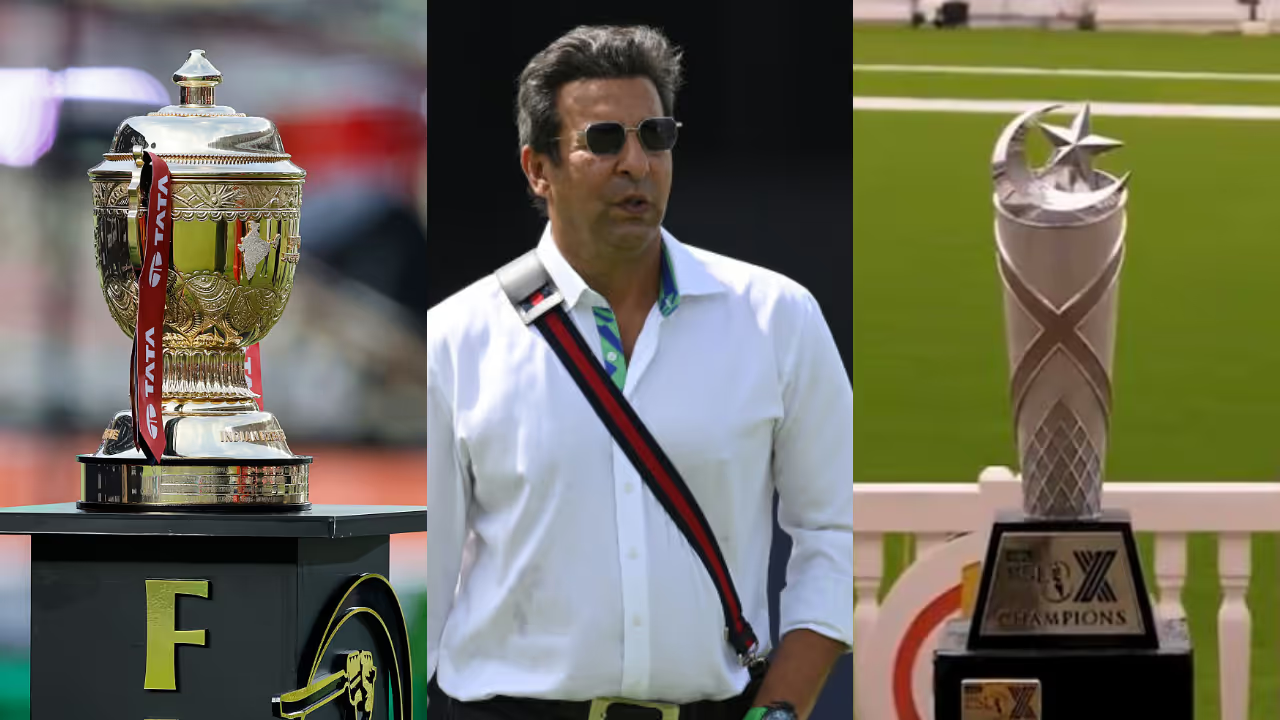
Wasim Akram's Dig at the Indian Premier League
Former Pakistan pace bowler, Wasim Akram, took a dig at the Indian Premier League (IPL) during the Pakistan Super League (PSL) 2026 roadshow in London on Monday, December 18. Speaking at the event, Akram mocked the IPL’s never-ending ‘marathon’ and joked, ‘bacchey bade ho jate hain, woh league khatam hi nahi hoti’ (kids grow up, but that league still doesn’t end).
Former Pakistan pacer turned commentator further highlighted the growing appeal of shorter and more competitive T20 leagues, arguing that many international players prefer to play the PSL because of its shorter schedule of 34-35 days, rather than a drawn-out crowd like the IPL.
'Bachy Baray Ho Jaty Hain League Khatam he Nahi Hoti'
-Wasim Akram on IPL pic.twitter.com/6wg3S8e9i5— Zubair Ali Khan (@ZubairAlikhanUN) December 8, 2025
As Wasim Akram mocked the IPL, let’s take a look at why the Pakistan Super League can never reach its scale of global popularity, financial power, and commercial success that the IPL has enjoyed over the last decade and a half.


1. Cash-Strapped Nation
One of the key reasons behind the massive growth of the Indian Premier League (IPL) is the strong financial power not only of the Board of Control for Cricket in India, but also of private owners of the franchises, given the league’s unmatched investment stability and the ability to attract top global talent every year. With India’s strong financial market, the IPL only gets richer and stronger each year.
Pakistan Super League, on the other hand, operates in a far more constrained economy and commercial landscape, given the country’s economic instability, weaker corporate investment climate, and shrinking sponsorship and media value. The ban on broadcasting of the PSL in India by online streaming platform Fancode, following the Pahalgam terror attack in April this year, has significantly curtailed the league’s revenue potential and its visibility among Indian fans.
2. Corruption in PCB
The Board of Control for Cricket in India (BCCI) is widely regarded as one of the most professionally run cricket bodies in the world, with transparent governance and strict financial oversight. The board’s relationship with the IPL franchises’ owners is professional and transparent, ensuring smooth operations and investor confidence.
Pakistan Cricket Board, on the other hand, has often been involved in corruption and financial irregularities, which were exposed this year. As per the audit report released in 2025, the PCB was found guilty of massive financial irregularities, including unauthorized payments, illegal appointments, and shady contract awards totalling over PKR 6 billion in fiscal year 2023-24. This has severely damaged the credibility of the PCB, discouraging sponsorships and top foreign players from associating with the Pakistan Super League (PSL).
3. Financial Limitations
The Indian Premier League (IPL) massively benefits from lucrative broadcasting deals, franchise investments, and merchandising revenues, which keep cash flow robust year after year. In 2022, the IPL bagged the media rights for a five-year contract worth $6.2 billion (INR 48,390 crore), making it one of the most financially powerful sporting leagues in the world, allowing it to consistently attract top international stars and invest in world-class infrastructure, marketing, and fan engagement.
In contrast, the Pakistan Super League struggles for the global spotlight, with limited broadcasting reach, lower sponsorship revenue, and smaller franchise investments. The total broadcasting rights for the PSL for the two years (2024-25) are valued at approximately $30 million (PKR 6.2 billion), a fraction of IPL’s revenue, limiting star signings and global reach.
4. Poor Fan Turnout and Weak Atmosphere
The IPL consistently enjoys packed stadiums and electric atmospheres that fuel fan engagement and commercial interest. The increase in the number of spectators and fans at the venues of all 10 IPL franchises has a direct impact on the economy of match-days, boosting ticket sales, merchandise, food, and sponsorship revenue.
In contrast, PSL has struggled with empty stands and low attendance at many venues, especially Karachi and Lahore, reducing match-day revenue, dampening the atmosphere, and limiting appeal for sponsors and broadcasters. This stems from the frustration of fans over poor national performance at the international level, which has eroded the enthusiasm of the fans.
5. Weak Governance and Mismanagement
The Board of Control for Cricket in India (BCCI) operates with professional governance, clear policies, and long-term planning, ensuring stability in the IPL. The increase from an 8-team contest to a 10-team league in the IPL was smoothly managed with careful planning, franchise coordination, and infrastructural upgrades, highlighting the BCCI’s organisational strength.
If we look at the Pakistan Cricket Board (PCB), there have been frequent changes in the management, a lack of long-term strategic planning, and persistent internal conflicts, all of which have hampered the growth of the PSL, league stability, and ability to attract top talent or global viewership. The weak governance and mismanagement in the PCB somewhat have a direct impact on the PSL, which struggles to consistently maintain schedules, enforce franchise discipline, and deliver a professionally run tournament comparable to the IPL.
Stay on top of all the latest Sports News, including Cricket News, Football News, WWE News, and updates from Other Sports around the world. Get live scores, match highlights, player stats, and expert analysis of every major tournament. Download the Asianet News Official App from the Android Play Store and iPhone App Store to never miss a sporting moment and stay connected to the action anytime, anywhere.