MalayalamNewsableKannadaKannadaPrabhaTeluguTamilBanglaHindiMarathiMyNation
Add Preferred SourceGoogle-icon
  • Facebook
  • Twitter
  • whatsapp
  • YT video
  • insta
  • Latest News
  • India
  • World
  • Business
  • Markets
  • Sports
  • Entertainment
  • Technology
  • Auto
  • Lifestyle
  • Home
  • International
  • Climate change
  • Doomsday Glacier: Satellite Data Shows Dangerous Cracks – Scientists Warn of Rising Seas

Doomsday Glacier: Satellite Data Shows Dangerous Cracks – Scientists Warn of Rising Seas

New study reveals a 4-stage breakdown of the 'Doomsday Glacier.' See how satellite data shows cracks and a failing pinning point accelerating ice flow towards the sea.
2 Min read
Ishwi Singh
Published : Dec 02 2025, 11:21 AM IST
Share this Photo Gallery
  • FB
  • TW
  • Linkdin
  • Whatsapp
  • GNFollow Us
14
Thwaites Glacier
Image Credit : Getty

Thwaites Glacier

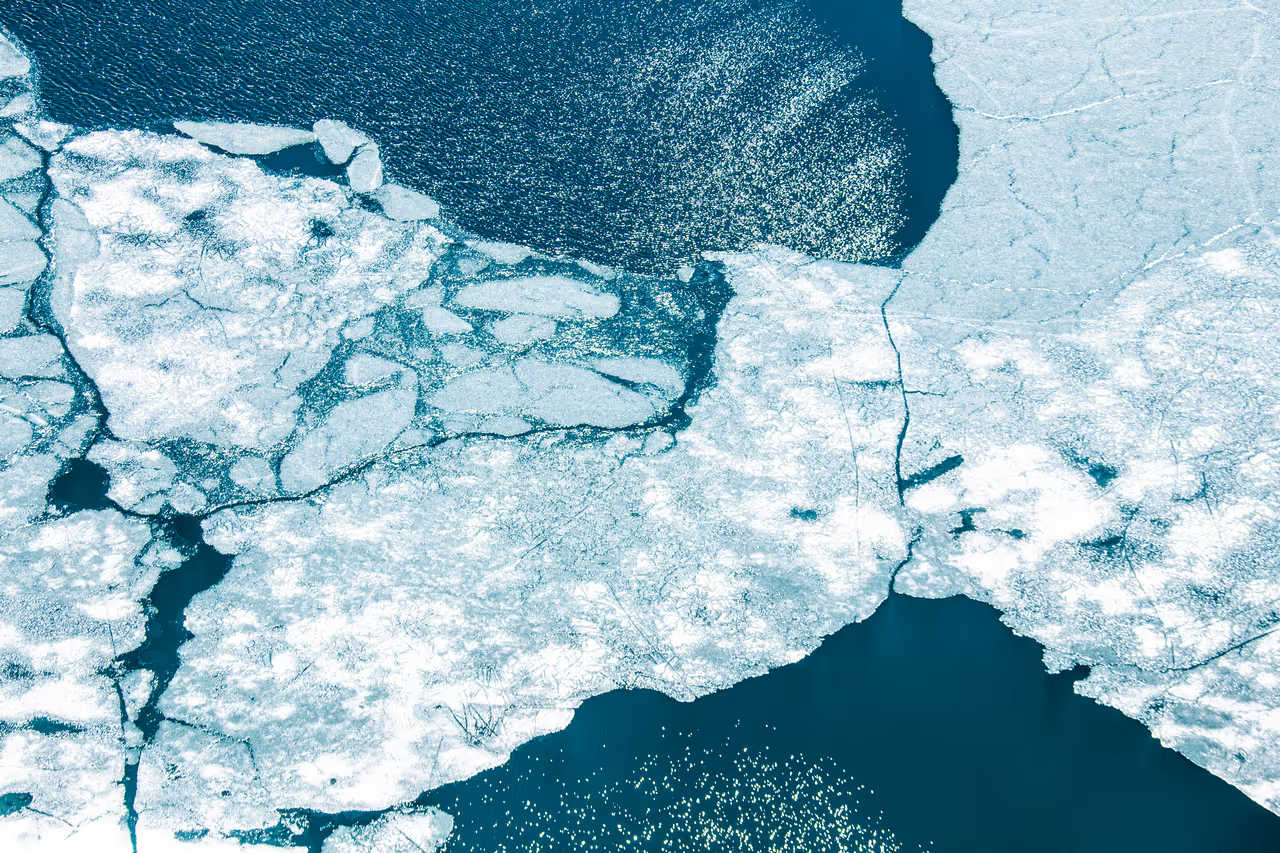
Satellites have shown quick changes in the “Doomsday Glacier,” known as the Thwaites Glacier in West Antarctica. This glacier is one of the most rapidly changing in the world, and scientists are closely watching it because what happens in the coming years could greatly affect how much sea levels rise.

A key part of this glacier system is the Thwaites Eastern Ice Shelf (TEIS), which is a large floating mass of ice. At its northern end, the shelf is partly held in place by a small area of land, called a pinning point. In the last twenty years, cracks have been spreading across the shelf, especially near a major area where the ice moves differently, known as a shear zone, just upstream of the pinning point.

Add Asianet Newsable as a Preferred SourcegooglePreferred
24
Tracking Fractures and Increasing Ice Movement
Image Credit : Getty

Tracking Fractures and Increasing Ice Movement

A new study, published in the Journal of Geophysical Research: Earth Surface, gives the most detailed view so far of how this slow breakdown has happened. 

The team used twenty years of satellite images, measurements of how fast the ice is moving, and GPS data collected directly on the glacier. Their findings show that as these cracks grew, the shelf’s connection to the pinning point became weaker. Once the shelf started to separate from the pinning point, the ice behind it began to move faster, making the whole structure even more unstable.

Related Articles

Related image1
High-Altitude Regions Are Warming Rapidly, Threatening Water and Food Security
Related image2
Africa’s Forests Now Emitting More Carbon Than They Absorb, Study Finds
34
Stages in the Breakdown
Image Credit : Freepik/wahyu_t

Stages in the Breakdown

The researchers found four clear stages in this breakdown. They also made two important discoveries. First, the cracking happened in two steps: long cracks that followed the direction of the glacier’s movement appeared first; later, shorter cracks developed that cut across that direction. 

Second, they found strong evidence of a feedback process. As the cracks weakened the shelf, the ice sped up, and this extra movement caused even more damage. This cycle of speeding ice and worsening cracks played a big role in the shelf’s recent breakdown.

44
From Support to Vulnerability
Image Credit : Getty

From Support to Vulnerability

One of the most surprising findings is how the pinning point has changed its role. For many years, it helped to keep the floating shelf stable. Now, however, it seems to be making the shelf weaker, as the changing shape of the ice makes the connection more fragile.

Researchers think that this four-stage pattern of decline might happen in other Antarctic ice shelves that are showing signs of similar stress. If these floating shelves keep getting thinner, Antarctica’s contribution to sea-level rise could increase more quickly in the future.
About the Author

IS
Ishwi Singh
Ishwi Singh is a content writer with a background in English literature. She has experience in creating engaging stories and translating content. Previously, she worked as an editorial intern at Oxford University Press.
Climate Change
Latest Videos
Recommended Stories
Recommended image1
High-Altitude Regions Are Warming Rapidly, Threatening Water and Food Security
Recommended image2
Africa’s Forests Now Emitting More Carbon Than They Absorb, Study Finds
Recommended image3
Polluted Air Is Silently Killing the Benefits of Your Daily Workout
Recommended image4
Nearly Half of the World’s Beaches Could Disappear Due to Sea-Level Rise and Human Impact
Recommended image5
Africa’s 'Vanishing' Carbon Deals: How Billion-Dollar Promises Disappeared
Related Stories
Recommended image1
High-Altitude Regions Are Warming Rapidly, Threatening Water and Food Security
Recommended image2
Africa’s Forests Now Emitting More Carbon Than They Absorb, Study Finds
News
Breaking News TodayLatest News TodayIndia NewsWorld NewsKarnataka NewsKerala NewsIndian Defence NewsBengaluru News
Entertainment
Entertainment NewsOTT ReleaseBigg BossMovie ReviewsBox Office Collection
Sports
Sports NewsCricket NewsFootball NewsWWE NewsOther Sports
Lifestyle
Lifestyle NewsFood and RecipesHealth NewsAstrologyCareer NewsWeb Stories
Business
Business newsShare Market NewsGold PriceDA Hike8th Pay CommissionTechnology NewsAutomobile News
Weather
WeatherKolkata WeatherChennai WeatherBengaluru Weather
Asianet
Follow us on
  • Facebook
  • Twitter
  • whatsapp
  • YT video
  • insta
  • Download on Android
  • Download on IOS
  • About Website
  • Terms of Use
  • Privacy Policy
  • CSAM Policy
  • Complaint Redressal - Website
  • Compliance Report Digital
  • Investors
© Copyright 2025 Asianxt Digital Technologies Private Limited (Formerly known as Asianet News Media & Entertainment Private Limited) | All Rights Reserved