
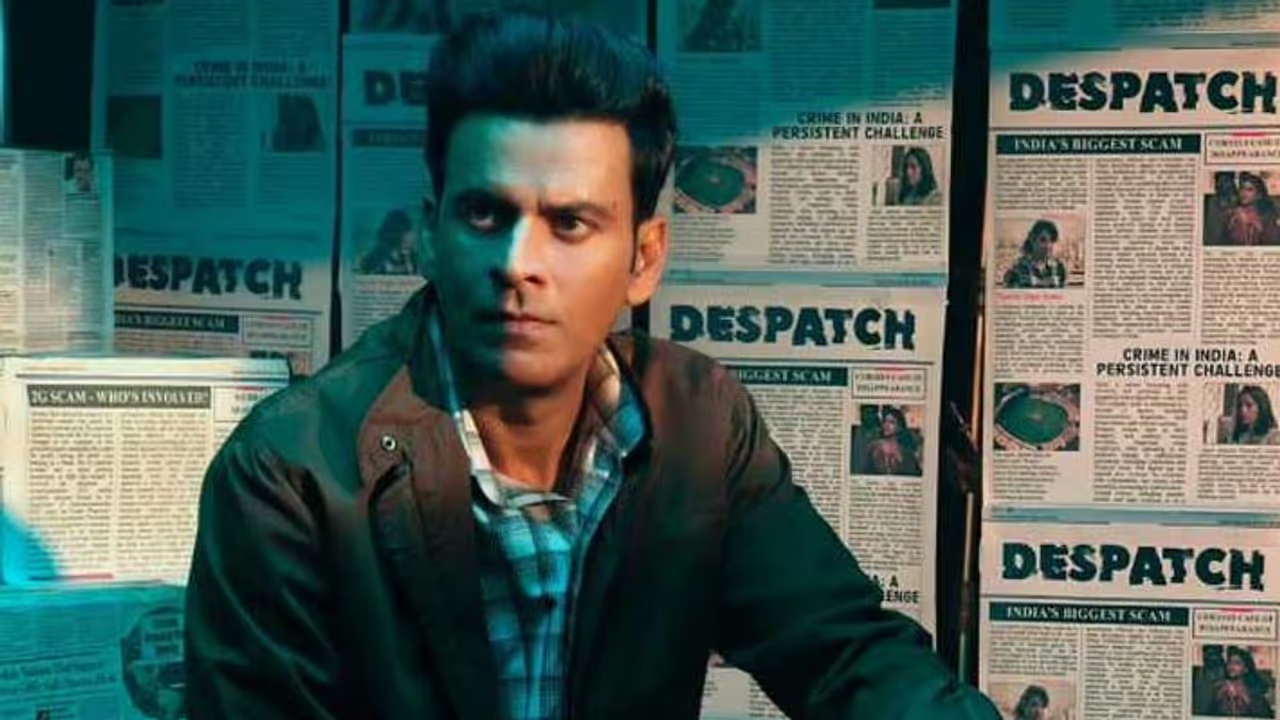
From Bihar to becoming one of Indian cinema’s most trusted actors, Manoj Bajpayee built influence through craft, restraint and range. This feature explores his journey across Satya, Aligarh, Bhonsle and The Family Man.
Hindi cinema has long rewarded those who master visibility. The louder the presence, the bigger the spotlight. Manoj Bajpayee built his career by stepping outside that logic entirely. He never chased spectacle, never engineered celebrity, never shaped himself for mass packaging. Instead, he quietly constructed one of the most respected bodies of work in Indian screen acting by letting performance, discipline and patience do the talking.
His journey did not begin in film corridors or media rooms. He grew up in a small town in Bihar, far removed from cinema’s glamour economy. Acting was not a predictable ambition in that environment. It was a leap of faith driven by instinct rather than opportunity. He moved to Delhi in his youth, navigating education, theatre exposure and repeated rejections before finding any professional footing. Those years trained him in resilience and observation, skills that later became visible in the emotional density of his performances.
When Manoj first began appearing in films during the mid nineteen nineties, the roles were small, often unnoticed, but deeply formative. He learned how to exist truthfully within limited screen time, how to communicate interior life without theatrical excess. Those early years shaped his preference for grounded realism over ornamental acting.
Everything changed when he portrayed Bhiku Mhatre in Satya. The performance felt raw, unpredictable and emotionally lived in, not designed for applause but impossible to ignore. It announced the arrival of an actor who could hold intensity without exaggeration and vulnerability without melodrama. That role permanently shifted how casting directors and filmmakers viewed him.
What followed was not a chase for repetition. Manoj consistently avoided being boxed into a single image. He moved fluidly between social drama, literary adaptation, crime narratives and intimate character studies. Films like Shool explored moral conflict within institutional power. Pinjar allowed him to inhabit historical trauma with restraint and dignity. In Aligarh, he delivered one of the quietest yet most emotionally piercing performances of his career, relying almost entirely on internal rhythm rather than dramatic flourish.
Even within ensemble driven projects like Gangs of Wasseypur, he managed to retain emotional gravity without dominating the narrative. His presence anchored chaos rather than competing with it.
Later, in Bhonsle, he portrayed isolation, aging and unspoken grief with such understatement that the performance felt almost documentary in its intimacy. It reinforced his reputation as an actor who does not seek visibility but depth.
The arrival of streaming platforms did not reinvent Manoj Bajpayee. It simply expanded the canvas that suited him best. Long form storytelling rewards patience, detail and character continuity, all areas where his craft thrives naturally.
The Family Man transformed his reach across demographics and geography. As Srikant Tiwari, he created a rare balance between ordinariness and capability. The character feels exhausted, humorous, vulnerable and competent all at once. Viewers connect not because the role is heroic, but because it feels recognisably human. The series introduced his work to younger audiences and international viewers without diluting the seriousness of his performance choices.
Streaming did not make him more famous. It made his credibility more visible.
What distinguishes Manoj Bajpayee’s career from traditional stardom is the economy it operates on. His value does not rise or fall with opening numbers or social media volume. It rests on trust. Directors trust him with emotionally demanding material. Audiences trust him to deliver authenticity even in imperfect projects. That trust has allowed him to remain consistently relevant without needing reinvention cycles.
He has never relied on spectacle, controversy or curated persona. His public presence remains minimal, his choices measured, his focus anchored in craft rather than attention.
The arc from a small town upbringing in Bihar to becoming one of the most dependable faces in Indian acting is not a story of sudden breakthrough. It is a story of accumulation. Skill built over decades. Judgment sharpened through difficult choices. Integrity preserved through restraint.
Manoj Bajpayee did not become essential by performing stardom.
He became essential by performing truth, again and again, until the industry adjusted itself around him.
And that is the rarest kind of success in cinema.
