
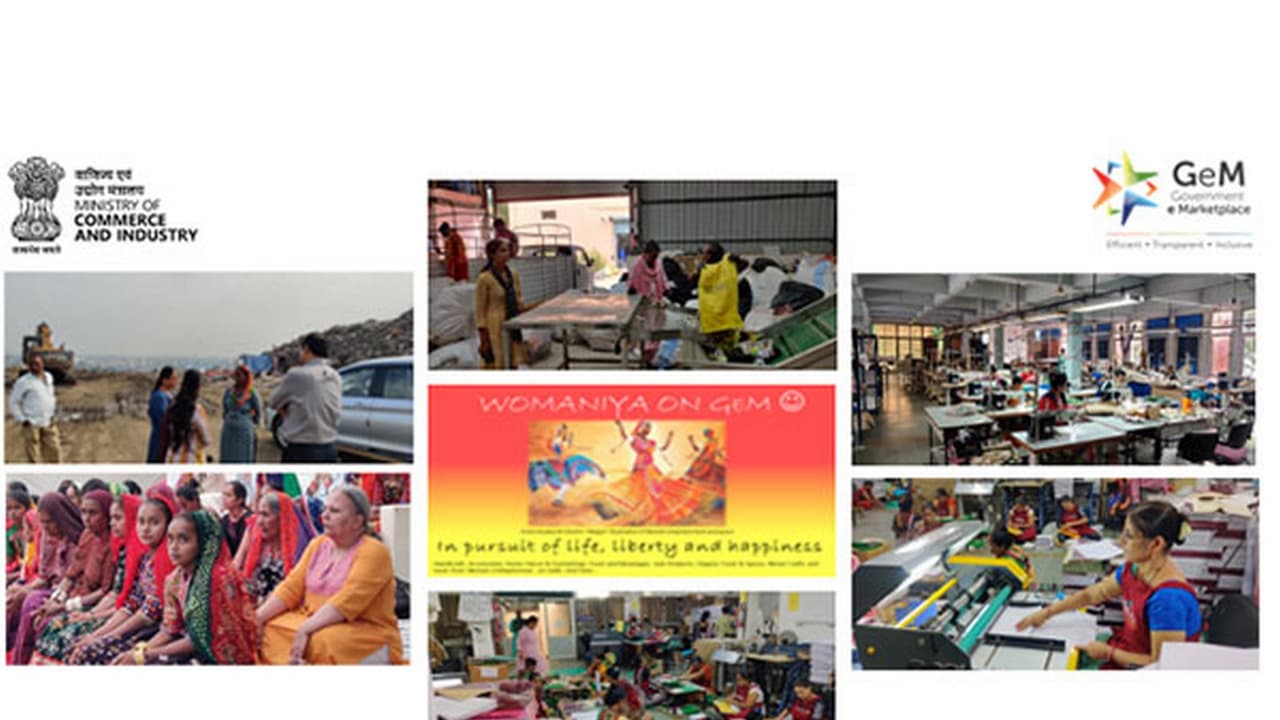
The 'Womaniya' initiative on GeM has grown significantly, registering over 2.1 lakh women MSEs in FY 2025-26. Women-led firms bagged contracts over Rs 28,000 crore, a 27.6% rise, surpassing the 3% government procurement target.
Significant Growth and Impact
The Press Information Bureau on Friday said the government's 'Womaniya' initiative, launched in 2019, has grown significantly since its launch.
In FY 2025-26, over 2.1 lakh women MSEs registered on GeM, with a total order volume of 13.7 lakh. Contracts worth more than Rs 28,000 crore were awarded to women MSEs, marking a 27.6 per cent increase over the previous year. Women-led businesses accounted for 5.6 per cent of GeM's total orders, surpassing the mandated 3 per cent procurement target.
About the 'Womaniya' Initiative
The initiative was aimed to promote women led Micro and Small Enterprises inclusion on the Government e-Marketplace (GeM). It offers a dedicated digital platform for women-led Micro and Small Enterprises (MSEs) and Self Help Groups (SHGs) to register and sell products such as handloom, jute, coir and home decor directly to Central Ministries and Public Sector Units across India.
Empowerment Through Digital Inclusion and Support
"The initiative uses specialised features on GeM to create new opportunities for women-led enterprises and SHGs. It enables them to access government markets, showcase their products and grow their businesses in a transparent digital ecosystem," the press release said.
Under the scheme, women-led MSEs are on boarded through a digital process using Udyam verification and required documentation. Their participation is further supported through online and offline training sessions conducted by GeM to build capacity and improve onboarding.
The "Womaniya on GeM" initiative is a step towards making government procurement more gender-inclusive. Government buyers help generate demand by placing orders for products listed under the initiative, integrating women producers into procurement systems. At the local level, district administrations and support centres conduct onboarding drives, training programmes and workshops to help sellers prepare their product catalogues, the release added. (ANI)
(Except for the headline, this story has not been edited by Asianet Newsable English staff and is published from a syndicated feed.)