
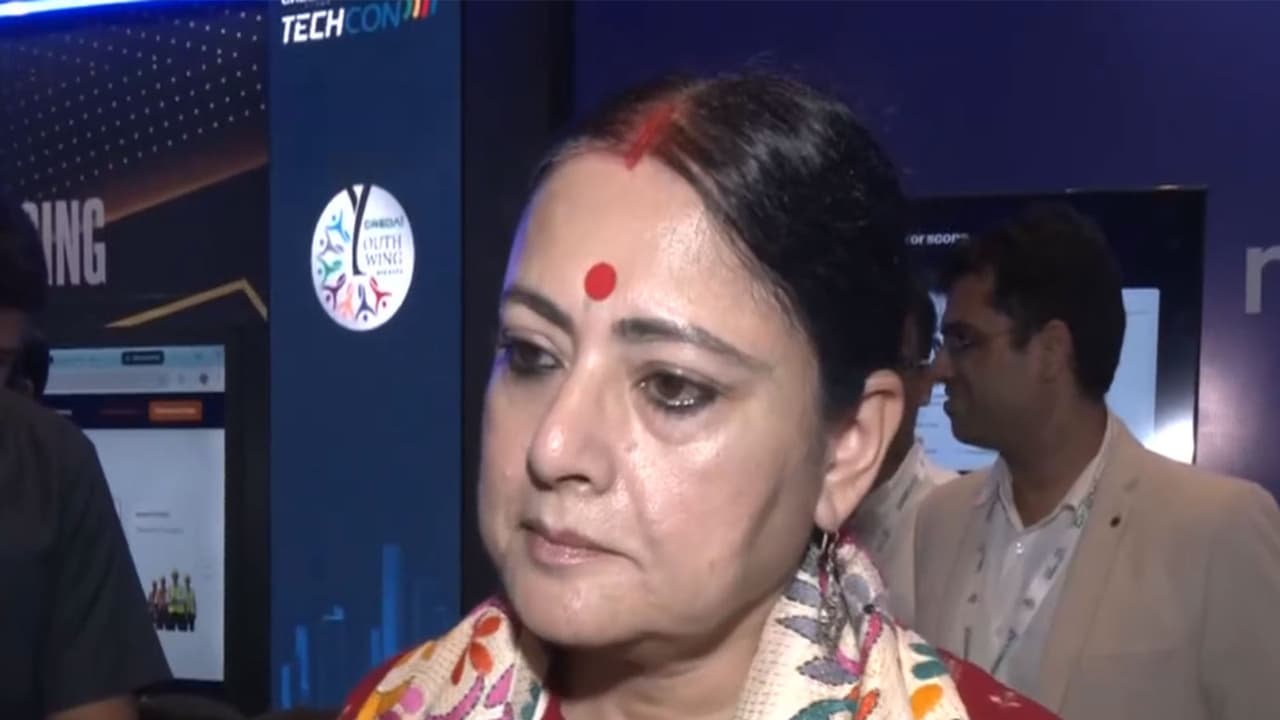
The West Bengal government is exploring using artificial intelligence for various urban management functions like property tax assessment, waterlogging detection, and monitoring bridge health, state minister Agnimitra Paul announced.
The West Bengal government is exploring the use of artificial intelligence across urban management functions, including property tax assessment, waterlogging detection, pipeline maintenance, parking and monitoring the health of bridges, state minister Agnimitra Paul said on Wednesday.
AI for Comprehensive Civic Overview
Speaking on the sidelines of CREDAI Kolkata TECHCON 2026, Paul said the government was interested in technology that could give officials a consolidated view of civic infrastructure and problems requiring intervention. "We want to see how AI can be integrated into areas such as property tax assessment, licences... and other revenue-generation models, including hoardings. Through such a system, you should be able to see the entire situation at a glance -- where the problems are and what needs attention," Paul said.
She said AI could also help authorities identify areas facing waterlogging and determine where ageing pipelines needed replacement. "For instance, we should be able to identify where waterlogging is occurring, where pipelines need to be changed and assess the overall infrastructure of Kolkata and its surrounding areas. AI can help us with this, and we are extremely interested in these applications," she said.
Addressing Specific Urban Challenges
Paul also highlighted parking as a major urban challenge and stressed the need for more multi-level parking facilities. "You cannot simply tell people, 'Do not park illegally.' The question is: where will they park? That also has to be addressed. So, going forward, parking infrastructure will have to be developed," she said.
The minister also sought technology-based solutions for assessing the structural health of bridges. "If I want to test the health of a bridge, how can AI help? I am not an expert, but I want solutions for this," Paul said.
Paul's reference to the Urban Challenge Fund comes after the Centre approved the Rs 1 lakh crore scheme earlier this year to support market-linked urban infrastructure projects. Central assistance can cover up to 25 per cent of project cost, while at least 50 per cent must come from market sources.
At the state level, West Bengal has already digitised several municipal services, including property tax collection, building-plan approvals and trade licences. Paul's comments suggest the state is now looking to extend technology use towards AI-based monitoring of urban infrastructure and civic problems.
Real Estate Industry Embraces AI
Meanwhile, CREDAI Kolkata TECHCON Chair Gaurav Belani said artificial intelligence was increasingly being adopted by the real estate industry across construction, marketing and customer interactions. "Today we are using AI everywhere, we will be using it as well in marketing, in our customers interaction, even in construction works. So AI will help reduce cost and improve sustainability of buildings and help with customer interface," Belani said.
Belani, however, rejected concerns that increased AI adoption would necessarily lead to higher unemployment, saying expansion of the technology ecosystem would create new employment requirements. (ANI)
(Except for the headline, this story has not been edited by Asianet Newsable English staff and is published from a syndicated feed.)