
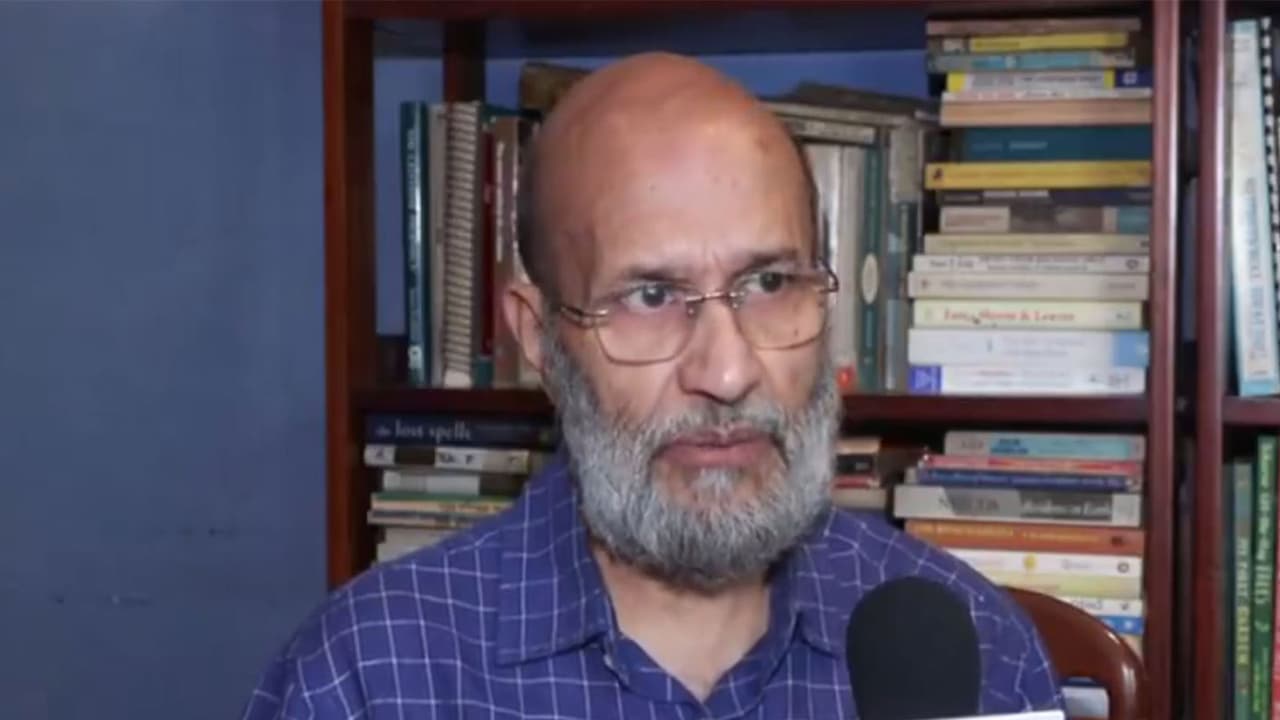
Former UN advisor Santosh Mehrotra warns the US-Iran war will spike oil prices, widening India's current account deficit. He predicts higher inflation, a falling rupee, and disruptions to fuel and gas supplies, impacting the common person.
Economic Impact on India
With no sign of the US-Iran war ending and global oil prices likely to reach record highs within a quarter, Santosh Mehrotra, former Economic Advisor to the United Nations, warned that India's current account deficit could widen by 0.3 per cent of GDP for every USD 10 rise in oil prices. He expected inflation to rise further as government action on fuel and gold comes "too little, too late," while geopolitical risks and supply disruptions keep pressure on the rupee and household budgets.
Mehrotra explained the direct transmission of oil prices to India's economy, "For every USD 10 increase in the international price of oil, it increases our current account deficit by about 0.3 per cent of GDP. And simultaneously, that same USD 10 impact on the consumer price index is about roughly the same." He said the downward revision to GDP and upward revision to CPI have already been made, but these are based on the "current situation" and do not account for a prolonged conflict.
Supply Chain Disruptions and Job Losses
The biggest near-term risk, he said, is the disruption to oil, gas, fertiliser, and helium supplies due to the closure of the Strait of Hormuz. "All this is already having an impact on the lives of ordinary people," he noted, pointing to shortages of industrial LPG that have hit ceramics and restaurants. "There has been a significant decline in the number of jobs in the restaurant industry because LPG has simply not been sufficiently available."
Government Policy and Fiscal Strain
Mehrotra was critical of the government's recent diesel price hike, arguing it will worsen inflation across the board. "Diesel is an input into transportation costs... that will simply get absorbed by the truckers, but it will finally get passed on to the consumer." He said that the government had a "windfall gain of roughly 25 to 30 lakh crores" over the last decade when oil prices averaged USD 50-60 per barrel, but fiscal strain persists due to "poor economic policies."
Rupee Depreciation and Inflationary Pressure
He also highlighted the rupee's depreciation, from "under 90 rupees to about 95 plus, nearly 96 to a dollar" in the last three months, as another inflationary trigger. "When the rupee falls against the dollar, inevitably you'll have a situation where the RBI steps in... now the RBI has stopped doing that."
Geopolitical Outlook and Future Oil Prices
Mehrotra believes oil prices could easily touch USD 150 if the war continues, with spot prices for India already near USD 140. He added that Iran is "clearly winning the war" and unlikely to concede on sanctions or uranium enrichment, meaning "the rest of the world will continue to pay the price for the behaviour of Israel on the one hand and the United States on the other."
(Except for the headline, this story has not been edited by Asianet Newsable English staff and is published from a syndicated feed.)