
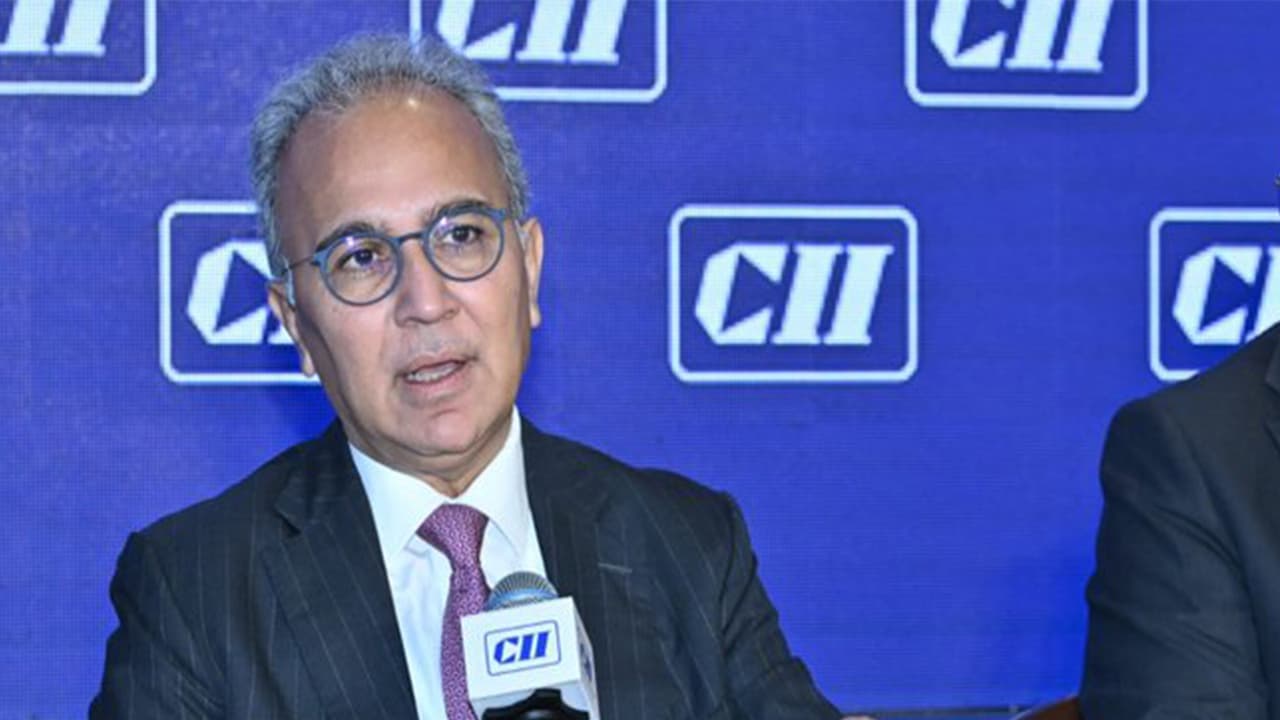
CII President Rajiv Memani stated that scaling India's manufacturing engine is crucial for absorbing the growing workforce in an era of AI-driven disruption, aiming to increase manufacturing's share of GDP from 15% to potentially 25-30%.
Manufacturing as India's Employment Engine
President of the Confederation of Indian Industry (CII), Rajiv Memani, stated that the ability of the economy to absorb a growing workforce in an era of technological change depends on the successful scaling of this manufacturing engine. Speaking at the CII Western Region Annual Meeting 2026, Memani noted that as artificial intelligence introduces new disruptions across various industries, the industrial sector must become a primary driver for employment.
"India has achieved two important things, but the biggest shift is the pivot towards manufacturing--from 15% of GDP to potentially 25-30%," Memani said. He further emphasized that "with AI bringing disruption, absorbing the growing workforce will depend on how strongly the manufacturing engine scales."
From Domestic Strength to Global Markets
Expanding on the theme of industrial growth, Naushad Forbes, Past President of CII and Co-Chairman of Forbes Marshall Pvt Ltd, discussed the relationship between domestic success and international expansion. "Markets may seem different, but customer needs are often similar across the world. Building strong capabilities in the domestic market allows companies to learn, innovate, and take those same strengths into global markets," Forbes said.
Developing a Future-Ready Workforce
The discussion also addressed the evolving requirements for human capital. Sunil Mathur, Managing Director and CEO of Siemens India, observed that maintaining the current growth trajectory requires a fundamental shift in how the country develops talent. "We are on the right path, but the future will demand a new kind of talent," Mathur said. He added that "strengthening education, skilling, and global partnerships will be key to building that capability."
The Need for Institutional Resilience
Regarding the internal resilience of organizations, Vir S. Advani, Deputy Chairman of the CII Western Region and Chairman and Managing Director of Blue Star Ltd, spoke about the necessity of long-term commitment. "Building an institution requires clarity of purpose and conviction. Even in a challenging environment, we are staying the course, continuing to invest and execute with confidence," Advani said, noting that "long-term success comes from sustained effort."
Ensuring an Inclusive 'Digital Bharat'
Piruz Khambatta, Chairman of Rasna Pvt Ltd, remarked that the success of "Digital Bharat" is measured by its level of inclusion rather than just technological advancement. Khambatta called for a unified effort between the private sector and the government to ensure that development reaches all sections of society. "Digital Bharat is not just about technology, it is about inclusion. It is about ensuring that every individual, regardless of where they come from, has the opportunity to grow and improve their quality of life," Khambatta said.
(ANI)
(Except for the headline, this story has not been edited by Asianet Newsable English staff and is published from a syndicated feed.)