
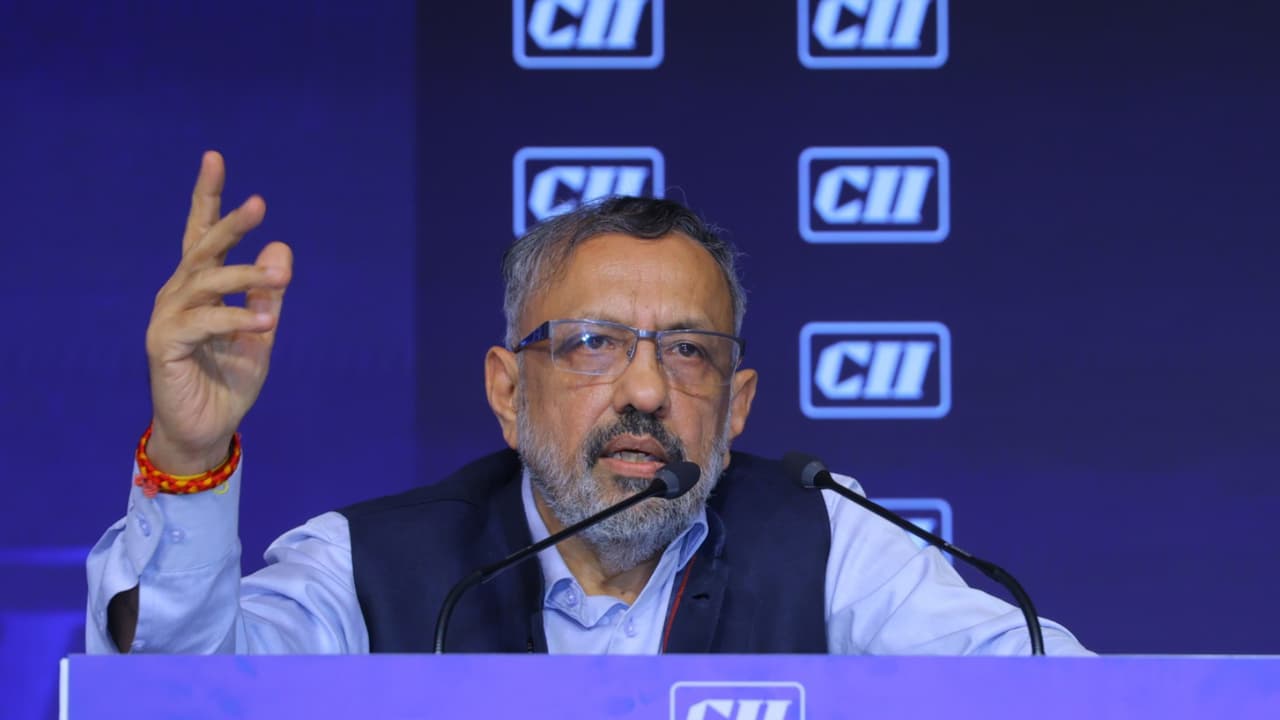
NITI Aayog's Rajiv Gauba noted India's R&D spend is stuck at 0.7% of GDP, below the 2.3% global average. He urged industry to boost R&D, enhance skilling for Industry 4.0, and shift away from reliance on imported technology.
India's gross expenditure on research and development (R&D) remains stagnant at 0.7 per cent of the GDP, significantly trailing the global average of 2.3 per cent. With nearly 60 per cent of this funding currently provided by the government, Member of NITI Aayog Rajiv Gauba on Tuesday stressed that the Indian industry must significantly increase its R&D contributions and move away from a reliance on imported technology.
"India's gross expenditure on R&D, we all know, is low. It has remained stuck at around 0.7% of GDP, well below the global average of 2.3% and much less than what countries like South Korea and Israel do. And of this 0.7%, around 60% is government funded," Gauba said, addressing the gathering at the CII Annual Business Summit 2026. He noted that such investment is no longer a choice but a strategic imperative for the nation's economic future.
Gauba pointed out that while India has achieved a nearly tenfold growth in per capita income since 1991, other nations starting from similar levels, such as China, have far outpaced this progress. He also called on the industry to address the formal skilling gap, noting that only 20 per cent of workers in construction and one per cent in tourism receive formal training. Gauba stressed that as Industry 4.0 and AI reshape the global landscape, skilling has become a matter of survival that cannot be the responsibility of the government alone.
Three Strategic Imperatives for Indian Industry
"Indian industry, I think, must invest more in R&D and shift from importing technology to creating it. R&D investment is not a cost; it is a strategic imperative. Second, skilling. The rise of Industry 4.0, AI, and automation has made workforce skilling a matter of survival. Third, I think Indian industry needs to shed its instinct for protectionism," Gauba said.
Call for Deregulation and Systemic Cleansing
He noted that India has reached an inflection point where it contributes 18 to 19 per cent to the incremental global GDP annually. However, he warned that the window of opportunity depends on the choices made today, particularly in shedding the remnants of a restrictive regulatory past.
"The most critical requirement for us to be able to bridge the gap between our potential and the actual is to cleanse our system of what has been described by some as regulatory cholesterol by undertaking a comprehensive exercise of deregulation," Gauba said. He explained that since 2014, the government has eliminated over 42,000 compliances, but emphasised that the mindset needs to change across all levels of government.
Trust-Based Governance: The 'Jan Vishwas' Principle
Gauba highlighted that the next generation of reforms must focus on trust-based governance, moving away from a colonial mindset of distrust. He outlined the "Jan Vishwas Siddhant" being evolved by a high-level committee, where industry representatives are active participants.
"We have suggested, for example, as one of these principles, that licensing in any form should be required only for reasons of national security or for activities that pose serious risk to human health or environment. Automatic self-registration should be the norm. And licenses where necessary should have perpetual or at least long-term validity," Gauba stated.
Economic Strength as National Security
The Niti Aayog member reminded the business community that economic strength remains the cornerstone of national security.
"We have to grasp the simple but profound truth that rising GDP is the best foreign policy. This is what gives the country leverage and is the best insurance or security, both internal and external," Gauba added. (ANI)
(Except for the headline, this story has not been edited by Asianet Newsable English staff and is published from a syndicated feed.)