
Parliament passed the Jan Vishwas (Amendment of Provisions) Bill, 2026, to decriminalise over 1,000 provisions across 79 Acts. The bill aims to promote ease of business by replacing imprisonment with monetary penalties for minor offences.
Parliament on Thursday passed the Jan Vishwas (Amendment of Provisions) Bill, 2026, marking a significant step toward decriminalising and rationalising offences across multiple central legislations to promote ease of doing business and ease of living.
'Unprecedented' Reform to Boost Ease of Business
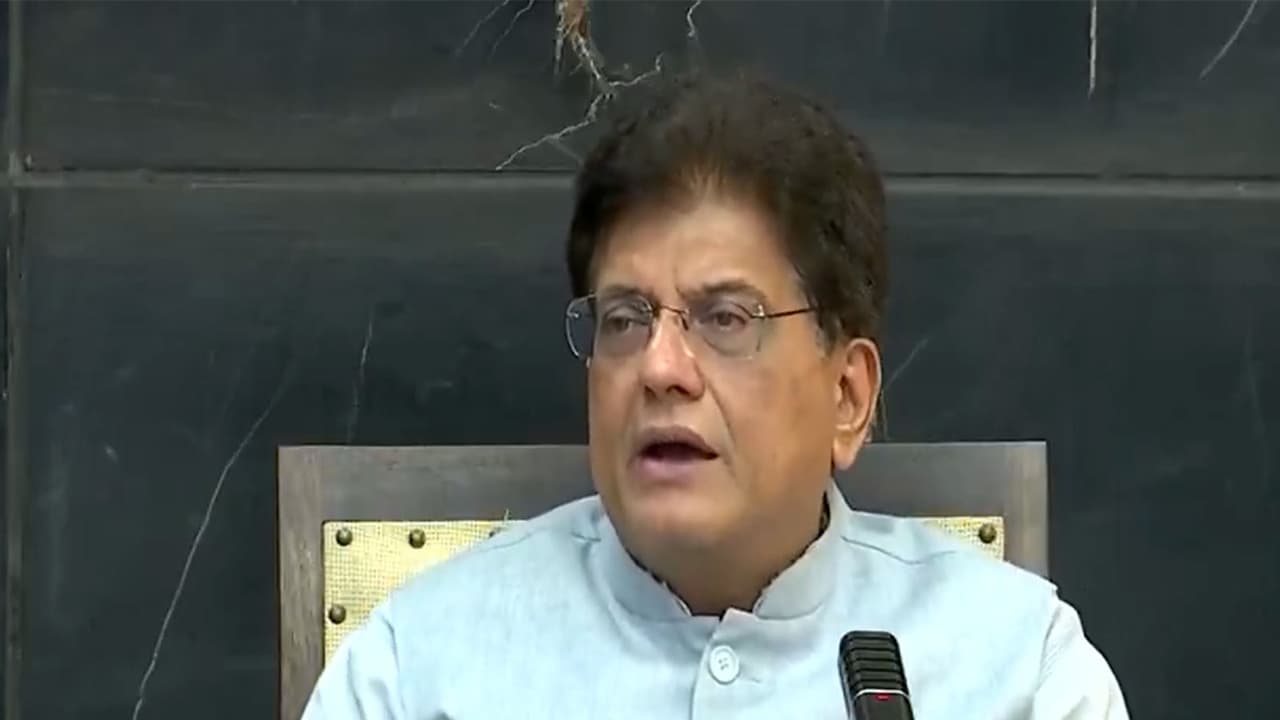
Addressing a press conference, Union Commerce Minister Piyush Goyal described the reform as unprecedented in scale. "I could not find any parallel anywhere in the world and certainly never in India... 1,000 provisions of the law covering a span of 79 different Acts of Parliament have been addressed in one stroke," he said, adding that "79 Acts with over 1,000 sections have been modified," including six laws dating back to the pre-independence era.
The Bill replaces the earlier Jan Vishwas Bill, 2025, which initially proposed amendments to 17 Acts before being expanded significantly following recommendations of a Select Committee. Goyal emphasised that the objective behind the legislation is to reduce regulatory burden and foster trust-based governance. "With one single law, we have decriminalised, simplified and made compliance less burdensome for the common man, MSMEs, entrepreneurs, startups and businesses," he said, calling it "a significant milestone in our journey towards Viksit Bharat 2047."
Decriminalisation of Minor Offences
A key feature of the legislation is the decriminalisation of offences by replacing imprisonment with monetary penalties. The government has already decriminalised 183 provisions, building on earlier reforms. "For minor offences where there is no harm caused... we must give the person a chance--through a warning, an improvement notice, or a small penalty," Goyal stated.
He underlined that over five crore cases are currently pending across India under such provisions, many of which involve minor infractions. The new framework allows authorities to impose penalties directly, avoiding lengthy court processes. "Fine has been replaced by penalty in many cases so that authorities can close cases without requiring court adjudication," he explained.
The Bill also introduces a graded enforcement mechanism--starting with advisories, followed by warnings, and escalating penalties for repeated violations. Serious offences, however, remain untouched. "Simple offences have been decriminalised, but we have not touched severe or big law breaks," Goyal clarified.
Shift from 'Colonial Mindset' to Trust-Based Governance
Highlighting the philosophical shift, he said, "For decades, citizens have been governed by laws with a colonial mindset where punishment prevailed over fairness." The reform, he noted, aims to correct that imbalance. "Every citizen of India is a law-abiding, honest person... mistakes can be made by anybody."
He further addressed the role of intent in legal violations: "Where there is no deliberate attempt to break the law, we must respond proportionately." In that context, he added a nuanced perspective: "Ignorance of the law, which is not an excuse before the law, may actually be the cause of the mistake and needs to be respected."
Other Provisions and Governance Philosophy
Goyal pointed out that many of these provisions had become "a source of uncertainty, potential rent-seeking, and harassment," all of which the government aims to eliminate. "We have removed all of that," he asserted.
The Bill also revises penalties across laws, introduces a 10 per cent escalation mechanism every three years, and establishes adjudicating and appellate authorities for dispute resolution. Additionally, several minor offences--such as false fire alarms or failure to report births and deaths--have been removed entirely.
Framing the reform within a broader governance philosophy, Goyal said the effort reflects trust in citizens and businesses. "The purpose of the reform agenda is not to control the common man, but to let them flourish with confidence that they have the trust of the establishment."
He said punitive action will now be reserved for genuinely serious violations: "Punishment should be given only for severe cases--those that cause harm to society, public property, or individuals. Minor lapses should not turn citizens into criminals." (ANI)
(Except for the headline, this story has not been edited by Asianet Newsable English staff and is published from a syndicated feed.)