
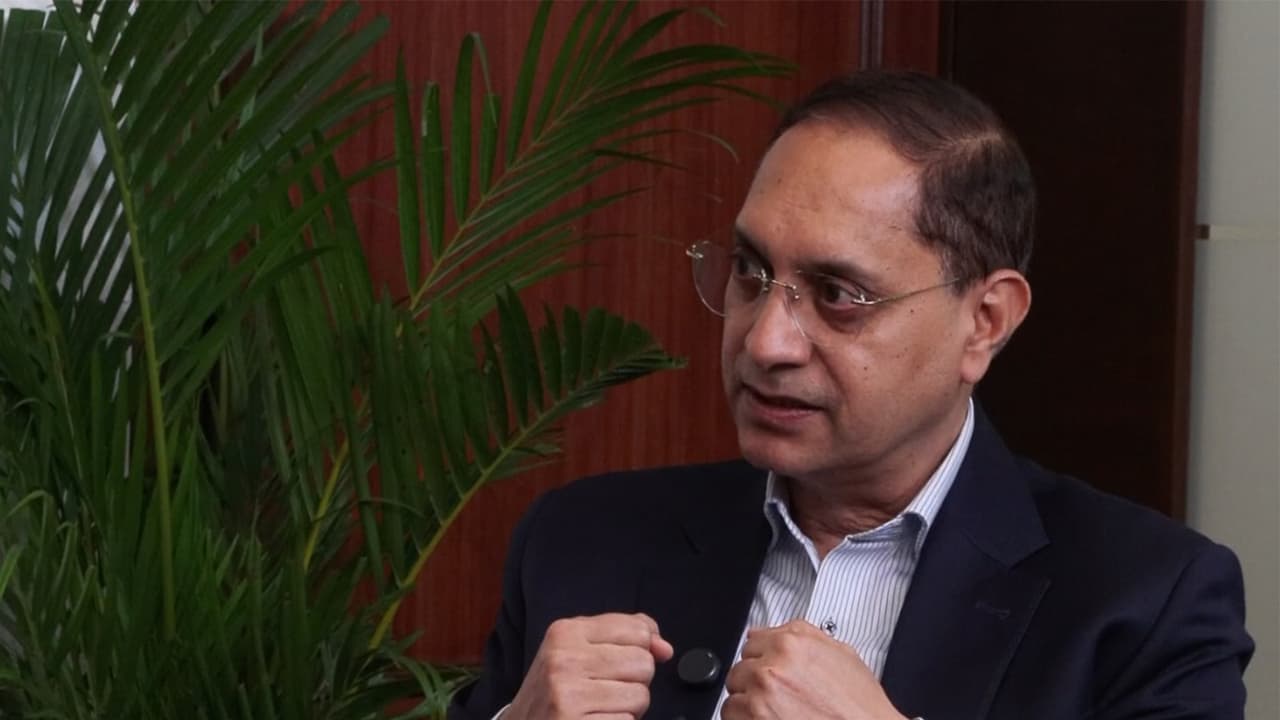
SEBI Chairman Tuhin Kanta Pandey asserts India's market regulations are globally competitive, based on disclosure, trust, transparency, and technology. The regulator aims for optimum regulation, backed by real-time surveillance and a consultative process.
Underscoring that India's market regulations are comparable to global standards and backed by real-time surveillance, Securities and Exchange Board of India (SEBI) Chairman Tuhin Kanta Pandey said the regulator follows a disclosure-based regime anchored in trust, transparency, and technology.
In an interview with ANI, Pandey said that on his first day in office, he outlined "four principles that we will work for, which are trust, transparency, teamwork, and technology," adding that these principles aim to achieve "optimum regulation, which means neither over-regulating the market nor under-regulating it."
Disclosure-Based Regime for Investor Confidence
Highlighting India's disclosure framework, he asserted, "Of course, it is globally competitive, and we are very high on disclosure." He added, "We are a disclosure-based regime, and some of our practices are world standard," noting that SEBI has also "defined materiality" to determine when disclosures become necessary.
Pandey said that appropriate regulation fosters investor confidence. "If we don't have adequate regulation, the market won't develop because there won't be trust in the market," he said, while cautioning that over-regulation could "throttle innovation" and obstruct market development.
Consultative Rule-Making and Reforms
He emphasised that SEBI has institutionalised a consultative process in rule-making. "When we frame a regulation, we do so only after proper consultation, after the committee process, after examining all public comments, and only then do we let the regulation go through the board," he said, adding that consultation papers are backed by data and rationale to convince the public before finalisation.
Calling the past year a year of reform, Pandey said SEBI has introduced several changes across departments, balancing investor protection with ease of doing business.
Enhanced Surveillance and Enforcement
On market oversight, the SEBI chief highlighted enhanced technological capabilities, including real-time surveillance. "Certainly. I think the measures that we have taken are to upgrade our surveillance infrastructure," he said, adding, "Plus, there is real-time surveillance."
Addressing concerns around enforcement, he said SEBI aims to be "a professional, just but strong regulator that will oversee the market through various technological means, analyse and upgrade our surveillance capabilities, and take just action as per the law, appropriate, proportional, and consistent."
Stance on Insider Trading
On insider trading, he rejected suggestions of laxity. "We have had several cases where insider trading has been caught, and we have penalised them," he said, adding that SEBI's orders "have been upheld by the courts in several cases."
India's Strong IPO Market
On India's IPO market, he noted strong activity in 2025. "In 2025, we were number one in the world in terms of the number of IPOs, with more than 320 IPOs," he said, adding that India was "third in terms of the value of IPOs globally."
He said SEBI continues to clear applications and that "for us, it is business as usual," even as companies time their market entry based on market conditions.
On disclosures during turbulent times, he reiterated that SEBI regulations mandate timely and compulsory disclosures under listing norms and IPO processes. "Those disclosures are compulsory," he said, adding that action is taken "when disclosures are not made."
Capital Markets and Economic Growth
Linking capital markets to India's long-term growth vision, Pandey said, "The capital market is an extremely important instrument," adding that markets play "a key role in capital formation, which is the basis of economic growth." (ANI)
(Except for the headline, this story has not been edited by Asianet Newsable English staff and is published from a syndicated feed.)