
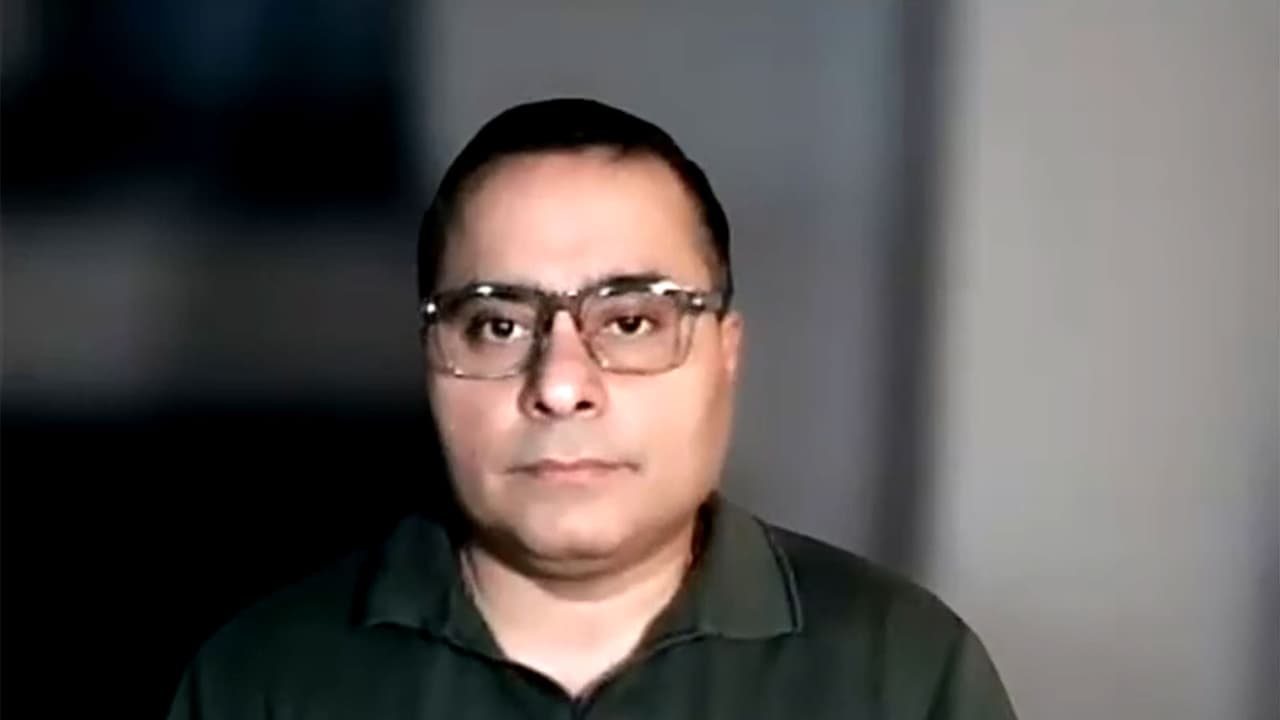
Kotak Securities' Anindya Banerjee warns India's economy is in a 'dicey' phase amid an energy shock. He says if the artificial supply disruption continues, it could cause systemic global issues and lead to fuel price hikes for Indian households.
India's economic landscape is entering a critical 'dicey' phase amid the ongoing energy shock, warned Anindya Banerjee, Head of Research at Kotak Securities, on Monday. He cautioned that if left unresolved for the next 60 to 90 days, this could trigger systemic issues for the global economy.
Global Energy Shock and its Impact
Speaking to ANI in an exclusive interview, Anindya cautioned that the world is navigating a unique, artificial supply disruption that may soon force Indian households to share the financial burden. According to Anindya, the primary concern stems from the continued blockade of vital supply routes, including the Strait of Hormuz. He added that this 'storm' is caused by geopolitical developments choking routes while the world remains 'sloshing with oil and gas'.
"Because the global situation looks very dicey, and the energy shock continues without any solution... things might get tricky if this energy shock continues for another 2-3 months," Banerjee told ANI, adding that the global economy could face 'major issues'.
Fuel Price Hikes Loom for Indian Households
With the economic impact distributed across the government, oil marketing companies (OMCs), and industrial users, Banerjee was of the view that if the crisis extends into the monsoon season, the 'fourth pillar'--Indian households--will likely see a direct impact. Like other analysts, he too anticipates a staged increase of Rs 5 to Rs 7 per litre in petrol and diesel prices, alongside inevitable hikes in domestic LPG and CNG costs.
Curbing Gold Imports to Strengthen Currency
Commenting on Prime Minister Narendra Modi's appeal to curb spending on gold, and asking people to take measures to save petrol to strengthen the Indian currency, Anindya said that the government has issued a 'nudge' to citizens to reduce discretionary spending on gold.
He added that in FY26, gold imports reached USD 72 billion, the second-largest import after oil. While import volumes dipped by 5 per cent, a doubling in global prices caused the value to surge from USD 58 billion to USD 72 billion. The government remains reluctant to hike duties further to avoid incentivising smuggling, relying instead on appeals for restraint.
Cautious Outlook and Way Forward
The Kotak Securities analyst clearly mentioned that, with no immediate end to the West Asia stalemate in sight, the outlook remains cautious. He suggested that the way ahead for India is to "hunker down" and wait for the artificial supply disruptions to pass. "Till it lasts, we have to simply hunker down and just wait for the storm to pass," he concluded.
(Except for the headline, this story has not been edited by Asianet Newsable English staff and is published from a syndicated feed.)
