
Union Minister Ashwini Vaishnav said railway safety and track maintenance will be overhauled in 5-8 years with new tech. The goal is to make rail operations and worker safety on par with developed countries, replacing century-old practices.
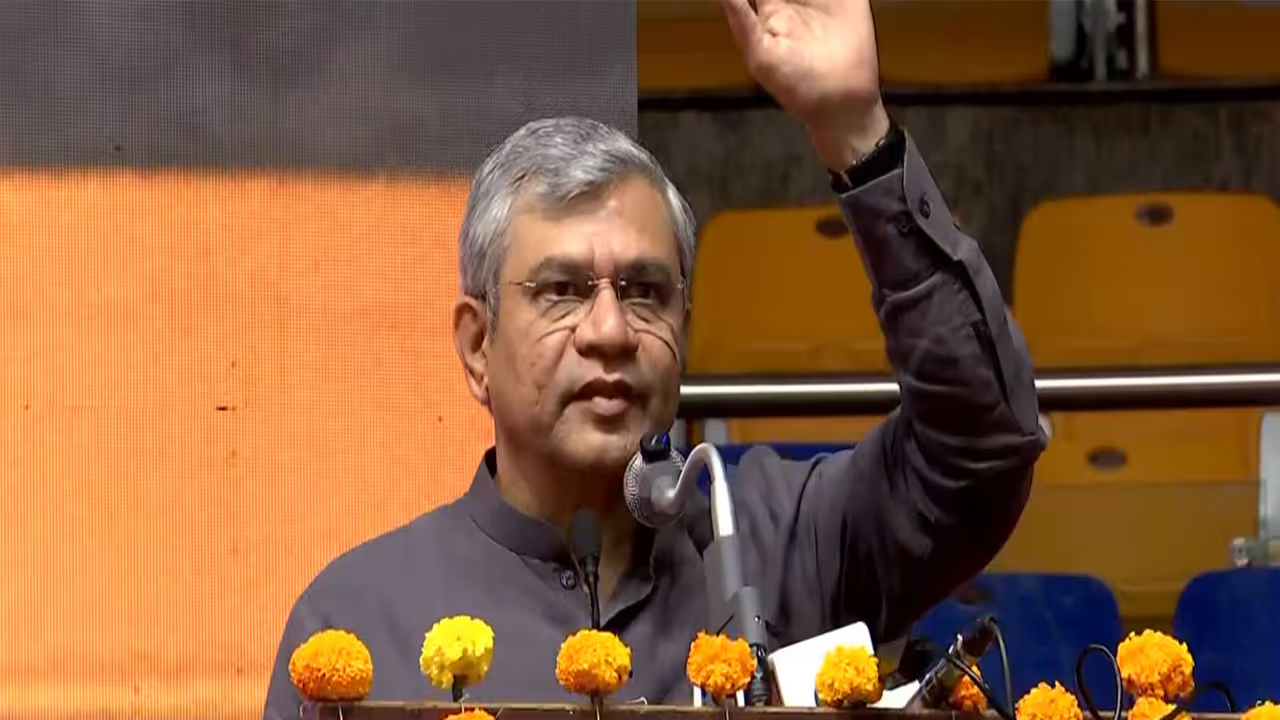
Railway safety and the way track maintenance is done in India are set for a complete overhaul over the next 5-8 years, with new technology replacing century-old practices, Union Minister for Railways Ashwini Vaishnav said while addressing the All India Track Maintainers Conference.
Speaking to a gathering of trackmen and railway officials, Vaishnav said the government's focus is now on making both rail operations and track workers' safety on par with standards in developed countries. "We don't want to settle there. We want to do even better work. We want to bring Indian Railways to the scale of developed countries," he said, crediting the entire railway workforce and the leadership of Prime Minister Narendra Modi for the progress made so far. He also noted that for only the second time in India's history, the entire Parliament had worked in support of railway workers during the recent Budget Session.
Focus on Worker Safety
Vaishnav noted that railway accidents have reduced by 90% in the last decade, but stressed that safety cannot be taken for granted. The bigger challenge, he said, is protecting track maintenance staff who work on live lines. The earlier VHF-based Rakshak system, he explained, often failed in areas with hills, curves or long distances where the signal could not reach.
To address this, the Railways has developed a mobile phone-based safety app, currently under pilot in Southern and Western Railways. "Mobile connectivity through 4G and 5G now covers about 95% of the country. Wherever there is a gap, we will install towers," Vaishnav said. Once the pilot is successful, the app will be provided to 100% of trackmen and keymen for personal safety. "If you are safe, the railway is safe. Your safety is our big responsibility," he added.
Modernisation of Track Maintenance
On modernisation, the Minister said the way track maintenance is carried out will change fundamentally. Over the last decade, nearly 36,000 km of new tracks have been laid through gauge conversion, doubling, and new lines. To maintain this expanded network, the Railways currently has 1,800 track machines, and the aim is to increase this to 3,000.
These machines will enable better inspection for kinks, nodules, weld defects and other track issues, reducing reliance on manual checks.
New Equipment and Vehicles
A major shift is also underway in equipment. The Railways is introducing rail-cum-road vehicles that allow staff to travel on tracks with all their tools and inspect without walking long distances. The pilot has already started in the Bhavnagar division and will be rolled out across all divisions in the coming years. Drone inspections and new types of gauges for checking turnouts and crossings are also being deployed.
Upgrading Track Components and Welding
Vaishnav said the Railways is moving towards universal adoption of 60 kg 90 UTS rails, 260-metre rail panels, thick web switches and weldable CMS in turnouts. Welding is also being upgraded from 80-welding to flash butt welding for greater track safety.
Introduction of Modern Fasteners
Another significant change is the introduction of screw-type fasteners, already in use globally for 70-80 years. Unlike traditional hammered fasteners, these can be tightened using a battery-operated torquing machine and do not need checking for 3-4 years, making maintenance safer and easier.
Further, the Minister assured staff that these changes will make their work safer and more efficient. "The time when track maintenance was done using 100-year-old methods is gone. Now it will be done in a modern, comfortable and safe way," he said. (ANI)
(Except for the headline, this story has not been edited by Asianet Newsable English staff and is published from a syndicated feed.)