
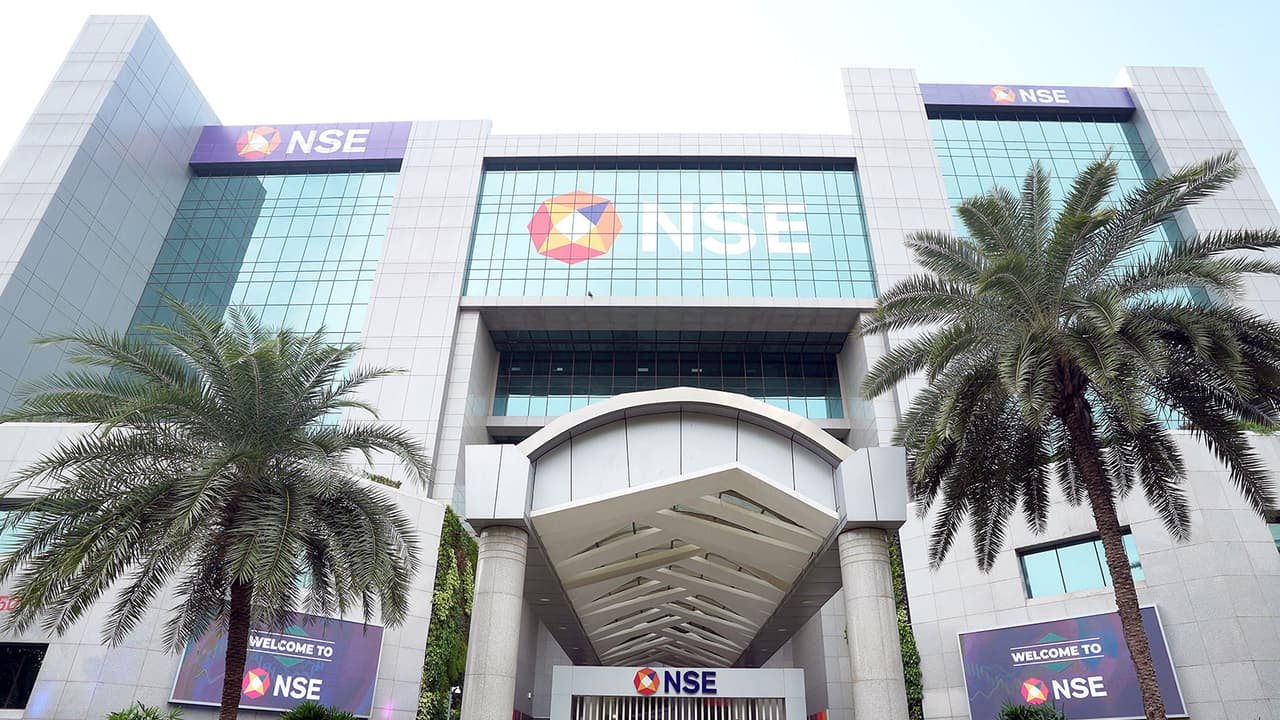
Indian equity benchmarks opened lower, with Sensex and Nifty declining amid renewed uncertainty over the US-Iran ceasefire. This dip follows a sharp rally, and experts caution that escalating geopolitical tensions could put the uptrend at risk.
Indian equity benchmarks opened lower on Thursday, tracking mixed cues from global markets amid renewed uncertainty around the fragile US-Iran ceasefire. The BSE Sensex stood at 77,154.49 points at 9:17 am, marking a decline of 408.41 points or 0.53 per cent. Similarly, the NSE Nifty 50 was positioned at 23,839.85 points, down by 157.50 points or 0.66 per cent.
The downward movement in domestic equities mirrored a general slump across the Asian region, with Japan's Nikkei 225 dropping 393.42 points and South Korea's KOSPI sliding 90.27 points, representing a 1.54 per cent decline. The Hang Seng in Hong Kong and the Shanghai Composite in China recorded marginal losses, while the SET Composite in Thailand remained a lone outlier, trading with minor gains.
Expert Analysis on Market Drivers
The previous sessions saw a substantial recovery, which experts attribute to specific geopolitical shifts and domestic policy signals. "The two-week ceasefire between the US and Iran and the consequent sharp decline in crude prices provided the trigger for a sharp 873-point rally in Nifty yesterday. The short-covering and accumulation in attractively valued financials facilitated the sharp surge in the market," said VK Vijayakumar, Chief Investment Strategist, Geojit Investments Limited.
Impact of RBI Policy and Economic Outlook
Speaking about the impact of recent regulatory updates, Vijayakumar noted that the latest monetary policy from the Reserve Bank of India met general expectations. He indicated that while the lack of change in rates did not provide a direct boost, the underlying economic outlook remains positive. "Even though RBI's monetary policy on expected lines with no change in rates and stance was not market boosting, the Governor's comment that 'growth impulses remain strong supported by robust private consumption and sustained investment demand' augurs well for the market," Vijayakumar stated.
He pointed toward long-term growth projections as a source of potential resilience for the indices. "With 6.9% GDP growth and 4.6% inflation projected for FY 27 by the RBI, the nominal GDP growth for FY27 can be around 11.5% which can deliver around 12% earnings growth in FY 27. With fair valuations in the market now, if the West Asian ceasefire holds, the market will remain resilient," he added.
Geopolitical Risks and Investor Caution
However, investors still remain cautious about emerging geopolitical tensions in West Asia. "There are some concerns surrounding Israeli attack on Lebanon and its fallout on the ceasefire. If crude again spikes in response to this development, the uptrend witnessed yesterday will be at risk of losing stream. The big takeaway from the r ally in the market yesterday is that fairly valued stocks depressed by FPI selling and shorting will bounce back at anytime. Patience is the key," Vijayakumar said.
Commodities in Focus
In the commodities space, gold prices climbed nearly 2 per cent to around USD 4,790 per ounce, hitting their highest level since mid-March, as investors recalibrated inflation expectations amid easing energy supply concerns. Meanwhile, Brent crude prices rebounded nearly 2 per cent to trade above USD 97 per barrel on Thursday, after Iran's fresh accusations against the U.S. reignited fears of potential disruptions to global oil supplies if tensions escalate again. (ANI)
(Except for the headline, this story has not been edited by Asianet Newsable English staff and is published from a syndicated feed.)