
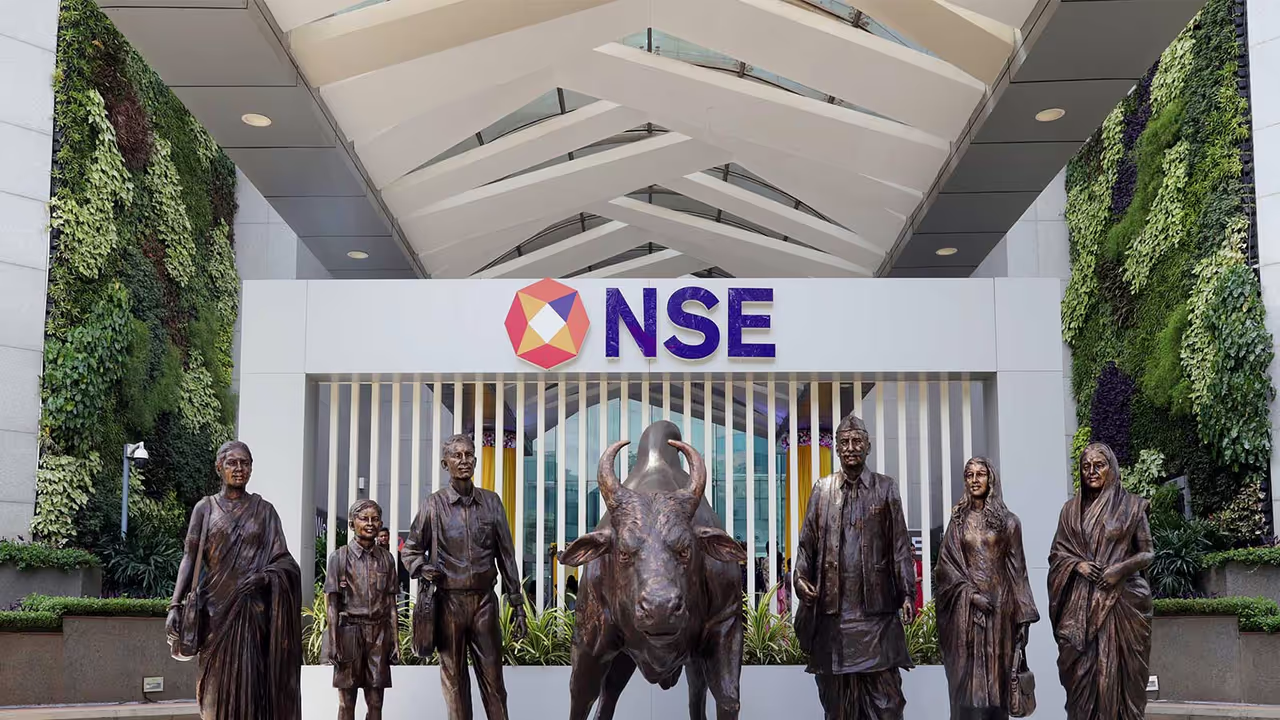
Indian markets ended in red for the third session as Sensex fell over 400 points and Nifty slipped below 22,700. The sell-off was triggered by rising crude oil prices and geopolitical tensions, leading to broad-based selling across sectors.
Indian equity markets ended in the red for the third consecutive session on Thursday, with the Sensex plunging over 400 points and the Nifty slipping below the 22,700 mark, as elevated crude oil prices and escalating geopolitical tensions weighed on investor sentiment.
Sensex, Nifty Extend Losses
Sensex ended lower at 73,249.39, down 460.30 points or 0.62 per cent against the previous close of 73,709.69. Similarly, Nifty settled at 22,687.65, down 123.70 points or 0.54 per cent, against the previous close of 22,811.35.
Broad-based Selling Hits Markets
The market witnessed broad-based selling. All broad markets ended in the negative territory; amongst the sectoral indices, most indices settled in the red with media emerging as the top drag, losing over 2 per cent, followed by FMCG, midsmall IT & telecom, and IT. On BSE, Bajaj Finance, LT, ICICI Bank, SBIN, Sun Pharma, Bharti Airtel, NTPC, Kotak Bank, Adani Ports among others were the top gainers. On the other hand, Eternal, Tech Mahindra, Trent, BEL, Power Grid, Maruti, TCS, HCL Tech, Titan, M&M, Tata Steel among others were the top losers.
Likewise, on NSE, Bajaj Finance, Cipla, ICICI Bank, Bajaj Auto, Sun Pharma, SBIN, BSE, Grasim, Axis Bank among others were the top gainers while Nestle, Eternal, BEL, HDFC Bank, Reliance, TMPV, HDFC Life, BEL, Trent, Power Grid, TCS, Indi Go among others were the top laggards.
Analysts Point to Macroeconomic Headwinds
Ajit Mishra, SVP, Research, Religare Broking, noted, “Global and domestic macroeconomic concerns continued to weigh on sentiment. Brent crude moved higher towards USD 113 per barrel amid escalating tensions in the Middle East, raising concerns over imported inflation and corporate margins.”
At the time of reporting, Brent crude was trading at around USD 111.82 per barrel while crude oil was trading at around USD 99.45 per barrel.
Market anlayst Vipin Dixena noted,“Fifteen of the 16 major sectoral indices ended in negative territory, reflecting widespread investor caution. Elevated crude oil prices and escalating geopolitical tensions remained the primary triggers for the sell-off.”
As per Dixena, the current weakness is not merely a result of profit booking. Brent crude moving above USD 110 per barrel creates a significant macroeconomic challenge for India, given its dependence on imported oil. Sustained high oil prices can increase inflationary pressure, weaken corporate margins and complicate the interest-rate outlook. “From a fundamental perspective, I believe investors should focus on the quality and sustainability of corporate earnings rather than the recent fall in stock prices alone. Companies with strong balance sheets, healthy cash flows, pricing power and manageable debt are better positioned to navigate the current environment,” he said. (ANI)
(Except for the headline, this story has not been edited by Asianet Newsable English staff and is published from a syndicated feed.)