
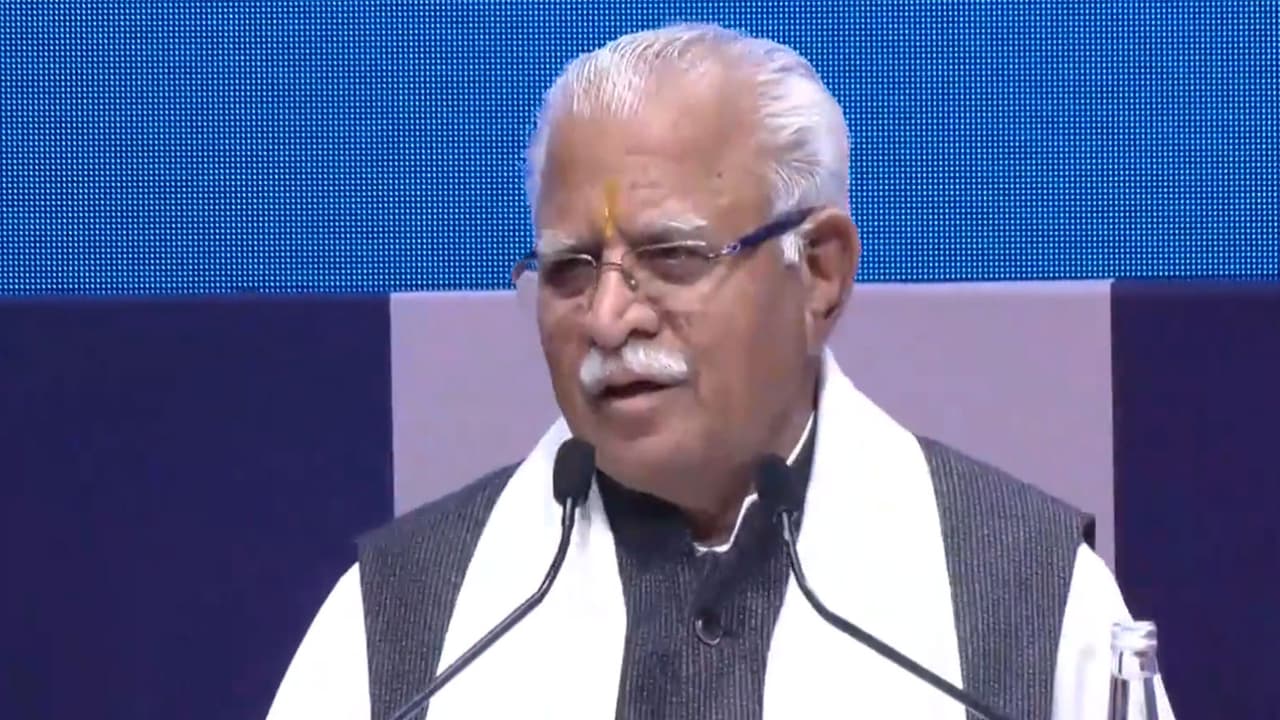
India is expanding its cross-border electricity trade by exploring a power transmission link with Sri Lanka, Power Minister Manohar Lal Khattar announced. This initiative is part of the 'One Sun, One Grid, One World' vision.
India is exploring regional grid connectivity, including potential power transmission links with Sri Lanka, as part of efforts to expand cross-border electricity trade and advance the "One Sun, One Grid, One World" initiative, Minister of Power Manohar Lal Khattar said on Thursday.
"Regional interconnections, including with Sri Lanka, can help facilitate the flow of clean energy across borders and strengthen the vision of a unified global grid," he said while addressing the Bharat Electricity Summit 2026 in New Delhi.
Expanding Cross-Border Power Supply
Highlighting India's growing role in regional energy cooperation, the minister said, "We are already providing power to Nepal, Bangladesh and Bhutan, and soon we will also supply electricity to Sri Lanka in the near future."
He also underlined India's competitive advantage in power generation costs. "We have more affordable power than most countries in the world, including European countries. Their cost of production is around Rs 35 per unit, while ours is significantly lower," he said, adding, "We aim to further reduce the cost of power production."
Strengthening Transmission and Meeting Demand
The minister emphasised the critical role of transmission infrastructure in enabling seamless electricity exchange across regions.
Tracing the evolution of energy use, Khattar spoke about the shift from early dependence on fire and coal to modern energy sources such as hydro, wind, nuclear and solar. He noted that conventional resources are finite and stressed the growing importance of renewable energy, particularly solar power, in meeting future demand.
Stressing the centrality of electricity to economic growth, he said power is fundamental to achieving India's goal of becoming a developed nation by 2047. He added that key sectors such as education, healthcare, industry and infrastructure depend heavily on reliable electricity supply.
India has significantly expanded its transmission network over the past decade, enhancing its ability to move power across regions and meet rising demand. The country's peak electricity demand reached around 250 gigawatts (GW) in 2024, and preparations are underway to meet higher requirements, with readiness to supply up to 270 GW during peak periods, he said.
Emerging Demand Drivers
He further noted that emerging demand drivers such as data centres, electric vehicles and new industries are expected to require an additional 30 GW of capacity in the coming years, putting further pressure on the power system.
The Future of India's Energy Mix
While renewable energy capacity is expanding rapidly, Khattar said fossil fuel-based generation will continue to play a role in the near term to ensure reliability. "Non-fossil sources are growing fast, but conventional energy remains necessary to meet rising demand," he said.
Focus on Energy Storage and Innovation
He also highlighted the importance of energy storage in stabilising the grid and integrating renewable power. India is targeting around 100 GW of storage capacity by 2035 through a mix of battery storage and pumped hydro projects. While battery storage offers flexibility, hydro-based storage provides longer operational life, he noted.
Calling for innovation, the minister encouraged startups and entrepreneurs to develop new solutions in energy generation, transmission and storage, emphasising that new technologies will be critical in improving efficiency and sustainability in the sector. (ANI)
(Except for the headline, this story has not been edited by Asianet Newsable English staff and is published from a syndicated feed.)