
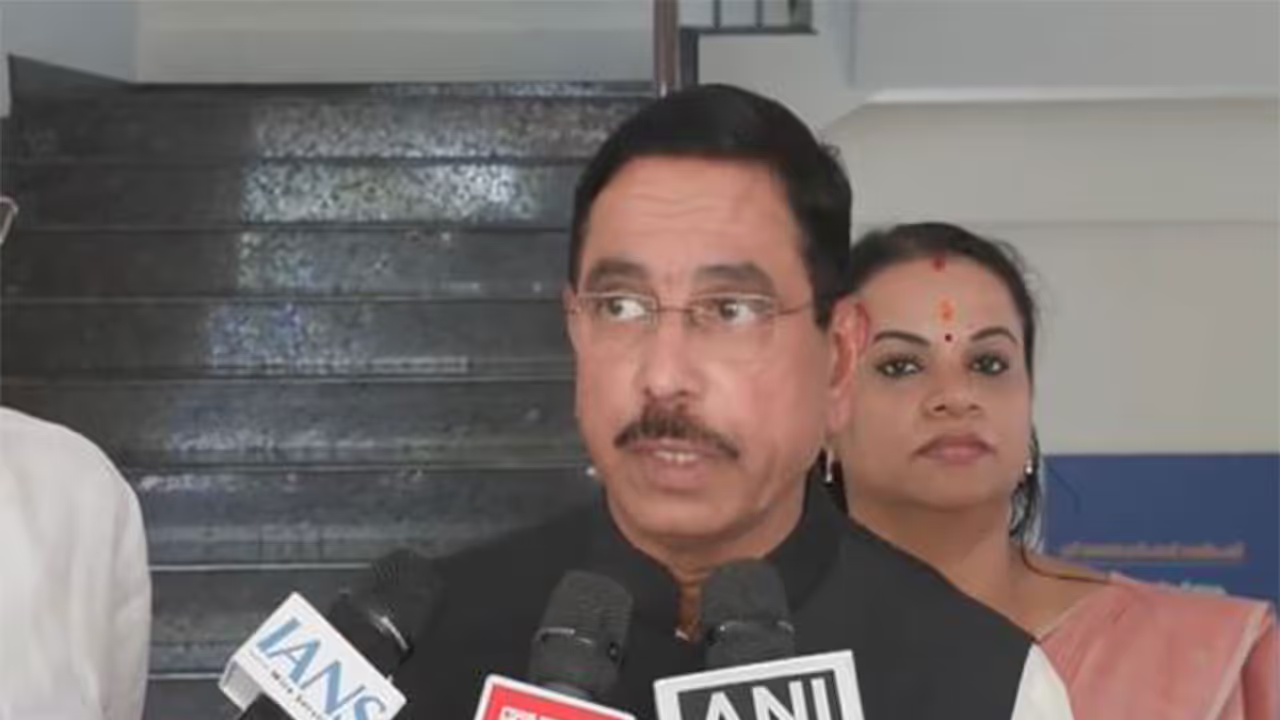
Union Minister Pralhad Joshi states India is seeing a structural shift in its power mix. Nearly two-thirds of recent peak electricity demand was met by renewable sources, showing India can handle variability and is reducing coal import dependency.
Union Minister Pralhad Joshi on Wednesday said that India is witnessing a structural shift in its power generation mix, with nearly two-thirds of peak electricity demand recently being met through renewable sources, indicating that the transition is "already happening on the ground".
"Nearly 30% of generation comes from wind, solar, battery, and pumped storage combined. Recently, around 22% of peak demand was recorded, with nearly two-thirds of the demand being met by renewable energy. This shows that India is capable of handling variability and converting installed capacity into generation, and generation into transmission," the Union Minister told reporters here on the sidelines of Resilient Futures Summit.
He emphasised that the country has demonstrated its capability to handle variability in renewable energy, citing the recent peak demand scenario where a significant share was met through non-fossil sources. "Almost two-thirds of the demand has been met by renewable energy," Joshi said, adding that this reflects India's progress in converting installed capacity into actual generation and transmission.
Reduced Dependence on Coal Imports
On coal imports, the Union Minister said dependence on imported coal has reduced significantly, particularly in segments where domestic coal can be utilised.
Joshi clarified that imports are largely limited to specific requirements, such as imported coal-based power plants set up earlier and metallurgical needs, while domestic coal is being used wherever available. "Now, the almost substitutable coal import, according to me, I do not have recent data, has come down. By substitutable coal, I mean coal used in imported-based power plants set up by the previous regime, not during Modi's tenure. For those plants, and for metallurgical requirements, coal imports are still needed," Joshi said.
Progress on PM Surya Ghar Yojana
Addressing rooftop solar adoption under the PM Surya Ghar Yojana, he said around 36 lakh installations have been completed so far.
The Union Minister added that the government is working to scale this up further to meet its target by March 2027, with efforts underway to accelerate implementation through utility-led models. "When we talk about solar generation capacity, I am seeing it on a day-to-day basis. We have installed nearly 36 lakh as of now, and we aim to complete the target by March 2027, as set by the Prime Minister. This means we still need to complete more than 65-66 lakh. We are also trying to push this through a utility-led model. Sir, last political question," Joshi added.
Renewable Targets Met Ahead of Schedule
Highlighting broader progress in the renewable sector, the Union Minister said, "Prime Minister Modi has set a target of 500 gigawatts by 2030, and the goal of achieving 50% capacity through non-fossil sources has already been met five years ahead of schedule."
He said the progress reflects the country's ability to scale up clean energy infrastructure while ensuring reliability in power supply. (ANI)
(Except for the headline, this story has not been edited by Asianet Newsable English staff and is published from a syndicated feed.)