
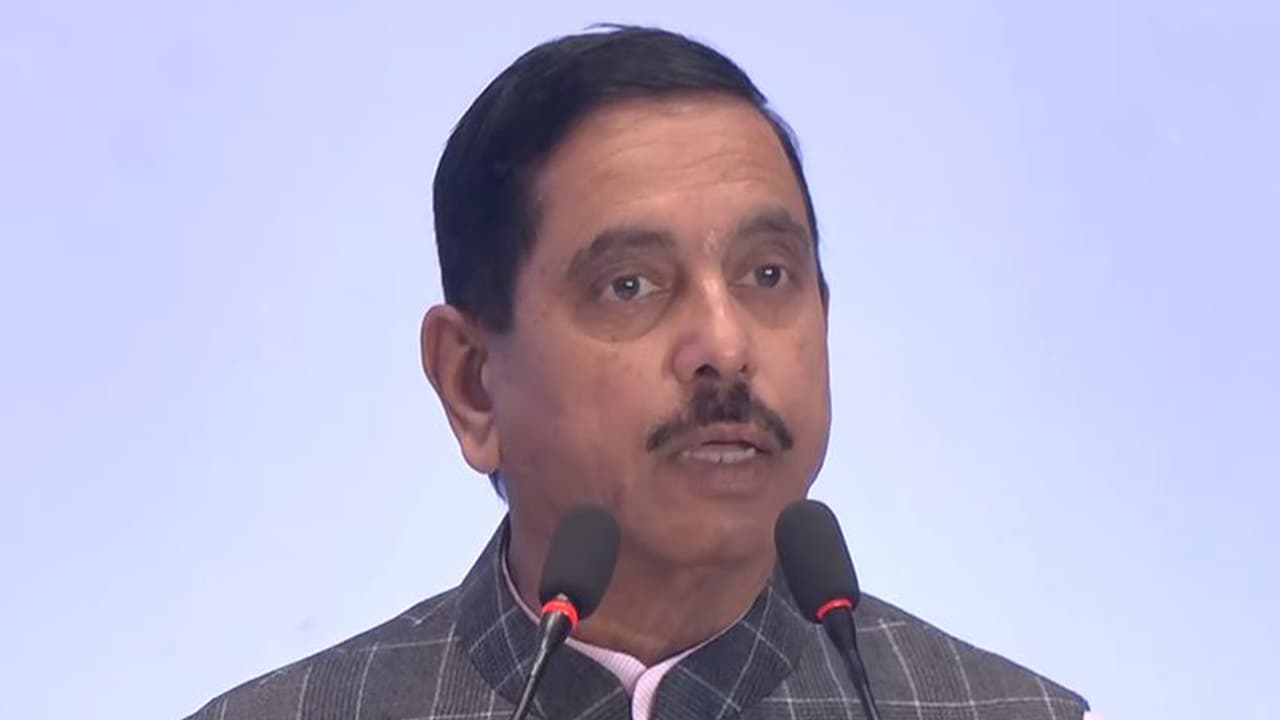
Union Minister Prahlad Joshi has announced that India plans to partner with Danish firms to enhance industrial energy efficiency, focusing on heat management and cooling to boost competitiveness while maintaining a steady decarbonisation path.
India-Denmark Partnership for Industrial Efficiency
India is looking to work with Danish companies on energy-efficient cooling, industrial heat management and waste heat recovery to help domestic industries reduce energy costs and improve competitiveness, Union Minister for New and Renewable Energy Prahlad Joshi said.
Addressing the Denmark country session at the Bharat Renewable Energy Summit and Expo 2026, Joshi said Danish expertise in these areas, along with digital energy management, could support Indian industries in improving energy efficiency. "Danish expertise in efficient cooling, industrial heat, waste heat recovery, and digital energy management can help Indian industry reduce energy costs and improve competitiveness," he said.
Economic Growth and Sustainability
The minister also highlighted India's ability to sustain economic growth while reducing the emissions intensity of its economy, saying the country was demonstrating that development and decarbonisation could progress together. "India has demonstrated that economic growth and emission reduction can go hand in hand. We are already decoupling economic growth from emissions," Joshi said.
He pointed to India's economic performance, noting that GDP grew by 7.8 per cent in the first quarter, while the services sector expanded by 10 per cent. Manufacturing gross value added (GVA) grew by 9.2 per cent, while exports of goods and services registered 12.2 per cent growth.
Renewable Energy Progress
Joshi said India's non-fossil fuel-based installed power capacity had increased from 80.3 gigawatts in 2014 to 310 gigawatts currently. Solar capacity rose from 2.8 gigawatts to 172 gigawatts, while wind capacity expanded from 21 gigawatts to 60 gigawatts. He further highlighted that India had achieved 50 per cent of its installed electricity capacity from non-fossil fuel sources ahead of its nationally determined contribution target under the Paris Agreement.
The minister also called for greater cooperation between India and Denmark in renewable energy forecasting, grid balancing, smart grids, battery storage and demand-side flexibility. He said the next phase of the energy transition would require better integration of renewable electricity across sectors to improve grid flexibility, reduce emissions and make more efficient use of energy. Joshi also encouraged Danish businesses and financial institutions to view India as a growing market for clean energy manufacturing and long-term investment.
(Except for the headline, this story has not been edited by Asianetnews Editorial staff and is published from a syndicated feed.)



