
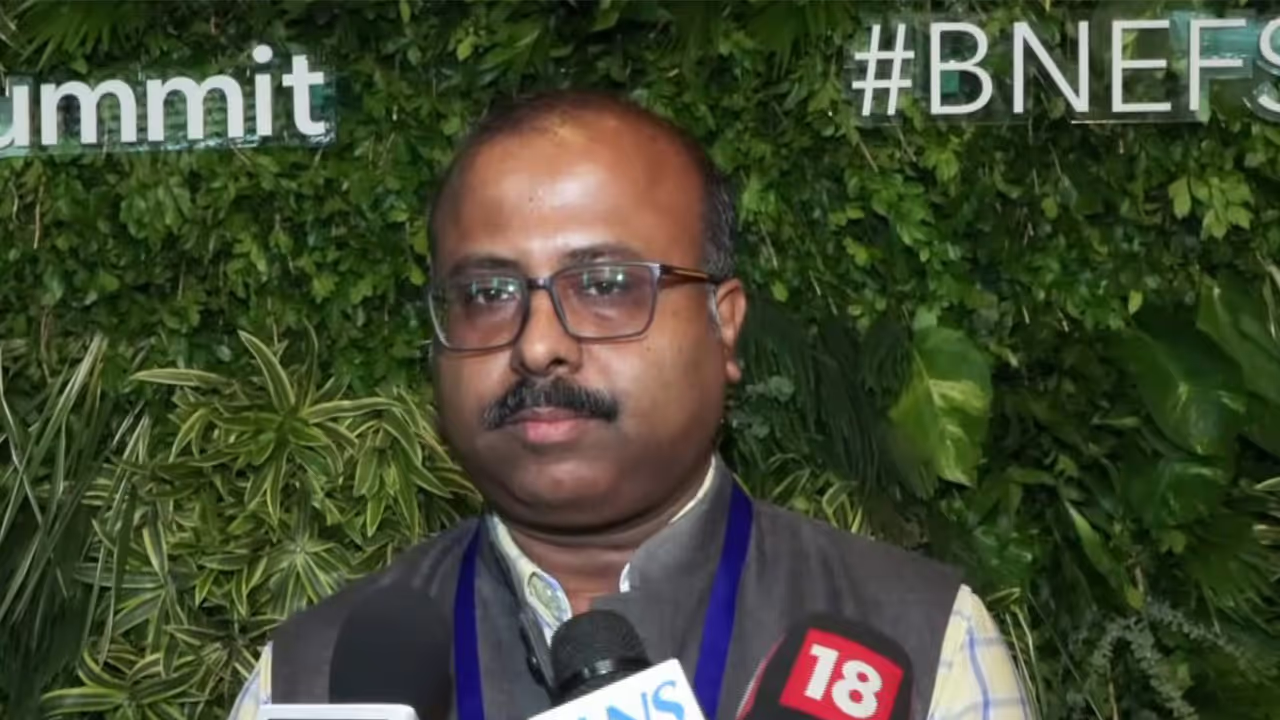
India needs to collaborate on Small Modular Reactor (SMR) technologies for reliable power in industrial hubs and data centres, says TERI's Alekhya Datta. He stressed that nuclear and hydro power are crucial for achieving the 2070 net-zero goal.
"We have to have a strategy to collaborate with the countries having those technologies, and we have to focus. We have to talk about the industrial sectors and the sectors where the data centres are coming. Very strategically, the state has to open those places where we need reliable power, where we need power at a high frequency or high load. SMR plays a very important role there," he said. He said this while responding to a query of ANI on the sidelines of the BNEF Summit.
Role in Net-Zero Target
Datta further added that nuclear power and hydropower would have a larger role to play as India moves towards its target of achieving net-zero emissions by 2070. "And if you're going towards net zero by 2070, I think if we move away from thermal, I think the nuclear and of course the hydro will play a larger role, and we have to have more technology to promote SMR as well as the hydropower to achieve the 2070 net zero target," he said.
New Regulatory Framework
On the development of SMRs, Datta referred to the new draft regulatory framework and said the draft has been placed in the public domain for comments. "So of course, recently under the SHANTI Bill, you must have noticed a new regulation has been drafted; it is available for public comments," he said.
The Department of Atomic Energy (DAE) has invited suggestions and feedback from stakeholders, industry, institutions, experts and members of the public on the draft SHANTI Rules and draft SHANTI Regulations. The deadline for submitting feedback till September 4, 2026, according to the government statement.
Private Sector Investment
Datta also spoke about the potential role of private-sector investment under the emerging regulatory framework. "A lot of privatisation will happen; private sector investment will also come under the new draft regulation that DEA has, I think, came out last year," he said.
Social and Community Considerations
He stressed that the development of SMRs should also take into account social and community considerations. "But we also need to understand the common sentiment as well as the social elements associated with it," Datta said.
Challenges of Data Centre Growth
On the growing data-centre sector, Datta said the facilities could create localised challenges because of their significant requirements for electricity and water. He said the fluctuating power requirements of data centres could also put pressure on distribution infrastructure.
Datta said the impact of data centres should be assessed not only from an investment perspective but also from the standpoint of local communities. "So basically, and of course, we also need to see from the investment standpoint, it is very good, but on a community standpoint, who will bear the cost? I think that is more important to understand, and it is very localized," he said.
He said TERI was working with the Ministry of Power, the Ministry of Electronics and Information Technology (MeitY) and the Bureau of Indian Standards (BIS) on a national framework for sustainable data centres. "We are also working at Delhi with the Ministry of Power as well as MEITY and BIS. So we are trying to develop our national framework on sustainable data centres, considering the community sentiment, the community engagement, as well as the requirement of power and water, for the very local level; the strategy that is taken is there," he said.
Importance of Energy Storage
Datta also highlighted the importance of energy storage as India increases renewable energy capacity, saying storage would help integrate renewable power into the electricity system.
Diversified Energy Portfolio
On ethanol and electric mobility, he said India needed a diversified portfolio of energy options while keeping affordability in mind. "All types of options in the portfolio are important. Electric mobility is also important, but affordability is also important," he said. (ANI)
(Except for the headline, this story has not been edited by Asianet Newsable English staff and is published from a syndicated feed.)
