
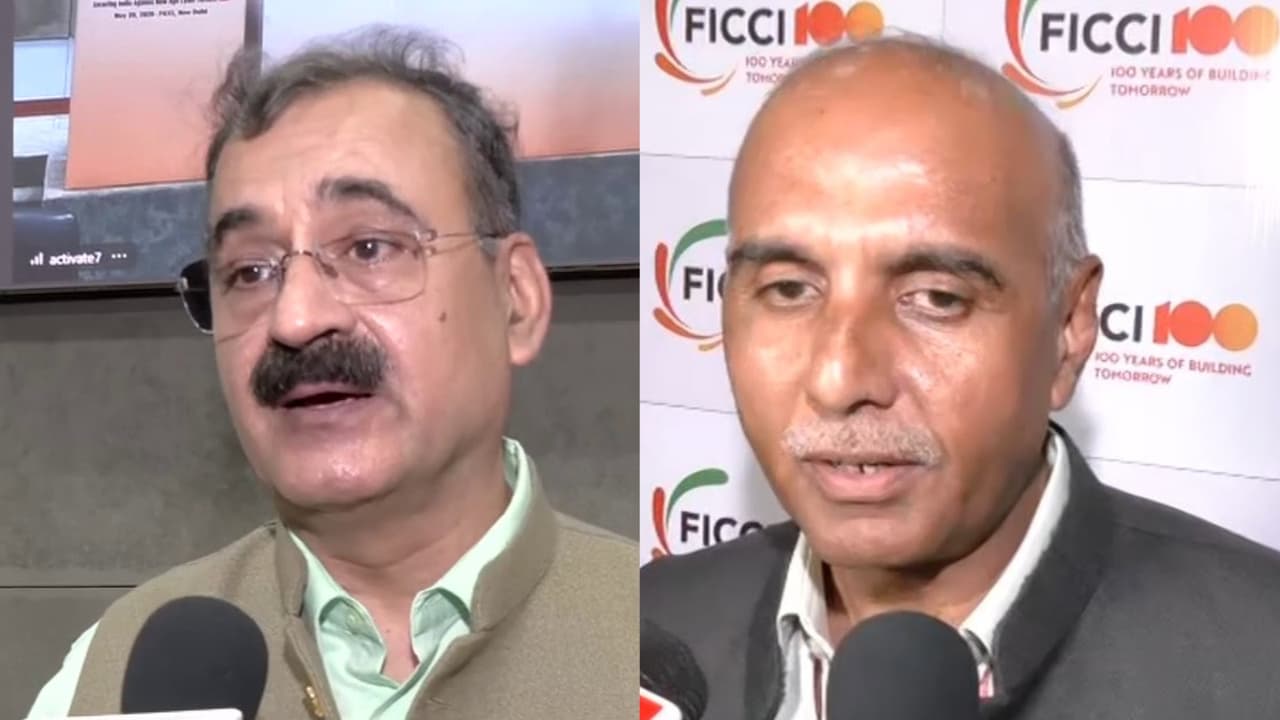
Cyber law expert Pavan Duggal asserts that India urgently requires a dedicated law for artificial intelligence, as current legal frameworks like the IT Act and DPDP Act are insufficient to manage AI-related risks and governance challenges.
India needs a dedicated law on artificial intelligence as existing legal frameworks are not adequate to deal with the risks emerging from AI, cyber law and artificial intelligence law expert Pavan Duggal said on the sidelines of FICCI's CyberComm event in the national capital.
Speaking to ANI, Duggal said India has taken several steps on AI governance, but they are not enough. "India needs to really wake up to the potential of AI. India is doing quite a lot of work, we have hosted the India AI summit, we have done the IT rules, we have come with the seven sutras for AI governance, but that is not enough," he said.
Need for a Dedicated AI Law
Calling for a separate legal framework, Duggal said, "India requires a dedicated law on artificial intelligence."
He said the Information Technology Act, 2000, and the Digital Personal Data Protection Act, 2023, do not adequately cover AI-related concerns. "The Information Technology Act 2000 is thoroughly inadequate to deal with issues pertaining to artificial intelligence. Even the Digital Personal Data Protection Act 2023 is not at all adequate," Duggal said.
Proposed Regulatory Framework
He said India should not blindly follow global regulatory models and must develop its own approach. "India needs to come up with its own customized approach on artificial intelligence regulation," he said, adding that India's decisions could become a benchmark for the Global South.
National AI Accountability Authority
Duggal also called for the creation of a National AI Accountability Authority to ensure legal accountability for AI systems. "We should also come up with the National AI Accountability Authority where we must make all AI algorithms accountable to law and give effective remedies to affected persons who get harmed as a result of acts done by artificial intelligence," he said.
He further said India must frame clear rules on data localisation and ensure that AI systems operating in the country remain subject to Indian law. "We cannot have Indians' data going outside India to be used against them, to be used against the sovereignty, security, integrity of India," he said.
Industry Calls for Minimal Regulation
On the role of industry, Duggal said trade bodies are seeking minimal regulation rather than over-regulation. "Trade bodies definitely want minimal regulation of AI. Why? Because regulation of AI means more innovation," he said.
He added that industry bodies are also open to self-regulation, but warned that leaving AI entirely to market forces would not be suitable. "Don't come with over-regulation because over-regulation is going to overkill. But minimal regulation, make the rules of the land very, very clear so that all stakeholders know about it and then enable more innovation to take place," Duggal said.
Cybersecurity Framework and Industry Actions
Speaking on cyber security, Duggal said India also needs a dedicated cyber security law. "India doesn't have a dedicated law on cybersecurity yet. We had only a national cyber security policy of 2013, but that's remained a mere paper tiger and has not been implemented," he said.
He said India must look at the intersection of AI and cybersecurity to protect critical information infrastructure and build a more resilient digital ecosystem. Against this backdrop, industry and internet infrastructure stakeholders also highlighted the need for stronger cybersecurity safeguards and proactive monitoring systems as India's digital ecosystem expands rapidly.
NIXI's Role in Safeguarding Cyberspace
Dr Devesh Tyagi, CEO of the National Internet Exchange of India (NIXI), said NIXI is working under the guidance of the Ministry of Electronics and Information Technology to safeguard India's cyberspace. "We have developed very rapidly and so are the threats, but I think government is aware of that and we are trying, government is taking various steps to mitigate those," Tyagi said.
He said NIXI is working to make India's domain and internet infrastructure safer. "We at NIXI are also working under guidance of Ministry of Electronics, IT to safeguard our cyberspace," he said.
Tyagi added that NIXI is taking steps to detect fraudulent activities in its domain area. "We have initiated various tools so that we can detect the fraudulent activities," he said. (ANI)
(Except for the headline, this story has not been edited by Asianet Newsable English staff and is published from a syndicated feed.)