
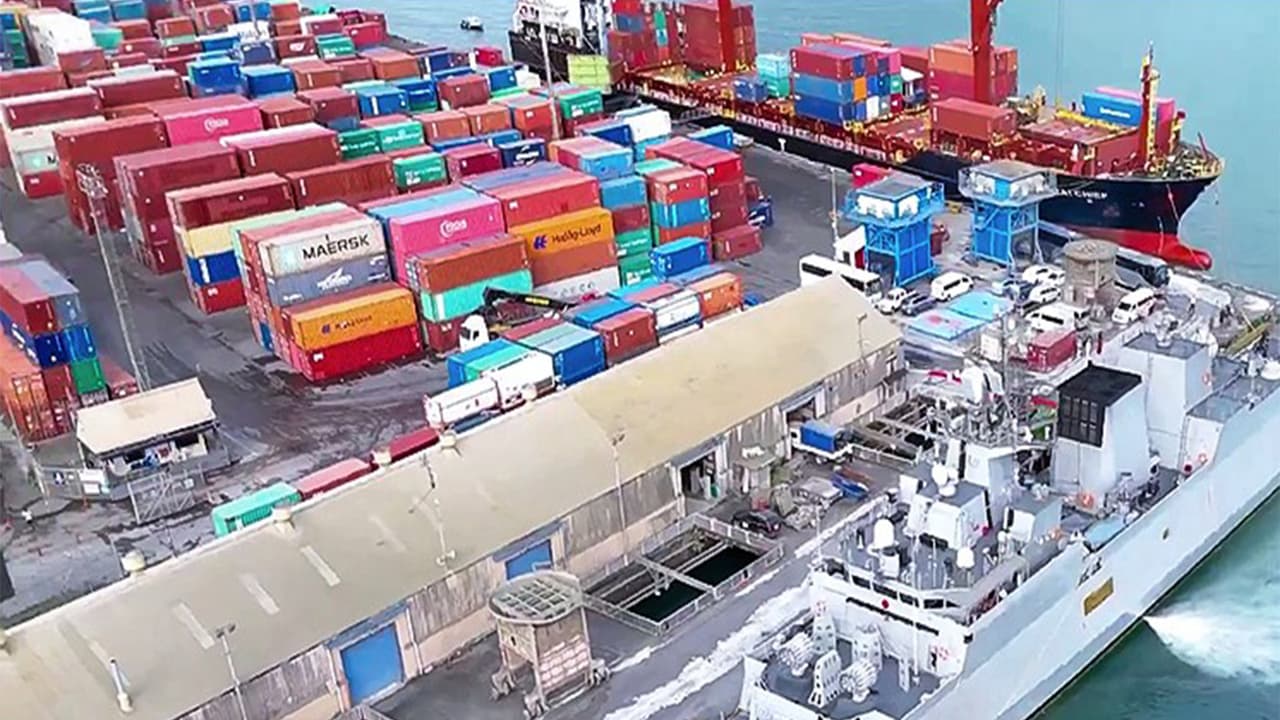
India requires about 215 next-generation Multimodal Logistics Parks (MMLPs) to handle a massive freight surge by 2047 and accelerate the shift from road to rail, says a CII-Knight Frank report, crucial for future competitiveness.
India's next wave of logistics competitiveness will hinge on scaling Multimodal Logistics Parks (MMLPs) to handle a massive freight surge and accelerate the shift from road to rail, according to a report by CII -Knight Frank India.
With freight movement projected to reach 28 billion tonnes by 2047, the report says India would need about 215 next-generation MMLPs to process nearly 3,162 MMT of cargo annually if these parks are to handle even 30% of the country's rail freight.
The report suggests that currently, India's operational MMLP network handles just 129 MMT annually, or 2% of total freight movement, indicating ample headroom for expansion.
Path to a Scale-Driven Transformation
The report noted that long-term success depends on building larger-format, high-density multimodal hubs capable of aggregating cargo at commercially viable scales, integrated with Dedicated Freight Corridors and port networks.
Shishir Baijal, Chairman and Managing Director, Knight Frank India, said India's logistics transformation is entering a "scale-driven phase."
"Over the past decade, the country has significantly improved its transport backbone, reflected in a 59% improvement in logistics efficiency and rising infrastructure investments," he said. "Multi-Modal Logistics Parks can become the critical link between infrastructure creation and freight efficiency by lowering logistics costs, improving rail adoption and supporting India's long-term manufacturing and export competitiveness."
Boosting Infrastructure, Cutting Costs
The report notes that transport infrastructure investment has jumped from $10 billion in FY2016 to $57.6 billion in FY2026, expanding highways, rail, ports, and freight corridors.
Knight Frank's Operational Infrastructure Index shows infrastructure efficiency improved 59% between FY2016 and FY2026. This has helped cut logistics costs to nearly 10-10.5% of GDP in FY2026, generating annual savings of Rs 10.8-11.7 trillion ($122-133 billion).
Yet road still dominates, accounting for nearly 70% of freight movement by tonne-kilometre versus 27.4% for rail, despite rail freight costs being nearly half. MMLPs can help correct this imbalance.
The report estimates that integrating DFC infrastructure with MMLP-grade systems can cut door-to-door freight costs by 43% versus road-only transport, while mechanised operations slash cargo dwell times from 34-152 hours to just 2.5-8 hours.
Current Status vs Future Needs
Ashwani Gupta, Chairman, CII National Committee on Ports and Shipping and CEO, Adani Ports and SEZ, said the opportunity now lies in "building efficient interchange ecosystems."
"MMLPs will be critical in reducing cargo fragmentation, improving turnaround time and enabling cost-efficient freight movement for industries beyond bulk cargo," he said.
"India currently has 30 operational MMLPs, which are smaller in scale and another 45 under various stages of development, creating a medium-term pipeline of 75 logistics parks. However, the scale requirement remains significantly larger to support the country's long-term freight transformation goals," the report said.
Rajeev Vijay, Executive Director, Government and Infrastructure Advisory at Knight Frank India, noted that Bharatmala MMLPs are being designed for 10-30 MMT/year throughput over the next 10-15 years.
Strategic Recommendations
The report calls for stronger central coordination, deploying CPSE freight as anchor demand, and strengthening first and last-mile links to make MMLPs true multimodal hubs rather than road-fed warehouses. (ANI)
(Except for the headline, this story has not been edited by Asianet Newsable English staff and is published from a syndicated feed.)