
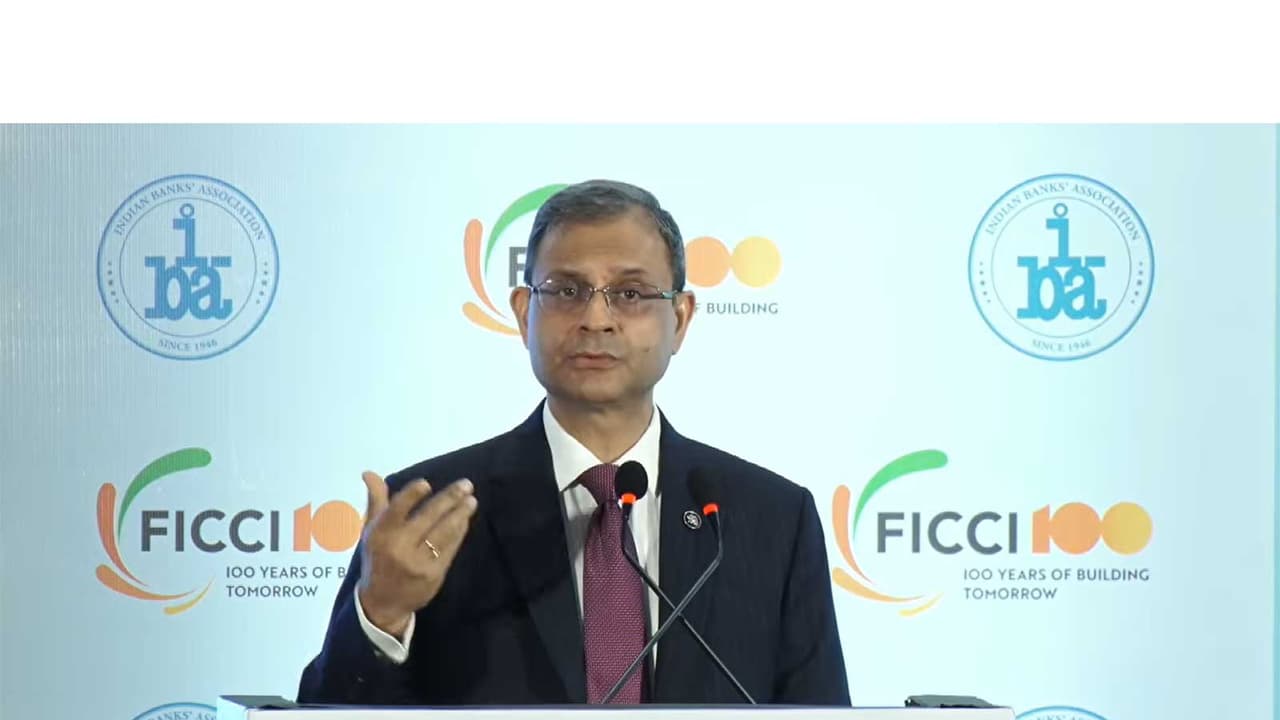
RBI Governor Sanjay Malhotra said India must proactively shape its AI journey in finance, not be shaped by it. He stressed AI requires a total mindset change in banking, from risk evaluation to customer service, leveraging India's digital infra.
Shape the AI Journey, Don't Be Shaped by It
Reserve Bank of India (RBI) Governor Sanjay Malhotra stated that India needs to shape its artificial intelligence (AI) journey rather than letting the technology shape the financial sector by default. Speaking at the FIBAC 2026 conference on Tuesday, the central bank chief emphasized that adopting AI requires a complete transformation in how institutions evaluate risk, serve customers, price capital, and organize operations.
"Doing business, doing banking, and so on, requires a total change in mindset," Malhotra said. "It's a shift in how we evaluate risk, serve customers, price capital, organize institutions. Happy to know many of the banks are already doing it. Some of you are considering doing it." He added, "The only question now before us is whether you shape the AI journey or you let it shape you by default."
India's Unique Vantage Point for AI
Highlighting India's strategic position, the Governor noted that the nation stands at a unique vantage point to leverage artificial intelligence due to its robust public digital infrastructure. "We in India stand at a unique vantage point to leverage AI. We have the most advanced public digital infrastructure, whether it is Aadhaar, UPI, DigiLocker, ONDC," Malhotra stated. "We are trying to build and improve and expand the unified lending interface, the account aggregator. These are all public goods on top of which the private sector can build AI because it has the potential to do for financial judgment what UPI did for financial transactions."
AI: A Multiplier of Intelligence
Reflecting on past technological shifts, Malhotra observed that while historical innovations multiplied physical power and connectivity, artificial intelligence directly multiplies intelligence. He noted that tasks like computer coding, once considered complex, have now become routine as focus shifts toward intelligence applications.
Regulatory Progress and Easing of Burden
Revisiting priorities outlined at the previous year's conference, Malhotra reported significant progress across key regulatory areas, including financial stability, customer centricity, ease of doing business, and reducing intermediation costs. He confirmed that banks remain on track to implement applicable Basel III guidelines starting from the beginning of the next financial year under the provided glide path.
The central bank has also finalized frameworks for credit risk capital, expected credit loss, project finance, related party transactions, and dividend policy, supported by enhanced supervisory mechanisms. On easing the regulatory burden, Malhotra explained that operational details were shifted to management while instructions were streamlined. The RBI automated over 203 application types, delivered 99.9 per cent of services within prescribed timelines, rationalized working capital norms, reviewed bulk deposit pricing, and delegated specific foreign exchange approvals to authorized dealers. Measures were also taken to expand bank credit, including norms for acquisition finance, priority sector lending, project finance, and alternative investment funds.
"Certainly, in all these areas, I think AI has a big role to play," Malhotra added, underscoring that reducing intermediation costs remains an ongoing collaborative effort between regulators and banking institutions. (ANI)
(Except for the headline, this story has not been edited by Asianetnews Editorial staff and is published from a syndicated feed.)