
The India-EU FTA includes a dedicated annexure on the EU's Carbon Border Adjustment Mechanism (CBAM), with provisions to ease compliance for exporters, recognise India's future carbon pricing, and address concerns of SMEs, said an official.
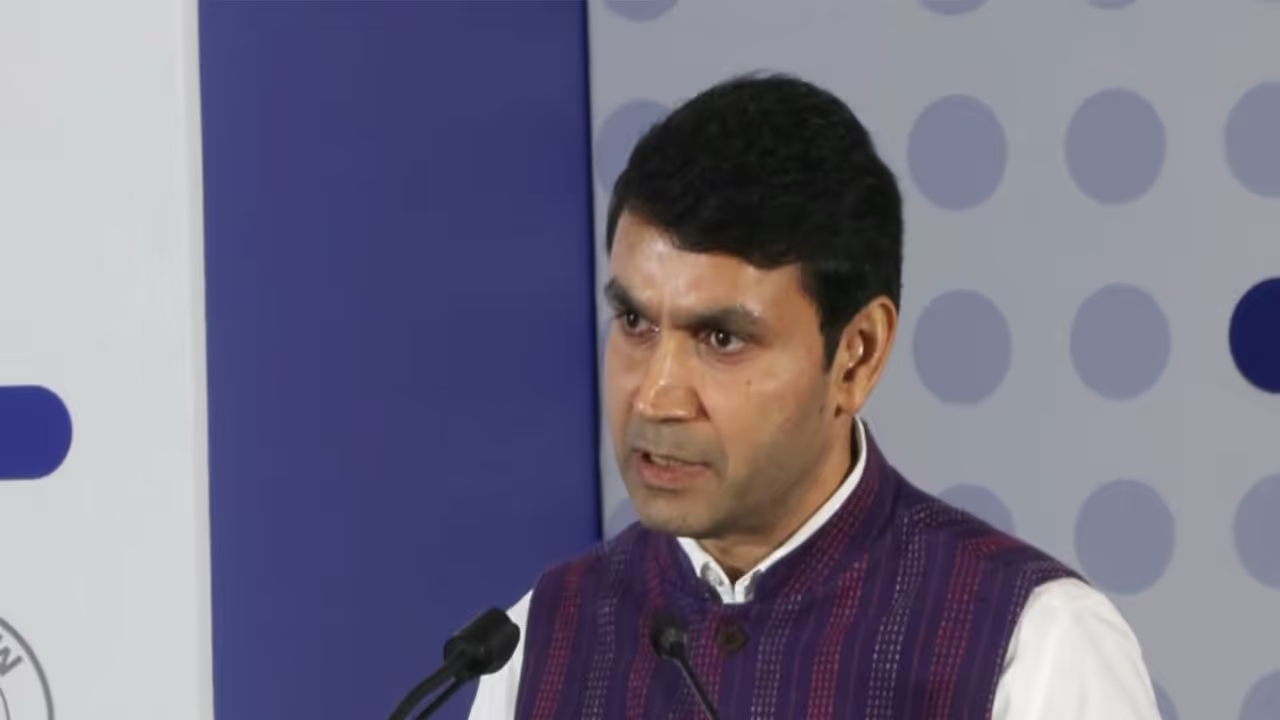
The India-European Union (EU) Free Trade Agreement (FTA) includes a dedicated annexure on the EU's Carbon Border Adjustment Mechanism (CBAM), with provisions to ease compliance for exporters, recognise India's future carbon pricing framework and address concerns of small and medium enterprises (SMEs), Additional Secretary in the Commerce Ministry Darpan Jain said on Thursday.
India-EU FTA's Approach to CBAM
Speaking at an event organised by the Indo-German Chamber of Commerce (IGCC), Jain said, "CBAM was one of the topics which took up a lot of our negotiating capital. And I must say, we explored many options on that. If you see the text of the agreement, which is already there in the public domain, there is a separate annexure on dealing with Carbon Border Adjustment Mechanism."
Provisions for Easing Compliance
Explaining the provisions of the annexure, he said it is built around multiple pillars aimed at reducing compliance burdens for Indian exporters. "First pillar is that in case there is any flexibility in CBAM in future, that would be available to India. So, there is an obligation in that," he said.
Jain acknowledged that CBAM compliance could be challenging, particularly for SMEs, due to verification and reporting requirements. "As you know, CBAM compliance is a concern among SMEs in terms of verification, in terms of finding out what is the value of embedded carbon, in terms of ensuring that the verifiers are recognised by EU authorities. So, there are separate provisions under that," he said.
Recognition of India's Carbon Pricing
He added that the agreement also creates a mechanism for engagement with the EU on recognising carbon costs incurred in India. "We also have a provision in which we can engage with EU authorities on taking into account the carbon price which is paid in India. As you would know, India also is developing its own carbon pricing mechanism. So, how to offset what is paid in India from what is paid in Europe, even that is part of it," Jain said.
Opportunities for SMEs and Overall Significance of FTA
Jain also rejected concerns that the agreement would adversely affect Indian SMEs, saying India and the EU have complementary trade structures. "I really don't see the pressure... Our SMEs can manufacture for some big European manufacturers. They have opportunities of direct exports also. I think there is a lot of opportunity rather than any fear of competition. In our consultations also, we never came across that fear. Most of our MSMEs actually are supportive of this," he said.
Jain also said the proposed India-EU FTA is significant because it brings together two of the world's largest economies and offers businesses access to a combined market of nearly USD 25 trillion. He said the agreement goes beyond tariff cuts by covering goods, services, e-commerce, intellectual property and other trade-related rules, giving businesses greater certainty in an evolving global trade environment.
According to him, the complementary strengths of India and Europe, with India's skilled workforce and Europe's technological capabilities, could help companies integrate into global value chains and create new opportunities for investment, manufacturing and exports. (ANI)
(Except for the headline, this story has not been edited by Asianet Newsable English staff and is published from a syndicated feed.)